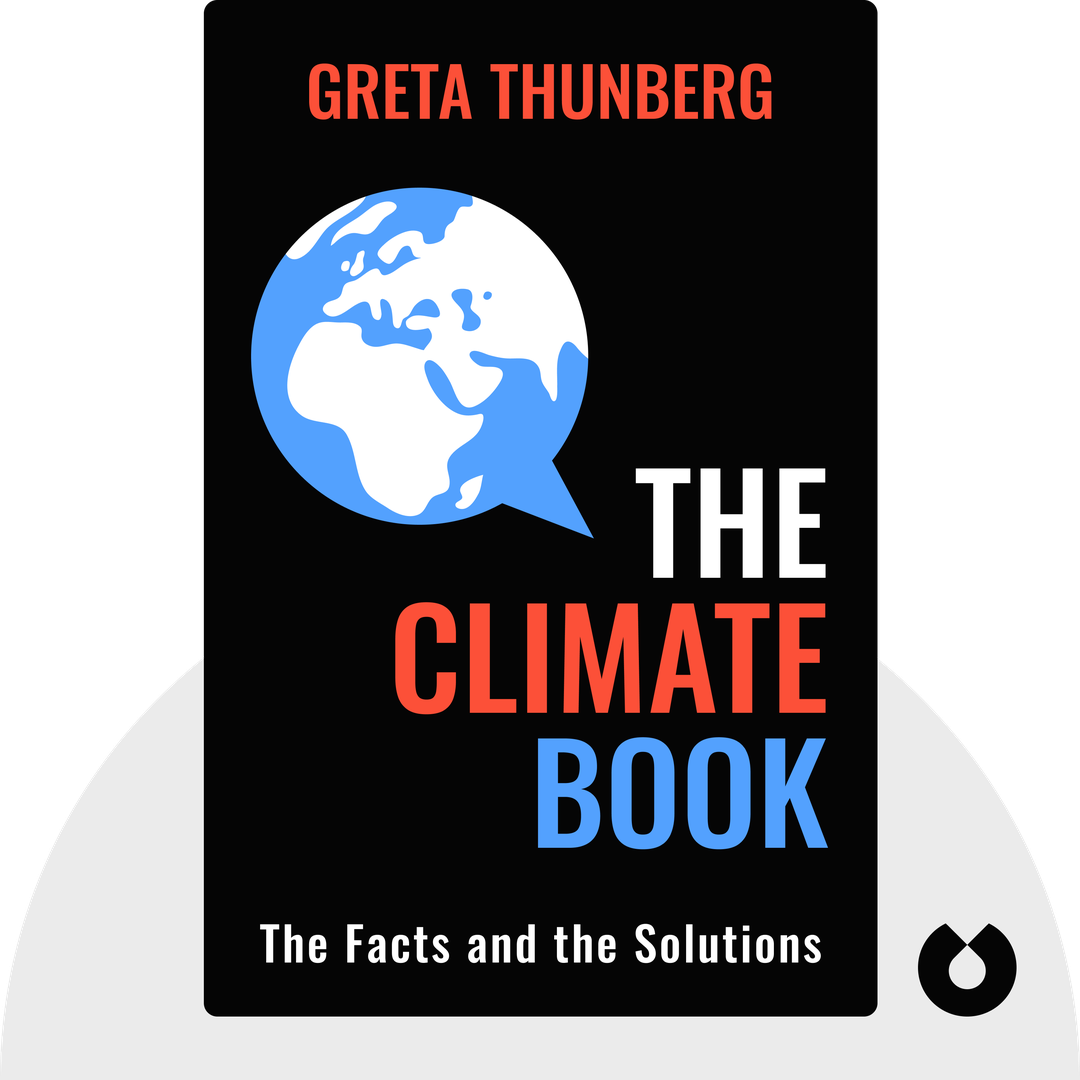
If You're Curious About These Questions...
You should listen to this audiobook
- Did you know that the way our media and political systems frame the climate crisis might actually be preventing us from taking the most effective actions?
- Have you ever wondered why individual lifestyle changes aren't enough to stop global warming, and what systemic shifts are truly required to save our future?
- Are you curious about the secret connections between social equity and environmental health that could finally unlock a path to a sustainable world?
Listen to The Climate Book — Free Audiobook
Loading player...
Key Takeaways from The Climate Book
- Discover how young climate activists are exposing systemic inactivity and breaking down the complex climate crisis into manageable steps to inspire daily change.
- Understand how humanity's relentless exploitation of natural resources—from historical animal extinctions to modern fossil fuel dependency—has driven us toward an irreversible epoch known as the Anthropocene.
- Learn how the intricate codependency of Earth's ecosystems creates dangerous domino effects, such as the ocean absorbing 90 percent of atmospheric heat while risking devastating thermal expansion.
- Recognize why the catastrophic consequences of global warming will disproportionately burden low- and middle-income nations due to systemic inequalities like environmental racism and limited healthcare access.
- Find out how rising global temperatures directly threaten human survival by releasing ancient pathogens from melting glaciers and spreading vector-borne diseases like malaria to entirely new geographic regions.
Learning Tools
Reinforce what you learned from The Climate Book
Mind Map
The Climate Book
Education & Awareness+
Role of the Media+
Government Emergency Mode+
A Just Transition+
Taking Action+
Quiz — Test Your Understanding
Question 1 of 6
What was Greta Thunberg's original method for addressing the climate crisis before she started protesting?
Question 2 of 6
According to the book, why is the media considered one of the biggest culprits in the destruction of the planet?
Question 3 of 6
When comparing the climate crisis to past emergencies like World War II, which of the following is NOT one of the four markers that show a government has shifted into emergency mode?
Question 4 of 6
How does the concept of a 'just transition' expand the traditional understanding of 'green jobs'?
Question 5 of 6
According to the text, who should primarily bear the financial cost of transitioning to a post-carbon economy?
Question 6 of 6
What is the book's perspective on making individual consumer choices, such as buying sustainable tomatoes or going vegan?
The Climate Book — Full Chapter Overview
- 1Recommendation
- 2It all begins with the media.
- 3How to confront a crisis.
- 4Building a just transition.
- 5What must now be done?
The Climate Book Summary & Overview
The Climate Book (2023) unites dozens of voices in a compelling and eye-opening exploration of the complex relationships between climate change, politics, and media. Offering insights into the interconnectedness of various global issues and the urgent need for systemic change, it contains practical, actionable steps towards a sustainable and equitable future.
Who Should Listen to The Climate Book?
- Everyone concerned about our planet Earth
- Climate activists looking to bolster their tactics arsenal
- Politicians and journalists who want to be part of the solution, not the problem
Books Similar to The Climate Book
Readers who enjoyed this also liked these titles.