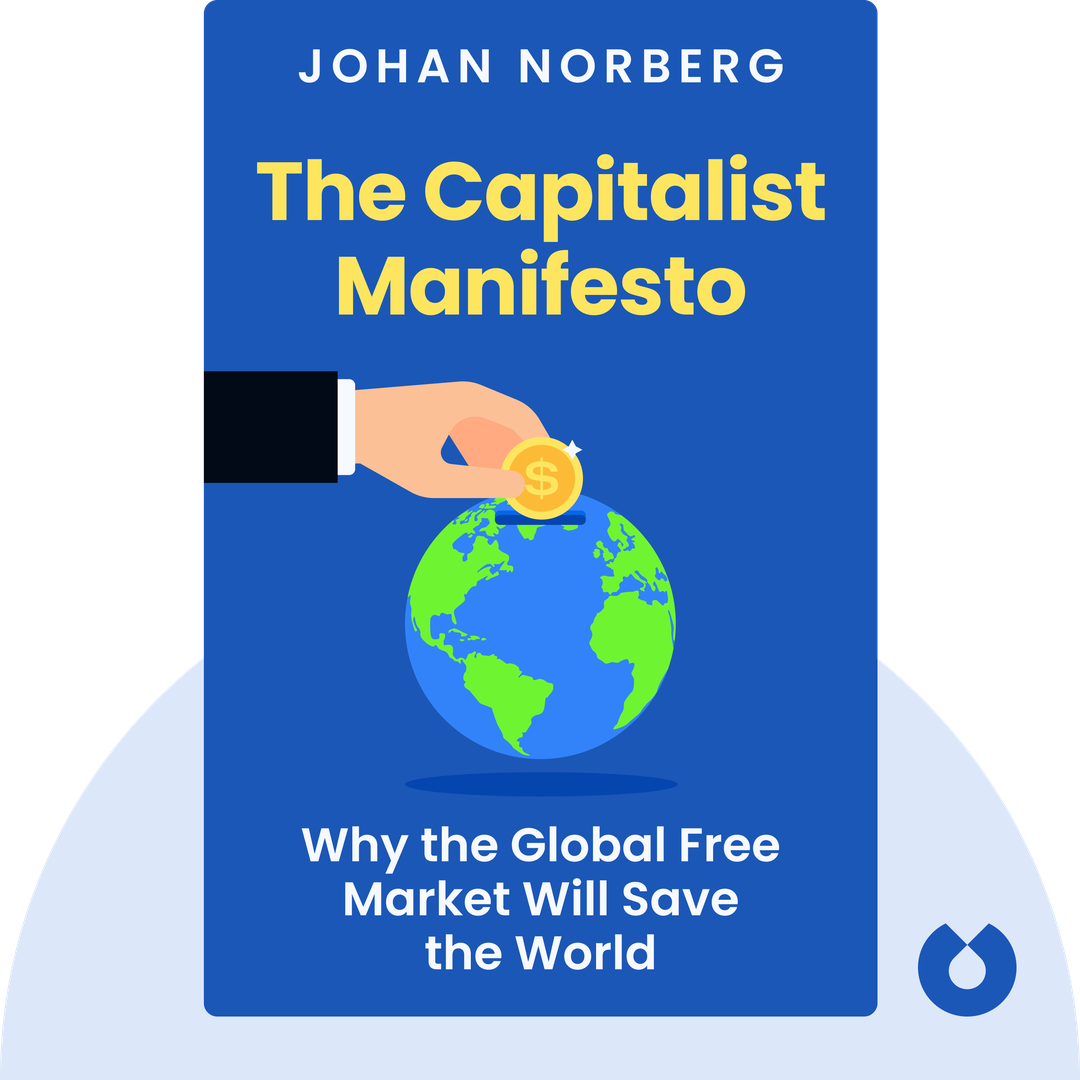
The Capitalist Manifesto
Start ListeningDownload Try free on iPhoneScan to start in 5 seconds
Categories:
If You're Curious About These Questions...
You should listen to this audiobook
- Did you know that the global free market system has been the single greatest engine for lifting millions out of poverty, contrary to what many critics claim?
- What's the secret to why capitalism consistently outpaces every other economic model when it comes to driving innovation and human progress?
- Have you ever wondered how the principles of a free market could be the unexpected solution to the world's most daunting modern challenges?
Listen to The Capitalist Manifesto — Free Audiobook
Loading player...
Key Takeaways from The Capitalist Manifesto
- Discover how economic liberalization and free markets have dramatically slashed global extreme poverty from 38 percent in the 1990s to roughly 10 percent today.
- Understand why automation and globalization haven't destroyed the workforce, but instead shifted jobs into higher-paying, service-oriented roles with increased job satisfaction.
- Learn how entrepreneurial wealth ultimately benefits society, as innovators retain only a small fraction of the immense economic and technological value they create for the community.
- Find out how international competition and open economies have democratized access to everyday goods, significantly lowering costs for low- and middle-income households.
- Recognize the critical difference between true profit-and-loss capitalism and 'crony capitalism,' and discover why eliminating government bailouts is essential for a fair and thriving market.
Learning Tools
Reinforce what you learned from The Capitalist Manifesto
Mind Map
The Capitalist Manifesto
Global Progress & Poverty Reduction+
Globalization & Automation+
Wealth Inequality & Entrepreneurship+
Big Business & Market Dynamics+
Environment & Sustainable Growth+
Society, Happiness & Individualism+
Quiz — Test Your Understanding
Question 1 of 7
What was a major driver in the significant drop in global extreme poverty from the 1990s to 2015, according to the text?
Question 2 of 7
How does the author explain the decline in traditional manufacturing jobs in Western economies?
Question 3 of 7
According to the text, what is a valid critique of modern capitalism that needs to be actively addressed?
Question 4 of 7
What counterintuitive effect do government regulations often have on the business landscape?
Question 5 of 7
Why does the author reject the concept of 'degrowth' as a viable solution to climate change?
Question 6 of 7
How does the text respond to the criticism that capitalism breeds loneliness and diminishes community?
Question 7 of 7
How does the author characterize the value of data in the context of large tech businesses?
The Capitalist Manifesto — Full Chapter Overview
- 1Recommendation
- 2Global gains and poverty decline post-1990s
- 3Globalization and automation in today’s economies
- 4Unlocking prosperity in a divided world
- 5The complicated role of big business in today’s markets
- 6Past degrowth and doom
- 7Dispelling the myth of isolation in a wealth-driven society
The Capitalist Manifesto Summary & Overview
The Capitalist Manifesto (2023) delves into the transformative power of free markets, arguing that capitalism has historically led to unprecedented prosperity and technological progress. It asserts that the global free market system holds the key to solving world challenges, emphasizing capitalism’s role in fostering economic growth and innovation.
Who Should Listen to The Capitalist Manifesto?
- Economics students interested in capitalism’s global impact
- Business professionals exploring market-driven growth strategies
- Free-market enthusiasts and capitalism advocates
Books Similar to The Capitalist Manifesto
Readers who enjoyed this also liked these titles.