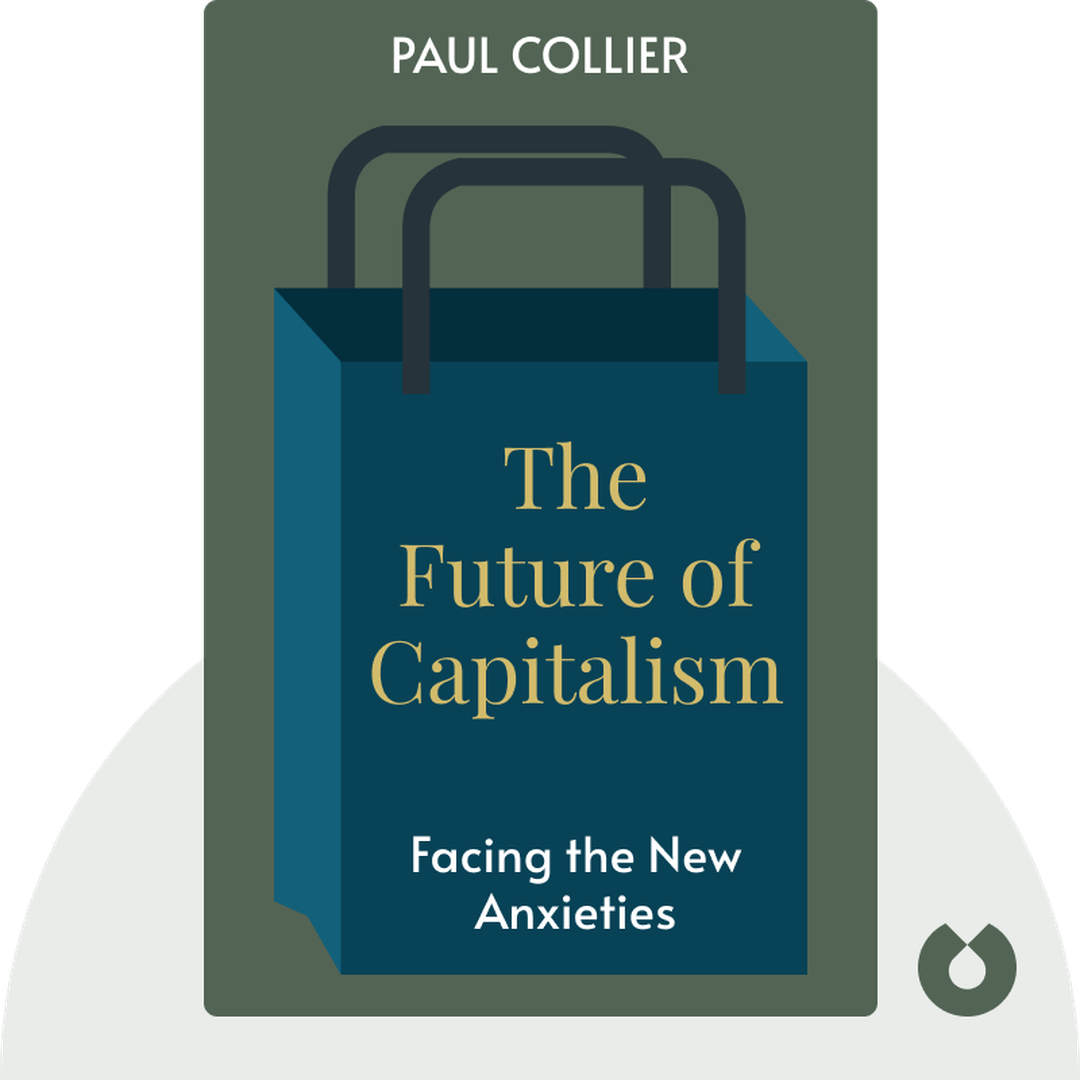
The Future of Capitalism
Start ListeningDownload Try free on iPhoneScan to start in 5 seconds
Categories:
If You're Curious About These Questions...
You should listen to this audiobook
- Have you ever wondered why modern capitalism often feels like it's tearing our communities apart rather than bringing them together?
- Did you know that the secret to fixing our broken economy might lie in reintroducing ethical values into a world dominated by cold data?
- Are you curious about how a new brand of pragmatic politics could finally create a version of capitalism that works for everyone, not just the elite?
Listen to The Future of Capitalism — Free Audiobook
Loading player...
Key Takeaways from The Future of Capitalism
- Understand why the shift from post-WWII communitarianism to modern utilitarianism concentrated wealth among the elite and triggered today's political polarization.
- Discover how replacing top-down state paternalism with 'social maternalism' can foster a patriotic community and restore social dignity to all economic classes.
- Learn why rigid political ideologies like Marxism and Libertarianism fail to address modern economic crises, and how pragmatic, context-specific policies offer real solutions.
- Explore how cultivating a shared sense of true patriotism—rather than divisive nationalism—can heal widening class divides and rebuild social solidarity.
- Find out how targeted public policies can recreate ethical, mutually owned companies that share profits and governance with their employees, abandoning the toxic culture of corporate greed.
Learning Tools
Reinforce what you learned from The Future of Capitalism
Mind Map
The Future of Capitalism
The Crisis of Modern Capitalism+
The Solution: Social Maternalism+
Building Ethical Firms+
Stabilizing Families+
Bridging Class and Geographic Divides+
Creating an Ethical World+
Quiz — Test Your Understanding
Question 1 of 7
According to the text, which ideology transformed the communitarianism of the postwar era into 'social paternalism'?
Question 2 of 7
What is the core characteristic of 'social maternalism' as proposed by the author?
Question 3 of 7
How does the John Lewis Partnership exemplify the author's vision for ethical firms?
Question 4 of 7
What pragmatic policy does the author suggest to help stabilize families under social maternalism?
Question 5 of 7
Why does the author criticize current global organizations like NATO and the IMF?
Question 6 of 7
How does the author propose addressing the geographic wealth divide between metropolitan and provincial cities?
Question 7 of 7
Which country's vocational training system does the author highlight as a model for bringing dignity and purpose to the working class?
The Future of Capitalism — Full Chapter Overview
- 1Recommendation
- 2The decline of social democracy has left us with a morally bankrupt capitalism.
- 3We can build an ethical capitalism via pragmatic policies that cultivate social maternalism.
- 4Ethical companies can emerge through targeted changes in public policy.
- 5Social maternalism can stabilize families by encouraging them to stay together and also offering relief.
- 6An ethical world demands global solidarity and small, focused international organizations.
- 7Closing class and geographic divides will require the redistribution of wealth and purpose.
The Future of Capitalism Summary & Overview
The Future of Capitalism (2018) offers a candid analysis of capitalism that calls for a return to communitarian ethics to mend rifts between families, communities and nations. Diagnosing the failings of modern liberalism, Paul Collier proposes the reintroduction into economic thinking of ethical concerns. He also suggests pragmatic policies that might forge a capitalism that works for everyone.
Who Should Listen to The Future of Capitalism?
- Students of political science and economics
- Policy makers interested in cultivating a new center left
- Skeptics of capitalism’s potential
Books Similar to The Future of Capitalism
Readers who enjoyed this also liked these titles.