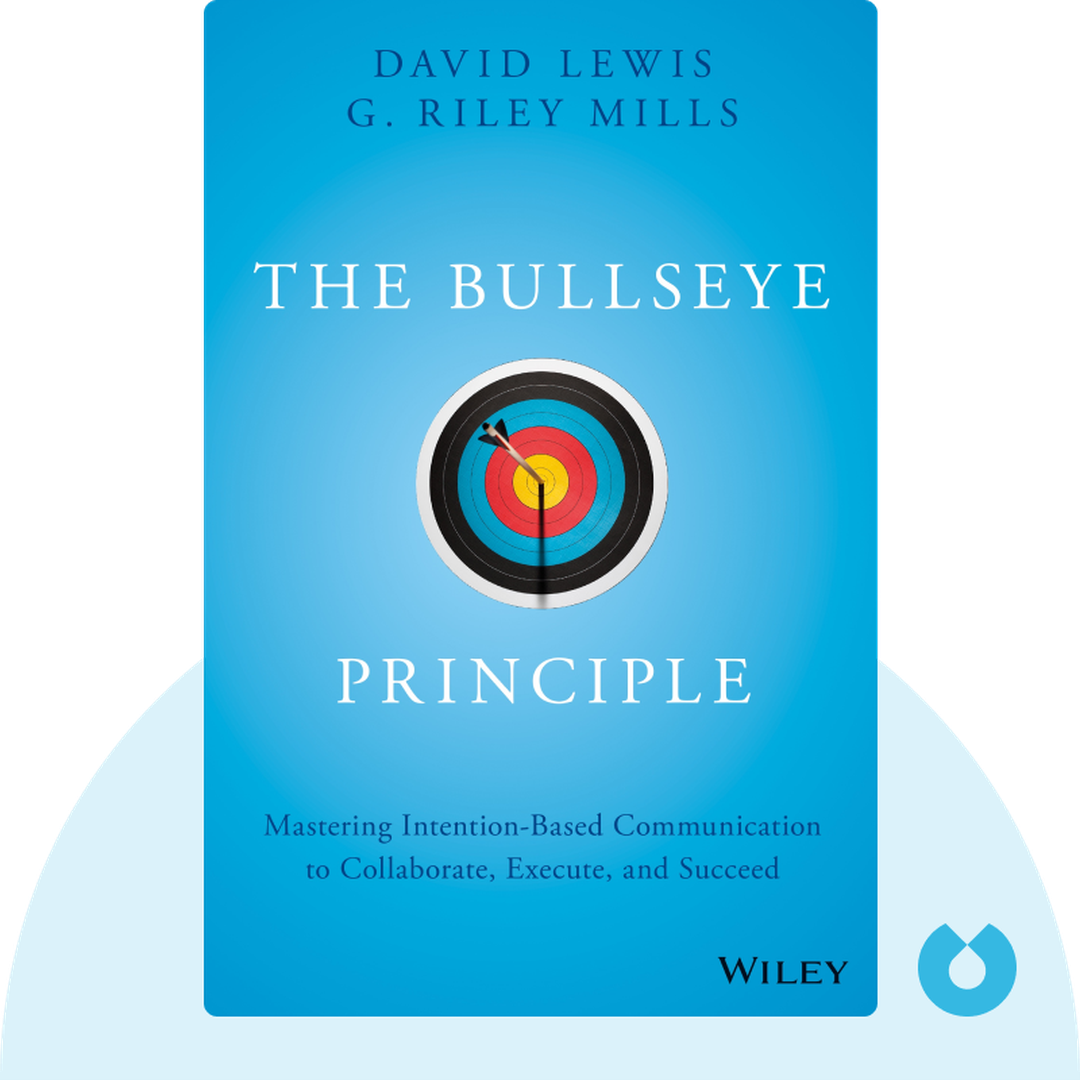
The Bullseye Principle
Start ListeningDownload Try free on iPhoneScan to start in 5 seconds
Categories:
If You're Curious About These Questions...
You should listen to this audiobook
- Did you know that the same techniques professional actors use to command a stage can be the secret weapon for winning over your next business audience?
- What’s the secret to hitting the 'bullseye' in every conversation and ensuring your message isn’t just heard, but acted upon?
- Have you ever wondered why some people exude effortless confidence in high-stakes meetings while others struggle to find their voice?
Listen to The Bullseye Principle — Free Audiobook
Loading player...
Key Takeaways from The Bullseye Principle
- Understand why effective communication requires aiming your message like an arrow at a specific objective, rather than blaming your audience when you miss the mark.
- Learn how to cultivate a powerful personal brand by crafting a two-sentence statement that aligns your core competencies, goals, and values.
- Discover how to multiply team productivity by up to five times by fostering a unifying sense of common purpose and leading by energized example.
- Master the 'amplification' strategy to elevate quiet voices in your meetings, ensuring great ideas are credited and team members stay fully engaged.
- Find out why utilizing storytelling is an essential tool for making complex information highly memorable and your business pitches undeniably persuasive.
Learning Tools
Reinforce what you learned from The Bullseye Principle
Mind Map
The Bullseye Principle
Objective-Driven Communication+
Personal Branding+
Leadership & Engagement+
The Power of Storytelling+
Running Effective Meetings+
Asking the Right Questions+
Continuous Improvement+
Quiz — Test Your Understanding
Question 1 of 7
According to the 'Bullseye Principle,' who is responsible when a message fails to persuade an audience?
Question 2 of 7
What is the ultimate goal of the personal branding exercise recommended by the authors?
Question 3 of 7
How did female staffers in the Obama administration successfully use the 'amplification' strategy?
Question 4 of 7
Why is storytelling considered significantly more effective than statistical analysis for making information memorable?
Question 5 of 7
What do the authors identify as the primary reason employees generally hate attending corporate meetings?
Question 6 of 7
During a meeting, a manager asks, 'How do you think we can finish this project by the deadline?' What type of question is this?
Question 7 of 7
What actionable advice is given to help professionals develop a tougher skin regarding constructive criticism?
The Bullseye Principle — Full Chapter Overview
- 1Recommendation
- 2We communicate to meet specific goals.
- 3Top communicators nurture their personal brands.
- 4True leaders set an example and foster a common sense of purpose.
- 5Storytelling makes information more memorable and proposals more persuasive.
- 6More and more meetings are poorly run, but they don’t have to be.
- 7Asking questions unlocks crucial information, but you need to know which types of questions to ask.
The Bullseye Principle Summary & Overview
The Bullseye Principle (2018) is a practical guide to confident, clear communication in contemporary business settings. Covering everything from personal branding to inspiring others and running meetings effectively, these blinks will show you how to deliver your lines with style and win over your audience.
Who Should Listen to The Bullseye Principle?
- Leaders looking to find their voice
- Public speakers with stage fright
- Interviewers and interviewees
Books Similar to The Bullseye Principle
Readers who enjoyed this also liked these titles.