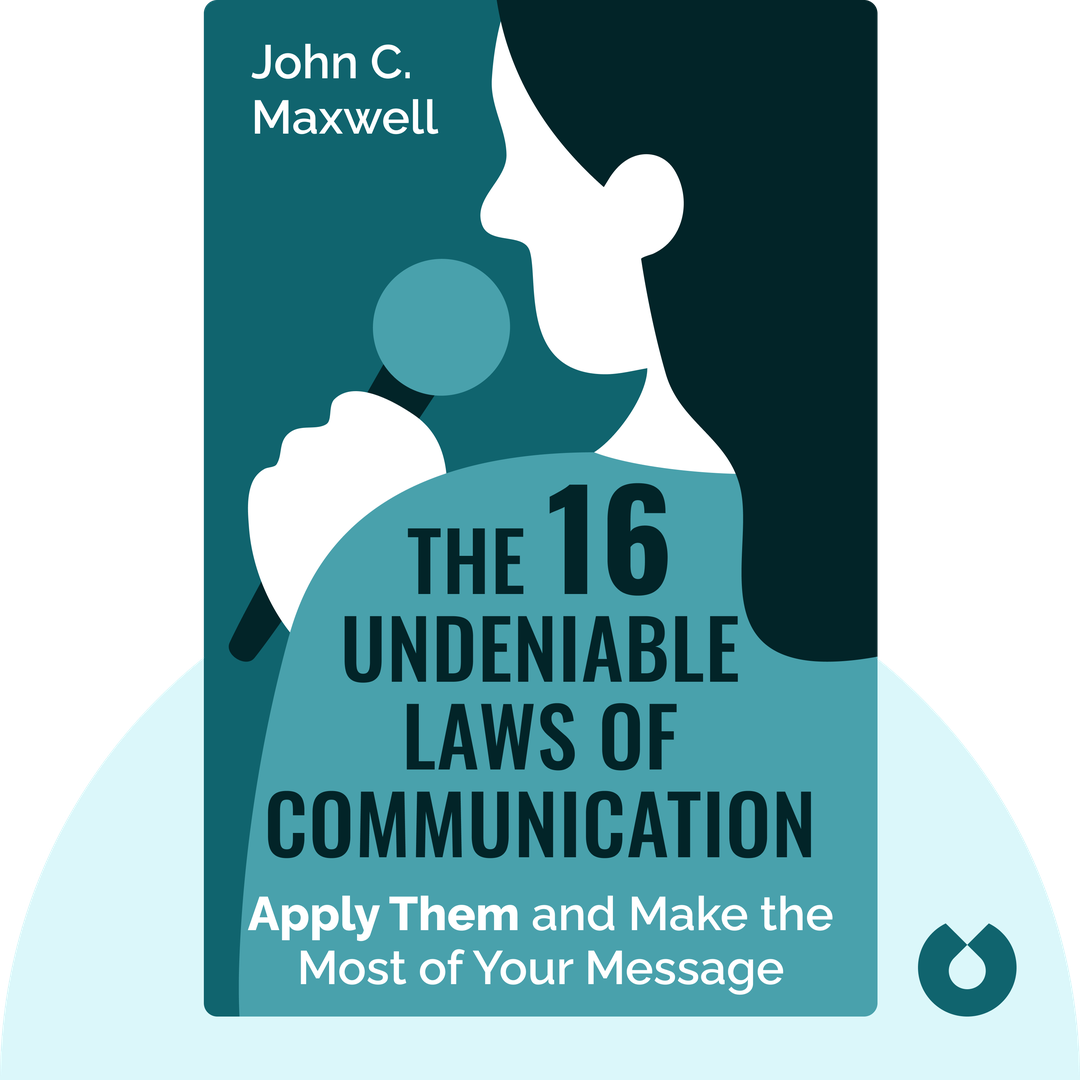
The 16 Undeniable Laws of Communication
Start ListeningDownload Try free on iPhoneScan to start in 5 seconds
Categories:
If You're Curious About These Questions...
You should listen to this audiobook
- What’s the secret to moving beyond just delivering a speech and actually making a deep, lasting connection with any audience?
- Did you know that the most effective communicators don't just share information—they act as a "thermostat" that sets the energy for the entire room?
- What if you could transform your fear of public speaking into a powerful asset that commands attention and inspires your listeners to take action?
Listen to The 16 Undeniable Laws of Communication — Free Audiobook
Loading player...
Key Takeaways from The 16 Undeniable Laws of Communication
- Understand why becoming a credible messenger starts with internal honesty and speaking from deep personal experience. Learn to share your blunders to build authentic connections and earn your audience's respect.
- Discover how to prepare effectively by defining exactly what you want your audience to accomplish and customizing your message to their specific needs.
- Find out why public speaking is actually a team sport that relies on honest feedback and active collaboration to rigorously hone your ideas.
- Master the formula for creating impactful content by distilling your main idea into a single thesis sentence, starting with a compelling hook, and ending with a strong call to action.
- Learn how to close the accessibility gap between you and your listeners by sharing relatable stories, using imaginative picture words, and leveraging the melodic power of repetition.
Learning Tools
Reinforce what you learned from The 16 Undeniable Laws of Communication
Mind Map
The 16 Undeniable Laws of Communication
Value of Effective Communication+
Becoming a Credible Messenger+
Preparation and Collaboration+
Crafting Great Content+
Connecting with the Audience+
The Power of Storytelling+
Using Real-Time Feedback+
Ultimate Goal of Speaking+
Quiz — Test Your Understanding
Question 1 of 8
Why did Mahatma Gandhi make a mother and her sugar-addicted son wait three days before he spoke to the boy?
Question 2 of 8
According to the text, what is the recommended approach to tailoring your speech's message?
Question 3 of 8
Why does the text describe public speaking as a 'team sport'?
Question 4 of 8
What is the recommended next step for creating great content right after rigorously selecting your most sound and important ideas?
Question 5 of 8
How should a speaker handle the perceived 'gap' that occurs when their influence makes them seem inaccessible to the audience?
Question 6 of 8
According to the text, when does a speaker truly start exuding charisma?
Question 7 of 8
What are the four essential building blocks of a captivating story mentioned in the text?
Question 8 of 8
What does 'the law of the thermostat' refer to in the context of public speaking?
The 16 Undeniable Laws of Communication — Full Chapter Overview
- 1Recommendation
- 2Becoming a trusted messenger
- 3Prepare, prepare, and practice
- 4Content reigns supreme
- 5Connecting with your listeners
- 6The power of stories
- 7Using live feedback to improve delivery
The 16 Undeniable Laws of Communication Summary & Overview
The 16 Undeniable Laws of Communication (2023) addresses the fear of public speaking. It offers tried-and-true techniques that can transform any beginner or average speaker into a trusted and effective communicator.
Who Should Listen to The 16 Undeniable Laws of Communication?
- Anyone trying to improve their communication skills
- Speakers addressing anyone from small groups to stadium crowds
- Leaders and organizers looking to inspire their teams
Books Similar to The 16 Undeniable Laws of Communication
Readers who enjoyed this also liked these titles.