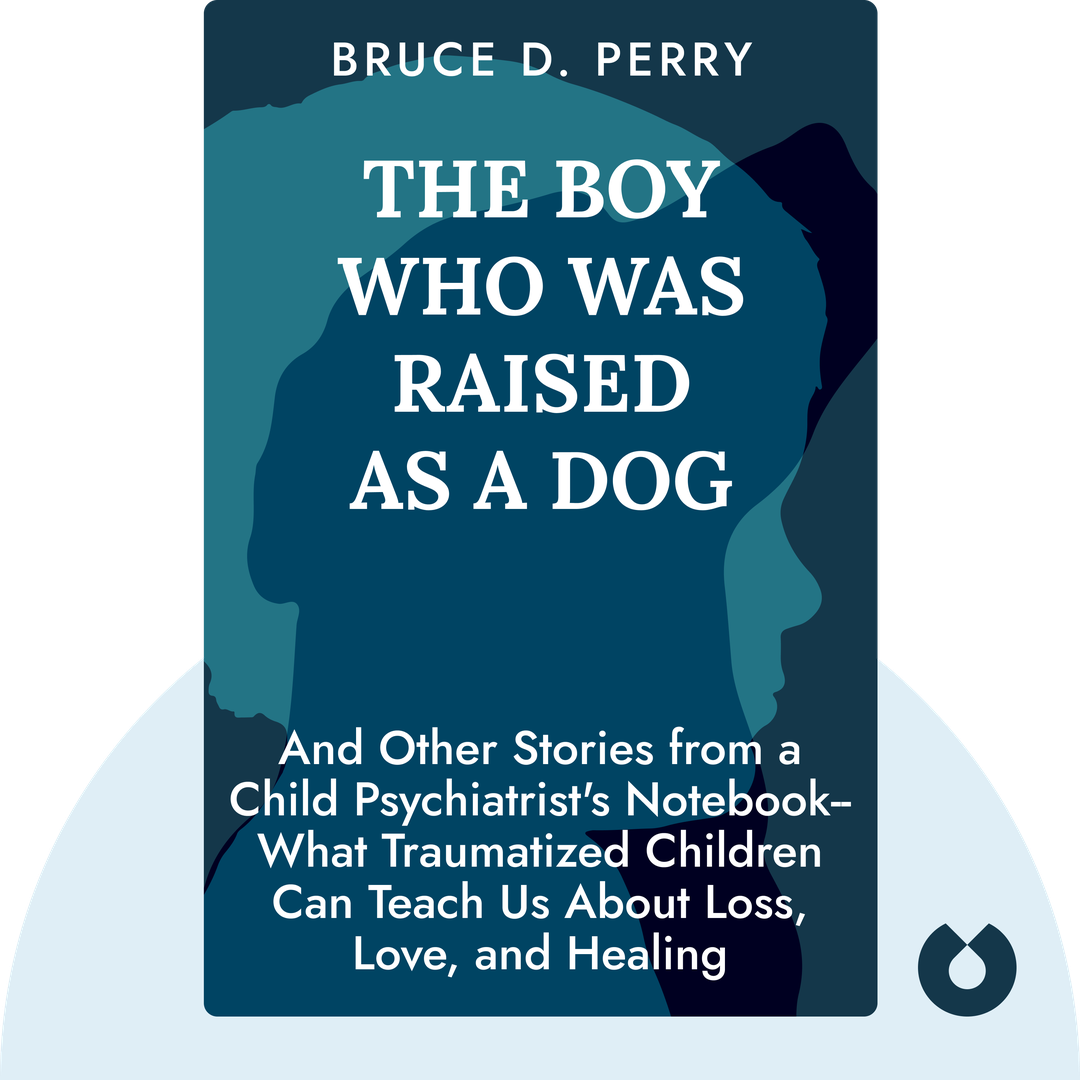
The Boy Who Was Raised as a Dog
Start ListeningDownload Try free on iPhoneScan to start in 5 seconds
Categories:
If You're Curious About These Questions...
You should listen to this audiobook
- Did you know that a child’s earliest experiences can physically reshape their brain, dictating how they handle stress and relationships for the rest of their lives?
- Have you ever wondered why traditional 'talk therapy' often fails traumatized children, and what unconventional, rhythmic methods can actually unlock their ability to heal?
- What if you could decode the hidden language of a child’s behavior to discover exactly what their brain needs to recover from past trauma?
Listen to The Boy Who Was Raised as a Dog — Free Audiobook
Loading player...
Key Takeaways from The Boy Who Was Raised as a Dog
- Understand why the long-held belief that children are naturally resilient is a myth, and learn how trauma actually impacts developing minds far more profoundly than adults.
- Uncover the psychological mechanisms of childhood PTSD, and see how prolonged stress oversensitizes the brain to view benign everyday objects as life-threatening threats.
- Learn how traumatized children can process horrific events and begin to heal by reenacting their trauma in a safe, entirely self-controlled environment.
- Discover the 'use-dependent' nature of brain development, revealing how a lack of early emotional soothing can literally stunt a child's physical growth and cause them to fail to thrive.
- Explore how intermittent emotional neglect during infancy disrupts the limbic system, severing the link between human contact and stress relief while fostering severe empathy deficits.
Learning Tools
Reinforce what you learned from The Boy Who Was Raised as a Dog
Mind Map
The Boy Who Was Raised as a Dog
Core Philosophy on Childhood Trauma+
Sandy: Recovery Through Control+
Laura: Neglect and Physical Health+
Leon: The Roots of Sociopathy+
Justin & Connor: The Neurosequential Approach+
James: Misdiagnosis and Deception+
Conclusion: Hope and Healing+
Quiz — Test Your Understanding
Question 1 of 7
What was the prevailing, yet incorrect, belief about childhood trauma when Dr. Bruce Perry began his career in the 1980s?
Question 2 of 7
According to the book's explanation of brain function, what happens when a child experiences prolonged, unpredictable stress?
Question 3 of 7
In the case of Sandy, who witnessed her mother's murder, what was a crucial aspect of her healing process during therapy sessions?
Question 4 of 7
How did Dr. Perry explain Laura's severe physical underdevelopment, which was initially misdiagnosed as infantile anorexia?
Question 5 of 7
What early childhood experience contributed to Leon's lack of empathy and later violent crimes?
Question 6 of 7
The 'neurosequential approach' used to treat Justin, who was severely neglected and kept with dogs, is based on what principle?
Question 7 of 7
What key lesson did Dr. Perry learn from the case of James, who was initially diagnosed with Reactive Attachment Disorder (RAD)?
The Boy Who Was Raised as a Dog — Full Chapter Overview
- 1Recommendation
- 2Sandy’s healing through control
- 3Laura’s path from neglect to connection
- 4Leon and the lasting shadow of early neglect
- 5Justin: The child who was raised as a dog
- 6James’s mother is lying
The Boy Who Was Raised as a Dog Summary & Overview
The Boy Who Was Raised as a Dog (2006) presents a series of case studies to explore the profound impacts of childhood trauma – and the resilience and adaptability of the human brain. Through the diverse experiences of young people who have faced unimaginable abuse and neglect, it illustrates how innovative therapeutic approaches can facilitate healing and recovery.
Who Should Listen to The Boy Who Was Raised as a Dog?
- Mental health professionals interested in how trauma impacts child development – and effective therapeutic interventions
- Social workers wishing to better understand child trauma and its repercussions to support at-risk children and families
- Parents or caregivers who want to know the minds of their children (and people in general)
Books Similar to The Boy Who Was Raised as a Dog
Readers who enjoyed this also liked these titles.