If You're Curious About These Questions...
You should listen to this audiobook
- Have you ever wondered why traditional parenting techniques often backfire when dealing with a child who has experienced early trauma?
- What’s the secret to disarming a child’s 'survival mode' behaviors and replacing them with a genuine sense of safety and trust?
- What if you could decode the hidden needs behind your child’s most puzzling outbursts and foster deep healing through connection?
Listen to The Connected Child — Cinematic Audio Edition
Loading player...
Key Takeaways from The Connected Child
- Understand the specific early histories and past traumas of at-risk children to decode their behaviors and provide the targeted support they need to heal.
- Discover why tantrums and aggression are often deeply ingrained fight-or-flight survival responses, and learn how to calm these fears by establishing 'felt safety.'
- Learn how to build a strong foundation of trust and connection using a multipronged strategy that prioritizes play over punishment and nurtures positive brain chemistry.
- Master the fundamental first step of communication by physically getting down to your child's level to make eye contact before attempting to connect.
- Find out how to model healthy social interactions and use visual aids or simple questions to help children with delayed verbal skills safely express their emotions.
Learning Tools
Reinforce what you learned from The Connected Child
Mind Map
The Connected Child
Understanding At-Risk Children+
Creating Felt Safety+
Rethinking Discipline+
Teaching Communication+
Structure & Predictability+
Connecting Through Play & Touch+
Supporting Brain Chemistry+
Navigating the Healing Journey+
Quiz — Test Your Understanding
Question 1 of 10
What is the recommended approach for parents when an at-risk child experiences a fear response triggered by past trauma?
Question 2 of 10
According to the text, what is the fundamental first step in teaching an at-risk child healthy communication skills?
Question 3 of 10
Why do traditional disciplinary techniques like sending a child to their room for a 'time-out' often backfire with fostered or adopted children?
Question 4 of 10
Instead of traditional punishments, what technique should parents use to help children practice and remember good behavior?
Question 5 of 10
How does providing structure and planning ahead for potentially stressful situations, like grocery shopping, benefit at-risk children?
Question 6 of 10
How can playing games together specifically help a child who struggles with sensory overload?
Question 7 of 10
Which of the following dietary changes is recommended to support healthy brain chemistry and stabilize mood in at-risk children?
Question 8 of 10
What is a crucial consideration when using physical touch to nurture and build confidence in a child with a history of trauma?
Question 9 of 10
If an adopted child suddenly regresses and begins behaving like a baby or toddler, how should the parent interpret this according to the book?
Question 10 of 10
If a parent feels their child isn't making any progress, what does the book suggest the parent might need to do?
The Connected Child — Full Chapter Overview
- 1Recommendation
- 2Understanding the histories of at-risk kids helps us give them the support they need.
- 3Adopted children must learn to feel safe after years of survival mode.
- 4Adoptive parents should model strong communication skills.
- 5Harsh punishments don’t work for at-risk kids.
- 6Prepare your kids for stressful situations with planning and structure.
- 7Play helps you strengthen your relationship with your children.
- 8Supporting healthy brain chemistry is essential for addressing behavioral problems.
- 9You can build your children’s confidence with love and encouragement.
- 10Progress may be slow, but don’t lose hope.
- 11Final summary
The Connected Child Summary & Overview
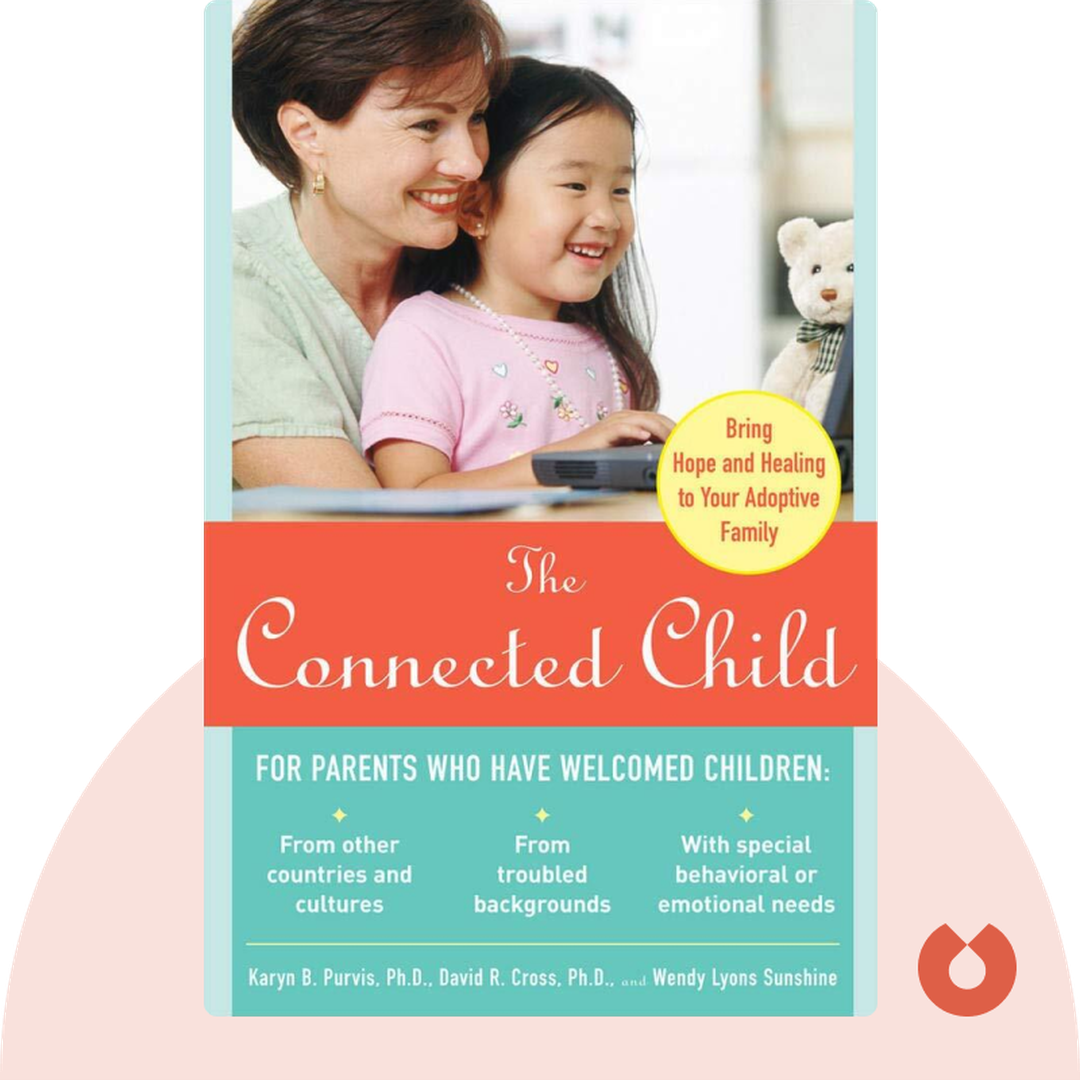
The Connected Child (2007) is an insightful guide for parents of adopted and foster children. Children from deprived or abusive backgrounds have unique needs. By taking a multipronged approach including behavioral interventions, good diet and exercise, and lots of nurturing, parents can play a vital role in helping their children heal.
Who Should Listen to The Connected Child?
- Parents who are considering adopting or fostering a child
- Teachers or social workers who interact with at-risk youth
- Anyone who’s ever had a showdown with a toddler in the cereal aisle
Books Similar to The Connected Child
Readers who enjoyed this also liked these titles.