If You're Curious About These Questions...
You should listen to this audiobook
- What’s the secret to unlocking better deals by trading like an ancient merchant in today’s modern economy?
- What if you could transform your negotiation results by moving beyond the price tag and mastering a five-step process from the world's oldest economies?
- Have you ever wondered why traditional negotiation tactics often fall short, and how a 'bartering mindset' could be the missing key to your professional success?
Listen to The Bartering Mindset — Free Audiobook
Loading player...
Key Takeaways from The Bartering Mindset
- Understand why the traditional monetary mind-set leads to competitive behaviors that force negotiating parties to settle for smaller compromises.
- Discover how the bartering mind-set naturally fosters integrative behaviors, helping you use trust and information exchange to create win-win solutions.
- Learn to approach transactions like a traditional barterer by viewing yourself as both a buyer and a seller to encourage creative deal-making.
- Master the first step of the bartering process by defining your needs deeply and broadly to uncover the true 'why' behind your requests.
- Identify the exact value you currently provide and could potentially offer your partners to successfully negotiate better outcomes without compromising.
Learning Tools
Reinforce what you learned from The Bartering Mindset
Mind Map
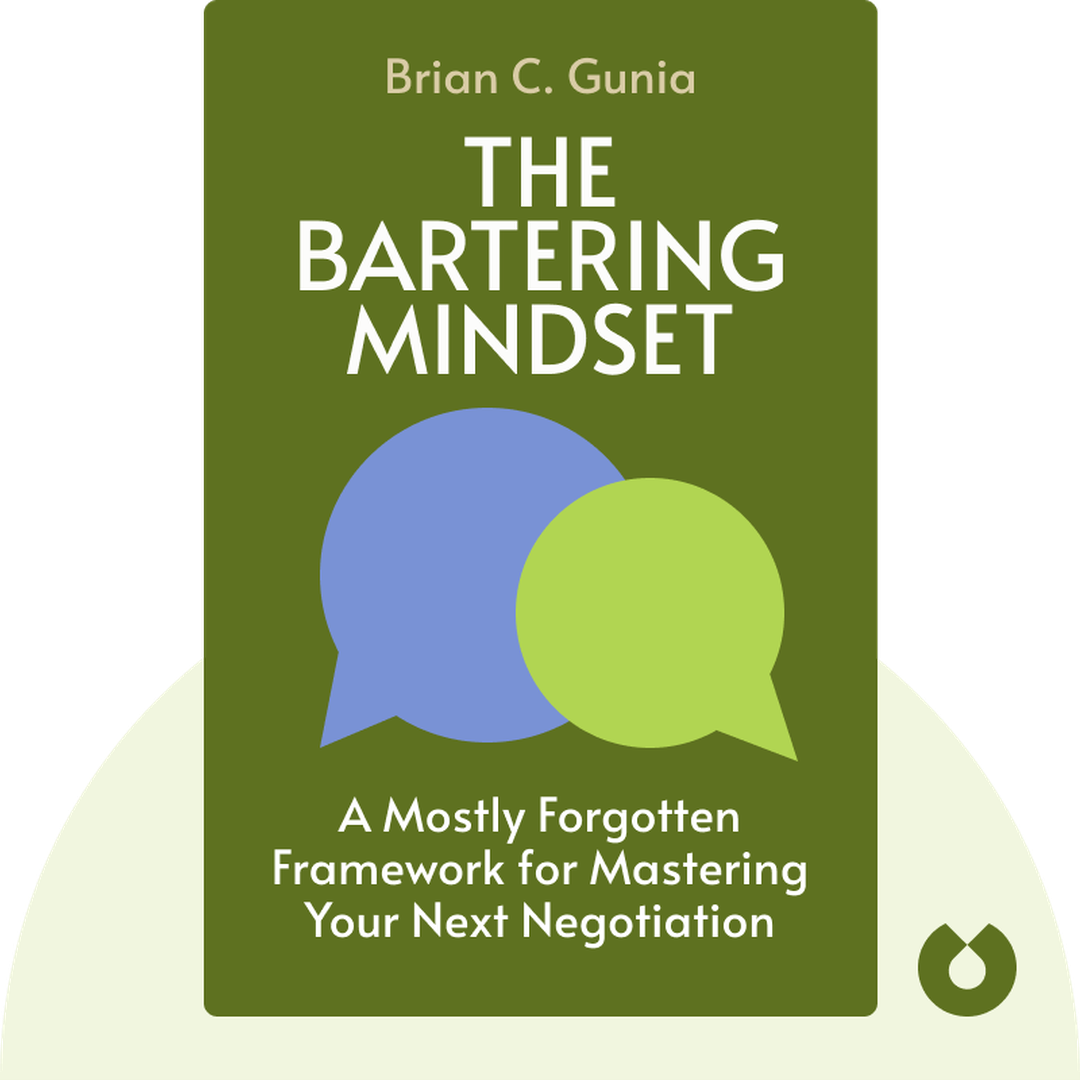
The Bartering Mindset
The Monetary Mind-set (The Problem)+
The Bartering Mind-set (The Solution)+
Step 1: Define Needs & Offerings+
Steps 2 & 3: Map Partners & Needs+
Step 4: Identify Power Partnerships+
Step 5: Test Assumptions+
Bridging Mind-sets (Closing)+
Quiz — Test Your Understanding
Question 1 of 7
What is the primary drawback of approaching negotiations with a 'monetary mind-set'?
Question 2 of 7
How does 'integrative behavior' differ from 'distributive behavior' in a negotiation?
Question 3 of 7
According to the first step of cultivating a bartering mind-set, what does it mean to define your needs 'deeply'?
Question 4 of 7
In the café example, what is the purpose of defining the 'full spectrum of your transaction partners' (Step 2)?
Question 5 of 7
When identifying 'power partnerships' in step four, what is the recommended method for assessing the holistic picture of your potential trades?
Question 6 of 7
What is your primary goal when you first approach potential 'power partnerships' to negotiate in Step 5?
Question 7 of 7
How does a Multi-Issue Offer (MIO) help successfully bridge the bartering mind-set with the monetary mind-set?
The Bartering Mindset — Full Chapter Overview
- 1Recommendation
- 2A strictly monetary mindset produces a narrow-minded approach to negotiating.
- 3The bartering mindset is clearly observable within an idealized barter economy.
- 4The first step for a negotiator with a bartering mindset is to define needs and offerings.
- 5Define the complete range of your transaction partners and identify their potential needs and offerings.
- 6Spot power partnerships by evaluating relationships and the costs and benefits of trades.
- 7Step five in developing a bartering mindset is to seek out the most powerful potential partnerships.
- 8Connect the bartering mindset to the monetary mindset by employing Multi-Issue Offers (MIOs).
The Bartering Mindset Summary & Overview
The Bartering Mindset (2019) details a method for negotiation that applies the mind-set of bartering economies of the past, in which people traded goods and services to get what they needed, to today’s monetary economy. By breaking down the bartering mind-set into a five-step process, these blinks will help you cultivate a more sophisticated approach to negotiating.
Who Should Listen to The Bartering Mindset?
- Professionals looking for a new approach to negotiation
- Psychologists and economists
- Historians and anthropologists interested in an interdisciplinary look into bartering
Books Similar to The Bartering Mindset
Readers who enjoyed this also liked these titles.