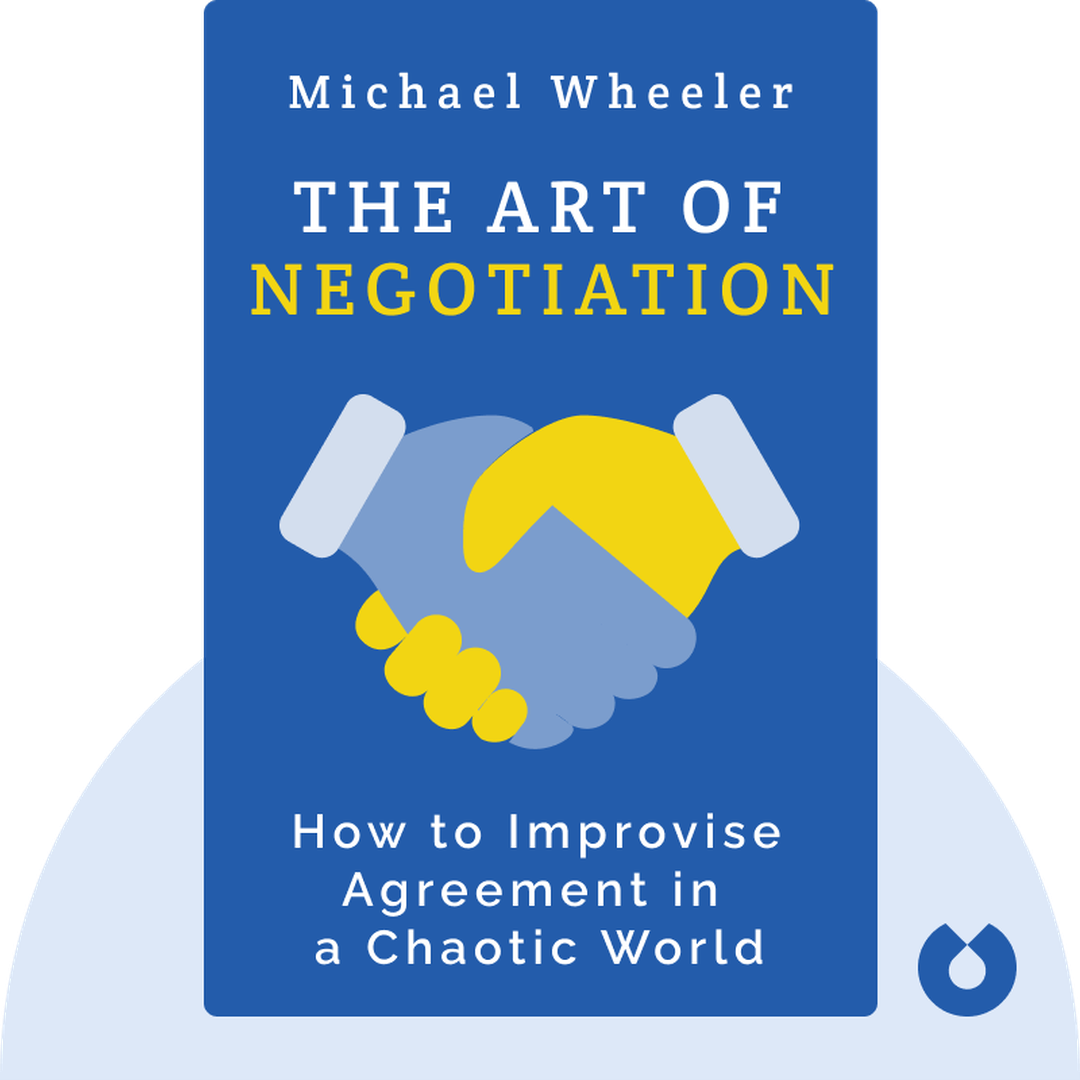
The Art of Negotiation
Start ListeningDownload Try free on iPhoneScan to start in 5 seconds
Categories:
If You're Curious About These Questions...
You should listen to this audiobook
- Have you ever wondered why the "perfect" negotiation script often fails the moment you actually sit down at the table?
- What if you could master the same improvisational skills used by jazz musicians to navigate even your most high-stakes business deals?
- Are you curious about how the world’s most successful negotiators turn unexpected obstacles into their greatest strategic advantages?
Listen to The Art of Negotiation — Free Audiobook
Loading player...
Key Takeaways from The Art of Negotiation
- Learn how to create a flexible negotiation 'map' that includes an ultimate stretch goal and minimum acceptable baselines so you always have a strong fallback plan.
- Discover the importance of strategic timing and creative problem-solving, and see how a well-prepared Plan B can turn a dead-end deal into a profitable new opportunity.
- Master your emotional state by identifying and avoiding negative triggers before a negotiation, ensuring you remain calm, alert, and fully present at the table.
- Understand why you must avoid going on 'autopilot' during routine deals by actively paying close attention to your counterpart's subtle tone of voice and body language.
- Find out how to improvise like an actor or jazz musician by embracing the golden rule of 'never saying no,' empowering you to work constructively with unexpected offers.
Learning Tools
Reinforce what you learned from The Art of Negotiation
Mind Map
The Art of Negotiation
Preparation & Planning+
Emotional & Mental Readiness+
Improvisation & Adaptability+
Foresight & Observation+
The Negotiation Process+
Closing & Ethics+
Quiz — Test Your Understanding
Question 1 of 10
What is the primary purpose of establishing 'baselines' before entering a negotiation?
Question 2 of 10
According to the story of the lost military patrol in the Swiss Alps, what is a hidden benefit of having a negotiation plan or 'map'?
Question 3 of 10
How does the author suggest negotiators prevent themselves from falling into 'autopilot' during a discussion?
Question 4 of 10
What key rule from improvisational acting can be highly effective when applied to negotiations?
Question 5 of 10
What does the psychological experiment involving chess players reveal about negotiation?
Question 6 of 10
If you receive a workable but suboptimal offer and need to reject it without losing the deal, which technique is recommended?
Question 7 of 10
How can a negotiator create value when a deal seems financially stuck, as illustrated by the basketball player example?
Question 8 of 10
Based on studies of loss aversion, how can you increase your chances of persuading someone to agree to your proposal?
Question 9 of 10
What lesson should negotiators learn from the famous supermarket jam study?
Question 10 of 10
According to the book's perspective on ethics, what is the best guiding principle when deciding how much information to share during a negotiation?
The Art of Negotiation — Full Chapter Overview
- 1Recommendation
- 2The key to successful negotiation is planning ahead, but not necessarily sticking rigidly to that plan always.
- 3When preparing for negotiation, consider scenarios and remember to have a Plan B ready.
- 4Skilled negotiators are prepared mentally and emotionally.
- 5Do not hesitate to improvise—channel your inner actor or jazz musician.
- 6Foresight and keen observation help you make more sound decisions.
- 7The opening minutes at the negotiating table are the most critical indeed.
- 8Many seemingly unsolvable problems can be solved through creativity and a fresh perspective.
- 9Now’s the time to close the deal.
- 10Act in line with your values and treat others as you wish to be treated.
The Art of Negotiation Summary & Overview
The Art of Negotiation offers a radical approach not found in most books on negotiation: no two negotiations are the same, and thus there is no silver-bullet strategy to negotiation. Rather, it offers insights on how to develop the skills to succeed in dynamic and unpredictable negotiations.
Who Should Listen to The Art of Negotiation?
- Anyone who sweats bullets at the negotiating table
- Anyone who wants to negotiate a higher salary
- Anyone who wants to feel more secure in everyday and business communication
Books Similar to The Art of Negotiation
Readers who enjoyed this also liked these titles.