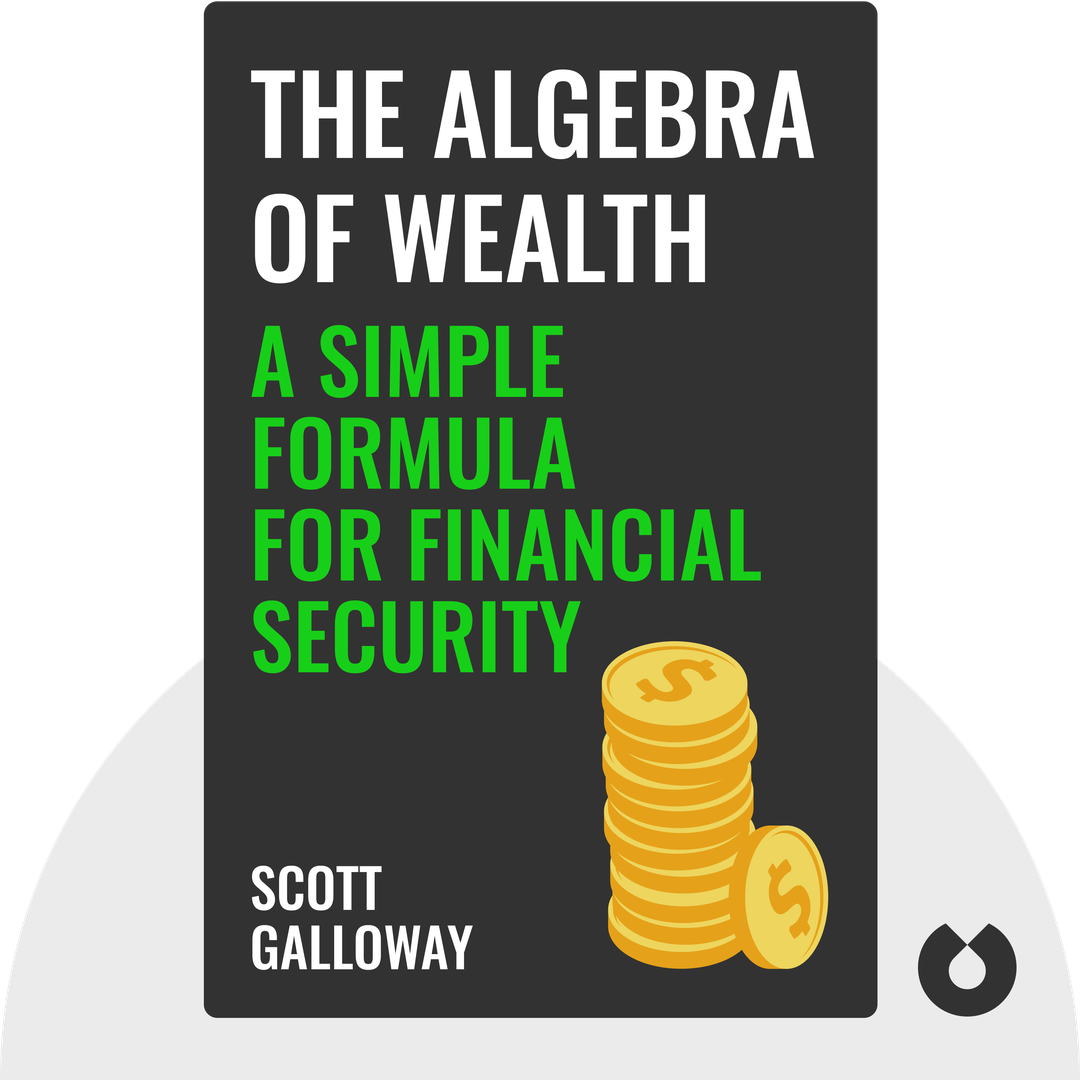
The Algebra of Happiness
Start ListeningDownload Try free on iPhoneScan to start in 5 seconds
Categories:
If You're Curious About These Questions...
You should listen to this audiobook
- Have you ever wondered why 'following your passion' might actually be the worst advice for achieving long-term success?
- What if you could use a simple set of variables to navigate the difficult trade-offs between your career, your relationships, and your health?
- Did you know that the most critical decision for your future wealth and happiness has nothing to do with your bank account?
Listen to The Algebra of Happiness — Cinematic Audio Edition
Loading player...
Key Takeaways from The Algebra of Happiness
- Understand the fundamental 'algebra of happiness' and how to balance the complex variables of meaning, love, and professional success to maximize your time on Earth.
- Discover the inevitable trade-off between work-life balance in your young adulthood and your later years, helping you make conscious choices about your career and future financial security.
- Evaluate the true cost of sacrificing your personal life for professional gain by using the 'deathbed test' to measure the current quality of your familial love and friendships.
- Learn why money is simply a means to an end, and how using it to achieve financial stability allows you to focus on the experiences and hobbies that actually bring you joy.
- Find out why investing time in loved ones is the ultimate key to happiness, and explore the author's formula for finding profound purpose through family and devoted relationships.
Learning Tools
Reinforce what you learned from The Algebra of Happiness
Mind Map
The Algebra of Happiness
Work-Life Trade-offs+
Career Strategy+
Employee vs. Entrepreneur+
Building Wealth+
Relationships & Family+
Life Metrics+
Quiz — Test Your Understanding
Question 1 of 8
How does the author describe the relationship between work-life balance in young adulthood and work-life balance in later adulthood?
Question 2 of 8
Why does the author suggest asking yourself who would show up at your deathbed?
Question 3 of 8
According to the author, what is a harsh reality about the career fields where you can achieve significant financial success?
Question 4 of 8
Which of the following is identified in the book as a crucial trait for a good employee, rather than an entrepreneur?
Question 5 of 8
How does the author define what it truly means to be 'rich'?
Question 6 of 8
What rule of thumb does the author provide for diversifying assets if you are over the age of 40?
Question 7 of 8
What is described as one of the most effective ways to keep a relationship with a life partner strong and happy?
Question 8 of 8
What actionable advice does the author give regarding the use of 'metrics' in your personal life?
The Algebra of Happiness — Full Chapter Overview
- 1Recommendation
- 2There is an unavoidable trade-off between work-life balance in early adulthood and in later adulthood for most people.
- 3Trading your personal life for professional success may carry a steep price to pay.
- 4Fulfilling activities, rich experiences, and quality time with friends and family are key to happiness itself.
- 5For financial security, pair a strong degree with a prime location and accept work in unglamorous fields when necessary too.
- 6Weigh the traits of a strong employee and an entrepreneur to decide which path you should choose to follow.
- 7Securing your finances means rethinking what the word “rich” truly implies and behaving accordingly.
- 8To savor financial security, you’ll ultimately need to pivot away from focusing on your professional life entirely.
- 9To build a happy family life, find a compatible partner, and avoid losing them by keeping score entirely.
The Algebra of Happiness Summary & Overview
The Algebra of Happiness (2019) lays out some of the most important variables involved in living a life full of meaning, love and success. It then provides a wide range of practical tips and principles on how to navigate the tensions and trade-offs involved in balancing these variables against one another.
Who Should Listen to The Algebra of Happiness?
- Young adults thinking ahead about their middle age and retirement
- Success-minded individuals weighing up entrepreneurship or pursuing a traditional career
- Family-oriented people trying to navigate the challenges of finding a work-life balance
Books Similar to The Algebra of Happiness
Readers who enjoyed this also liked these titles.