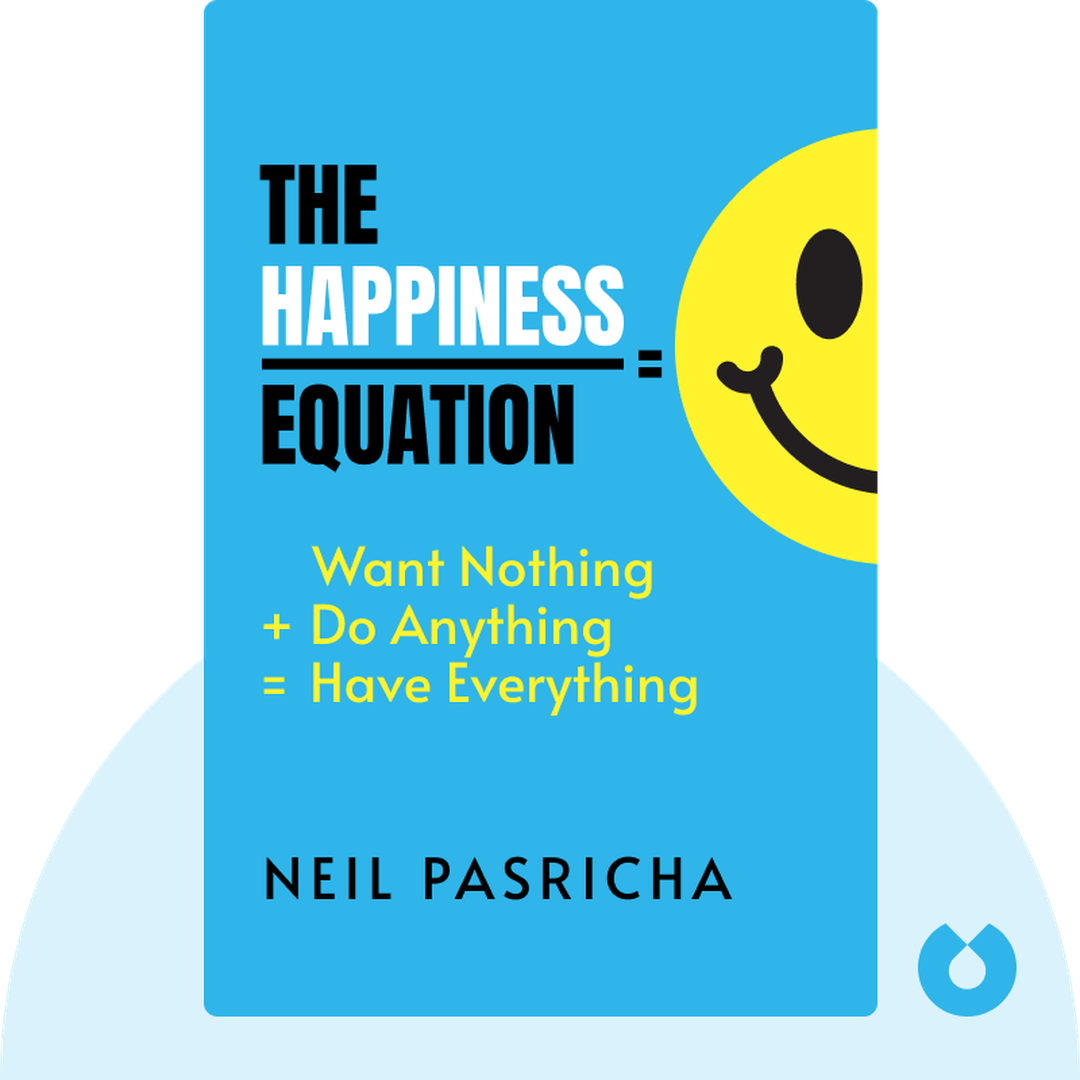
The Happiness Equation
Start ListeningDownload Try free on iPhoneScan to start in 5 seconds
Categories:
If You're Curious About These Questions...
You should listen to this audiobook
- Did you know that the traditional formula of working hard to become successful and then happy is actually backward, and what the real "happiness equation" looks like?
- Have you ever wondered why having more choices often makes us less satisfied, and how the secret of "limiting your options" can lead to instant relief?
- What if you could find your true calling and eliminate career dread by using a simple mental tool called the "Saturday Morning Test"?
Listen to The Happiness Equation — Free Audiobook
Loading player...
Key Takeaways from The Happiness Equation
- Discover why happiness is the actual precursor to success and great work, rather than the reward you get after achieving your goals.
- Learn how to capture everyday joy by practicing the '20-minute replay' journaling technique and doing things purely for the love of them.
- Understand the biological battle in your brain that causes anxiety, and overcome it by realizing the incredible cosmic luck of simply being alive.
- Find out why traditional retirement can harm your well-being and how discovering your 'ikigai'—a purposeful reason to wake up—leads to a longer, healthier life.
- Master the habit of overvaluing your time by recognizing that the free hours you keep are far more valuable than the total dollar amount on your paycheck.
Learning Tools
Reinforce what you learned from The Happiness Equation
Mind Map
The Happiness Equation
Secret 1: Happiness Precedes Success+
Secret 2: Intrinsic Motivation+
Secret 3: Cosmic Perspective+
Secret 4: Lifelong Purpose+
Secret 5: Overvalue Your Time+
Secret 6: Create Space+
Secret 7: Break Barriers+
Secret 8: Be Authentic+
Secret 9: Trust Your Intuition+
Implementation+
Quiz — Test Your Understanding
Question 1 of 9
According to the first secret of happiness, what is the correct relationship between happiness and success?
Question 2 of 9
What happens when your primary motivation is driven by external goals, money, or admiration?
Question 3 of 9
Why do negative thoughts naturally arise even when you have a positive outlook on life?
Question 4 of 9
How do the people of Okinawa, Japan, approach the concept of retirement?
Question 5 of 9
What does the comparison between the Harvard graduate and the retail assistant manager illustrate?
Question 6 of 9
How can applying Parkinson's Law help you create more time and reduce stress?
Question 7 of 9
According to the author, what are the two internal barriers that typically keep us from trying new things and finding happiness?
Question 8 of 9
What is the purpose of the 'Saturday morning test'?
Question 9 of 9
Why does the author advise against relying on the advice of others to find happiness?
The Happiness Equation — Full Chapter Overview
- 1Recommendation
- 2Begin from happiness, and choose to do things only because you sincerely enjoy doing them, not otherwise.
- 3Two struggles disrupt your happiness, yet by merely being alive, you already hold the ticket to happiness itself.
- 4Retirement alone won’t make you happy; you must remain intentionally active.
- 5How you use your time matters more than the amount you are paid ultimately.
- 6To feel less stress and make more time for what’s truly important, limit choices and create space.
- 7Break past barriers and do the things you love, even when you’re afraid.
- 8Be yourself and avoid relying on the advice of others.
The Happiness Equation Summary & Overview
The Happiness Equation (2016) unlocks nine essential secrets to living a happy life. These are guidelines that can help anyone reap the rewards that come with having a positive outlook on life. Happiness isn’t just about reducing stress and anxiety; it’s about paving the way to great work and success.
Who Should Listen to The Happiness Equation?
- Unhappy people
- Employees who dread their job
- Readers looking for guidance in life
Books Similar to The Happiness Equation
Readers who enjoyed this also liked these titles.