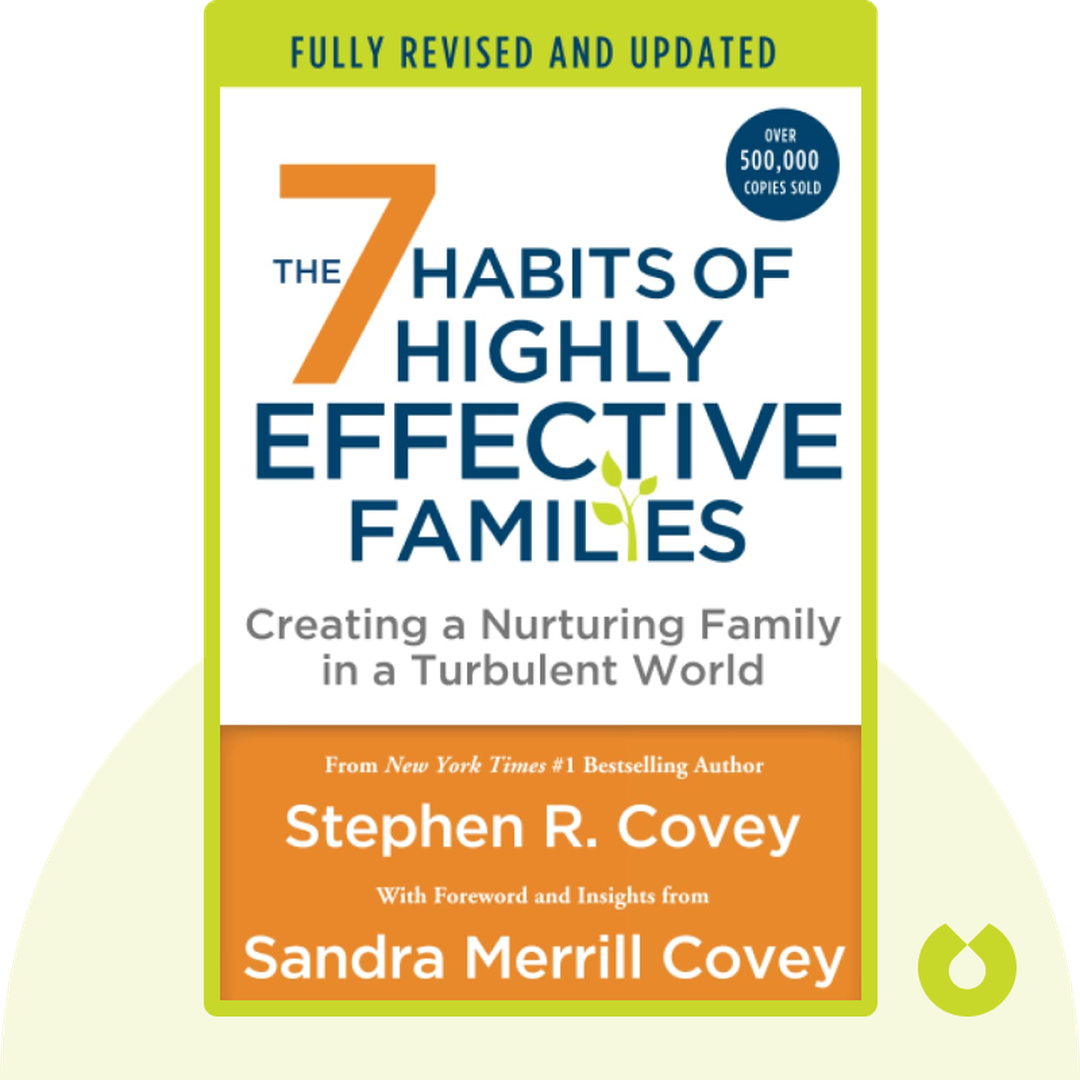
The 7 Habits of Highly Effective Families
Start ListeningDownload Try free on iPhoneScan to start in 5 seconds
Categories:
If You're Curious About These Questions...
You should listen to this audiobook
- What if you could create a "family constitution" that serves as a compass for every major decision and conflict your household faces?
- Did you know that the most successful families use a concept called the "Emotional Bank Account" to build unbreakable trust between parents and children?
- Have you ever wondered how to move your family from a state of constant survival to a culture of shared vision and deep connection?
Listen to The 7 Habits of Highly Effective Families — Free Audiobook
Loading player...
Key Takeaways from The 7 Habits of Highly Effective Families
- Discover why successful families don't rely on being right all the time, but instead use a shared roadmap to navigate challenges and get back on track.
- Learn how to stop emotional hijacking by establishing a 'family pause signal' that prevents reactive explosions and allows everyone to thoughtfully choose their response.
- Master the step-by-step process of crafting a unified family mission statement through a series of fun, inclusive gatherings rather than a single tedious meeting.
- Understand the importance of prioritizing your family foundation by scheduling non-negotiable weekly bonding times and daily micro-connection rituals.
- Find out why the competitive mindset that brings success in the workplace can be deeply destructive to your relationships when brought into your home.
Learning Tools
Reinforce what you learned from The 7 Habits of Highly Effective Families
Mind Map
The 7 Habits of Highly Effective Families
Foundational Concept+
Habit 1: Be Proactive+
Habit 2: Begin with the End in Mind+
Habit 3: Put First Things First+
Habit 4: Think Win-Win+
Habit 5: Seek First to Understand, Then to be Understood+
Habit 6: Synergize+
Habit 7: Sharpen the Saw+
Implementation Strategy+
Quiz — Test Your Understanding
Question 1 of 8
According to Habit 1 (Be proactive), what did psychiatrist Viktor Frankl realize was the one thing that could never be taken away from a person?
Question 2 of 8
What is the primary purpose of creating a 'family mission statement' as described in Habit 2?
Question 3 of 8
Which of the following is NOT one of the Coveys' four 'Big Rock' family systems recommended to help put first things first?
Question 4 of 8
In the context of Habit 4 (Think win-win), what does Stephen Covey's metaphor of the 'Emotional Bank Account' represent?
Question 5 of 8
According to Habit 5, what is a common mistake people make when trying to listen to another family member?
Question 6 of 8
How does the concept of 'synergy' (Habit 6) differ from simply compromising in a family setting?
Question 7 of 8
What does it mean to 'sharpen the saw' as described in Habit 7?
Question 8 of 8
When applying the 7 Habits to your family life, where does the author suggest you should begin?
The 7 Habits of Highly Effective Families — Full Chapter Overview
- 1Recommendation
- 2Habit one of seven. Be proactive.
- 3Habit two of seven. Begin with the end in mind.
- 4Habit three of seven. Put first things first.
- 5Habit four of seven. Think win-win.
- 6Habit five of seven. Seek first to understand, then to be understood.
- 7Habit six of seven. Synergize.
- 8Habit seven of seven. Sharpen the saw.
The 7 Habits of Highly Effective Families Summary & Overview
The 7 Habits of Highly Effective Families (1997) was written by Stephen R. Covey with, as he says, “such a passion . . . because family is what I care about most.” It’s a very personal book that talks about how the author, his wife, and nine children apply each of the habits in their family life. It can also be your guide to solving the problems you face in your family as you strive, individually and together, to become more effective.
Who Should Listen to The 7 Habits of Highly Effective Families?
- Self-improvement seekers who want to understand how effective families work
- Couples who want to raise their family in a nurturing environment
- Fans of The 7 Habits of Highly Successful People
Books Similar to The 7 Habits of Highly Effective Families
Readers who enjoyed this also liked these titles.