If You're Curious About These Questions...
You should listen to this audiobook
- Have you ever wondered why we wait until the end of the year to get serious about our goals—and what would happen if you treated every three months like a full year?
- What if the secret to doubling your results isn't learning more, but finally bridging the gap between what you know and what you actually do?
- Are you curious about how a simple shift in how you keep score can turn your biggest dreams into a series of manageable, high-impact weekly actions?
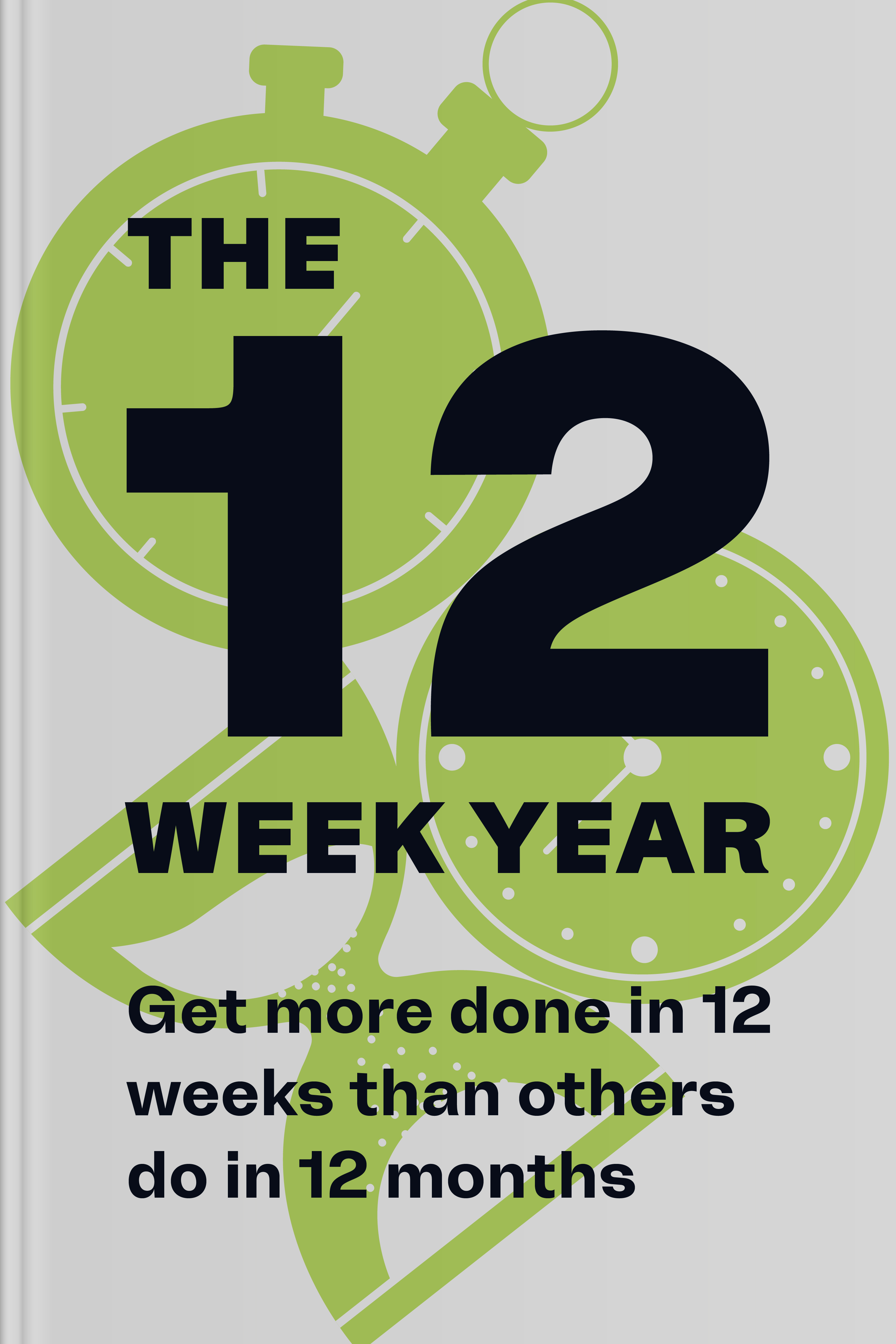
Listen to The 12 Week Year — Free Audiobook
Loading player...
Key Takeaways from The 12 Week Year
- Understand why compressing your annual goals into a focused 12-week timeframe creates the urgency, clarity, and momentum needed to actually achieve them.
- Discover why a lack of consistent execution, rather than a lack of knowledge, is the true obstacle keeping you from reaching your full potential.
- Learn how to overcome the trap of 'annualized thinking' by setting feasible, short-term deadlines that eliminate the illusion of endless time.
- Find out how attaching a strong emotional stake to your long-term vision helps you push through the short-term discomfort of taking new actions.
- Master the art of shaping your future by taking personal responsibility and recognizing that consistent daily actions are the only reliable predictors of long-term success.
Learning Tools
Reinforce what you learned from The 12 Week Year
Mind Map
The 12 Week Year
Core Philosophy+
Foundation & Planning+
Execution System+
Tracking & Mindset+
Quiz — Test Your Understanding
Question 1 of 9
According to the text, what is the primary reason the majority of people fail to live up to their full potential?
Question 2 of 9
Why do the authors argue that annualized thinking is counterproductive?
Question 3 of 9
How do the authors suggest structuring the timeframes for your personal and professional vision?
Question 4 of 9
What happens to your daily actions when you operate without a proactive plan?
Question 5 of 9
What is the primary purpose of a "Weekly Accountability Meeting"?
Question 6 of 9
In the context of the 12 Week Year measurement system, which of the following is an example of a "lead indicator"?
Question 7 of 9
According to the authors, you are highly likely to achieve your 12-week goal if you successfully execute at least what percentage of the actions in your weekly plan?
Question 8 of 9
What is a "buffer block" designed to do in your weekly schedule?
Question 9 of 9
How does the book redefine the concept of "accountability"?
The 12 Week Year — Full Chapter Overview
- 1Recommendation
- 2Turning Intentions into Clear Goals
- 3Closing the Gap Between Knowing and Doing
- 4Let Daily Actions Write the Future
- 5Choosing Commitment Over Casual Interest
- 6Building an Execution System That Supports Growth
- 7Courage, Accountability, and Starting Again
- 8A Gentle 12-Week Path to Real Progress
The 12 Week Year Summary & Overview
This audio-friendly summary explores a simple truth many people already sense: knowing what to do is rarely the problem. The real challenge is building the kind of structure—and the kind of self-trust—that makes consistent action possible.
Across seven chapters, the narration introduces the 12-week approach to planning, along with the mindset and disciplines that support it: commitment, accountability, scorekeeping, time use, and an execution system that turns goals into weekly actions. The overall tone is supportive and practical, encouraging steady progress rather than perfection.
Who Should Listen to The 12 Week Year?
- People who feel busy but not truly productive, and want a simpler way to prioritize goals and follow through.
- Anyone who tends to plan a lot, start strong, then fade—especially without a deadline or a clear weekly structure.
- Listeners who want a warm, accountability-focused mindset that emphasizes consistent action, realistic commitments, and learning from mistakes.
Books Similar to The 12 Week Year
Readers who enjoyed this also liked these titles.