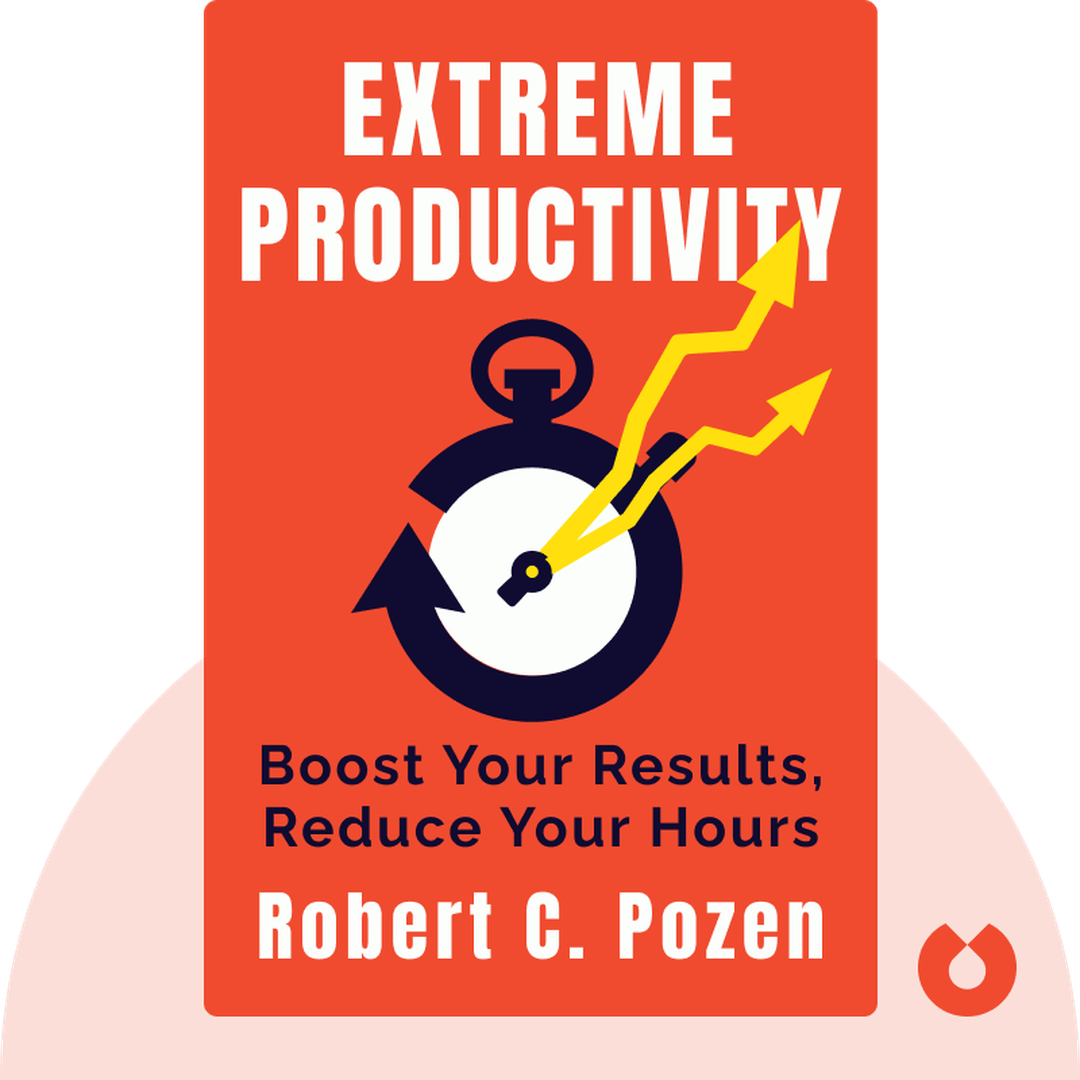
If You're Curious About These Questions...
You should listen to this audiobook
- Have you ever wondered why some people achieve twice as much in half the time, without ever feeling burnt out?
- What if you could master the art of "intelligent skipping" to focus only on the tasks that truly move the needle for your career?
- What’s the secret to ending procrastination for good by changing the way you view your daily to-do list?
Listen to Extreme Productivity — Free Audiobook
Loading player...
Key Takeaways from Extreme Productivity
- Discover why true productivity isn't about exhausting yourself, but rather expending minimal effort for maximum results to free up your schedule.
- Learn how to prioritize your workload effectively by dividing your tasks into long-term aims, medium-term objectives, and short-term targets.
- Understand the secret to beating procrastination by setting spaced-out mini-deadlines and sharing them with your boss to guarantee accountability.
- Find out how to apply the OHIO (Only Handle It Once) principle to quickly dispatch low-priority tasks and overcome unnecessary perfectionism.
- Master the art of efficient writing by following a structured, three-step process of brainstorming, categorizing, and outlining your ideas.
Learning Tools
Reinforce what you learned from Extreme Productivity
Mind Map
Extreme Productivity
Core Philosophy+
Goal Setting & Prioritization+
Overcoming Procrastination+
Managing Low-Priority Tasks+
Efficient Execution+
Work-Life Balance & Culture+
Quiz — Test Your Understanding
Question 1 of 7
What is the author's core philosophy regarding productivity?
Question 2 of 7
When prioritizing your aims, objectives, and targets, which tasks should you focus on first?
Question 3 of 7
How does the author suggest holding yourself accountable to the mini-deadlines you set for large projects?
Question 4 of 7
What does the OHIO principle stand for when dealing with low-priority tasks like emails?
Question 5 of 7
According to the book, what is the correct sequence of steps for structuring your writing efficiently?
Question 6 of 7
How can you actively help prevent a workplace culture that favors long hours over actual productivity?
Question 7 of 7
What is the author's actionable advice for reading faster?
Extreme Productivity — Full Chapter Overview
- 1Recommendation
- 2Prioritize your tasks and invest your time wisely.
- 3Beat procrastination with mini-deadlines that keep you accountable.
- 4Handle low-priority tasks quickly by keeping perfectionism in check.
- 5Write more efficiently by finding structure and quiet.
- 6What you deliver matters more than how much time you spend on it.
- 7Prioritize your personal life and find a flexible place to work.
- 8Final summary
Extreme Productivity Summary & Overview
Extreme Productivity (2012) is a guide to boosting your productivity through time management and expert control over the scope and requirements of your work. These blinks will teach you how to prioritize important tasks, end procrastination and generally become more efficient.
Who Should Listen to Extreme Productivity?
- People who want to meet their full potential
- Goal setters
- Victims of burnout
Books Similar to Extreme Productivity
Readers who enjoyed this also liked these titles.