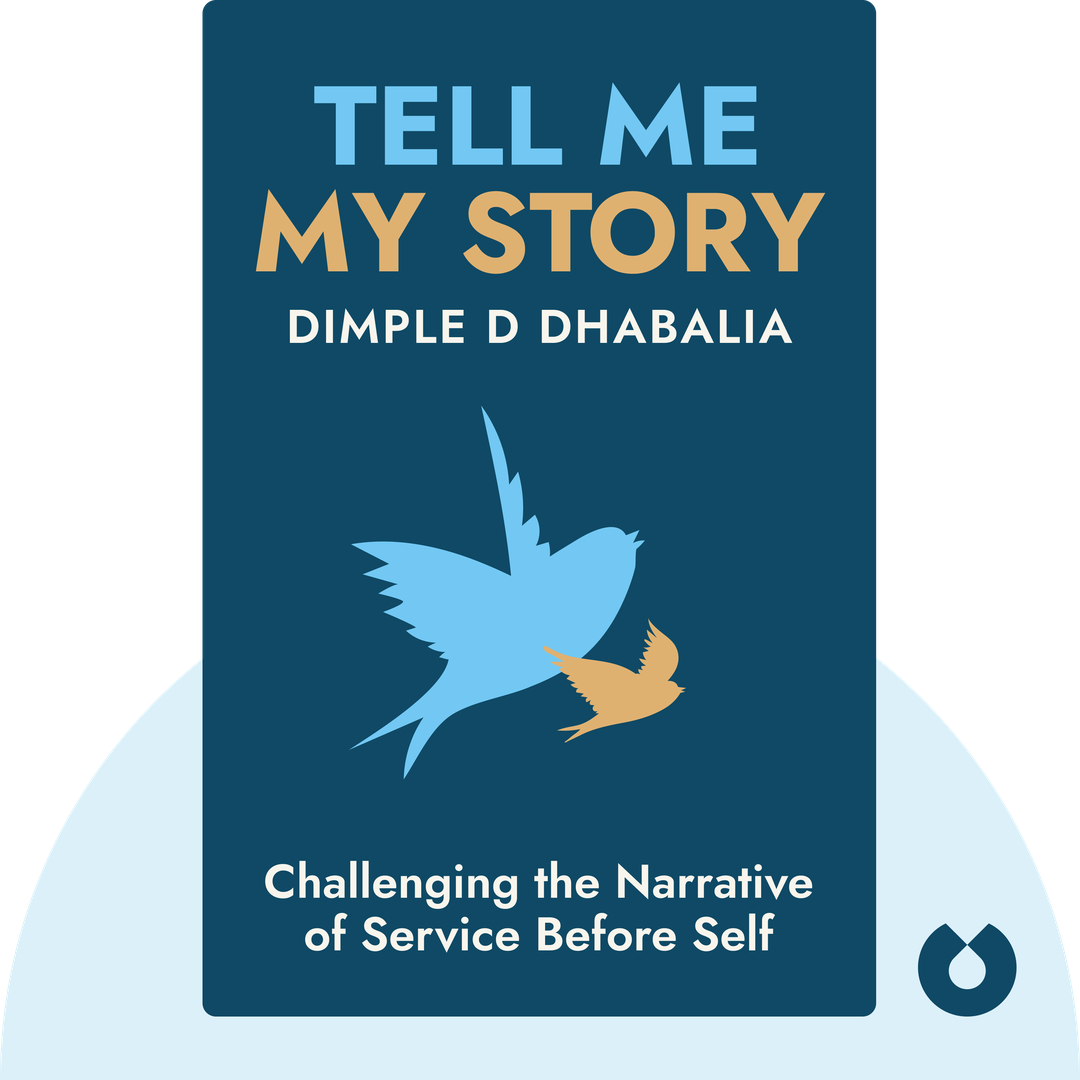
If You're Curious About These Questions...
You should listen to this audiobook
- Have you ever wondered why those who dedicate their lives to helping others are often the ones most at risk of losing themselves?
- What if you could bridge the gap between making a massive global impact and achieving true personal fulfillment without the burnout?
- What’s the secret to reclaiming your own narrative when the weight of the world’s stories starts to feel too heavy to carry?
Listen to Tell Me My Story — Free Audiobook
Loading player...
Key Takeaways from Tell Me My Story
- Discover why self-care and serving others aren't mutually exclusive in the helping professions. Learn how embracing your own healing actually enhances the quality of service you provide.
- Challenge the traditional narrative that treats exhaustion and personal sacrifice as a badge of honor. Find out how prioritizing caregiver well-being protects against vicarious trauma and compassion fatigue.
- Understand the concept of 'radical responsibility' to take immediate control of your own mental health. By focusing on accountability, self-care, and a growth mindset, you can navigate challenges without waiting for slow organizational changes.
- Master the three-step mindfulness practice of noticing, naming, and navigating your emotions. This practical framework helps you identify hidden feelings and choose intentional, self-compassionate responses during times of crisis.
- Redefine mindfulness not as the impossible task of quieting your thoughts, but as changing your relationship to them. Discover how tuning into your internal triggers helps you set better boundaries and regulate your emotional landscape.
Learning Tools
Reinforce what you learned from Tell Me My Story
Mind Map
Tell Me My Story
The Humanitarian Paradox+
Radical Responsibility+
Mindfulness in Action+
Redefining Self-Care+
Compassionate Leadership+
Quiz — Test Your Understanding
Question 1 of 5
How does Dimple Dhabalia reframe the traditional narrative of humanitarian work?
Question 2 of 5
According to the book, what are the three main pillars of 'radical responsibility'?
Question 3 of 5
How does the author describe the actual practice of mindfulness in the context of managing stress?
Question 4 of 5
Why do many individuals in mission-driven organizations feel guilty about practicing self-care?
Question 5 of 5
What does the author identify as the root cause of leaders suppressing authenticity and vulnerability in the workplace?
Tell Me My Story — Full Chapter Overview
- 1Recommendation
- 2Self-care and serving others are not mutually exclusive
- 3Organizational transformation starts with personal responsibility
- 4We’re best able to aid others when we’re mindful of ourselves
- 5Self-care isn’t mere personal luxury — it’s a professional necessity
- 6Compassion, not control, characterizes genuine leaders
Tell Me My Story Summary & Overview
Tell Me My Story (2024) is a blend of personal reflection and a rallying cry, presenting a vision of hope and a path to recovery for individuals engaged in humanitarian efforts. Underscoring the importance of supporting those who dedicate themselves to service, it advocates for a balance that allows them to thrive personally while making a meaningful impact on the world.
Who Should Listen to Tell Me My Story?
- Humanitarian workers and volunteers
- Mental health advocates
- Readers interested in social change
Books Similar to Tell Me My Story
Readers who enjoyed this also liked these titles.