If You're Curious About These Questions...
You should listen to this audiobook
- Did you know that having fewer resources can actually be your greatest competitive advantage in business and life?
- What's the secret to breaking out of a creative rut and finding hidden potential in the tools you already have?
- Have you ever wondered why chasing 'more' often leads to less success than simply learning how to 'stretch' what's right in front of you?
Listen to Stretch — Free Audiobook
Loading player...
Key Takeaways from Stretch
- Discover how to adopt a 'stretcher mindset' so you can stop endlessly chasing what others have and start creatively maximizing the resources you already possess.
- Understand why industry outsiders are often more innovative than seasoned experts, and learn how exploring completely outside your domain helps you uncover fresh solutions.
- Learn the hidden downsides of extensive planning, and see why embracing improvisation allows you to act quickly and capitalize on valuable real-time information.
- Find out why embracing strict constraints, such as tight deadlines or limited budgets, actually forces you to tap into your creativity and produce superior results.
- Realize how your expectations of yourself and others act as self-fulfilling prophecies, and discover why managing these assumptions is crucial for healthy relationships and success.
Learning Tools
Reinforce what you learned from Stretch
Mind Map
Stretch
Core Mindsets+
The Outsider Advantage+
Improvisation over Planning+
The Power of Expectations+
Routine and Relationships+
Avoiding Overstretching+
Mental Workouts+
Quiz — Test Your Understanding
Question 1 of 8
What is the fundamental difference between the 'chasing' habit and the 'stretcher' mindset?
Question 2 of 8
According to psychologist Phil Tetlock's research, why do outsiders often overshadow traditional experts when it comes to innovation?
Question 3 of 8
What is a major drawback of relying too heavily on detailed planning, according to the text?
Question 4 of 8
How do low self-expectations typically affect a person's ability to handle challenging situations?
Question 5 of 8
Based on the study of hotel managers by Ingram and Roberts, what is the most effective way to view your competitors?
Question 6 of 8
Which of the following is identified as a risk of 'overstretching'?
Question 7 of 8
In the context of maintaining a strong and focused mind, what does the term 'sleeping beauties' refer to?
Question 8 of 8
What simple activity did Stanford psychologists find makes people 81 percent more efficient compared to sitting?
Stretch — Full Chapter Overview
- 1Recommendation
- 2It’s easy to get lost chasing others’ material possessions.
- 3Outsiders are frequently more innovative than experts.
- 4Planning can make us feel safe, but it may also block out valuable information.
- 5Low expectations can harm your relationships with others and yourself.
- 6A dose of creativity and willingness to collaborate can greatly boost your success.
- 7Becoming a stretcher also entails holding back.
- 8A mental workout is truly essential for maintaining a strong, focused mind.
Stretch Summary & Overview
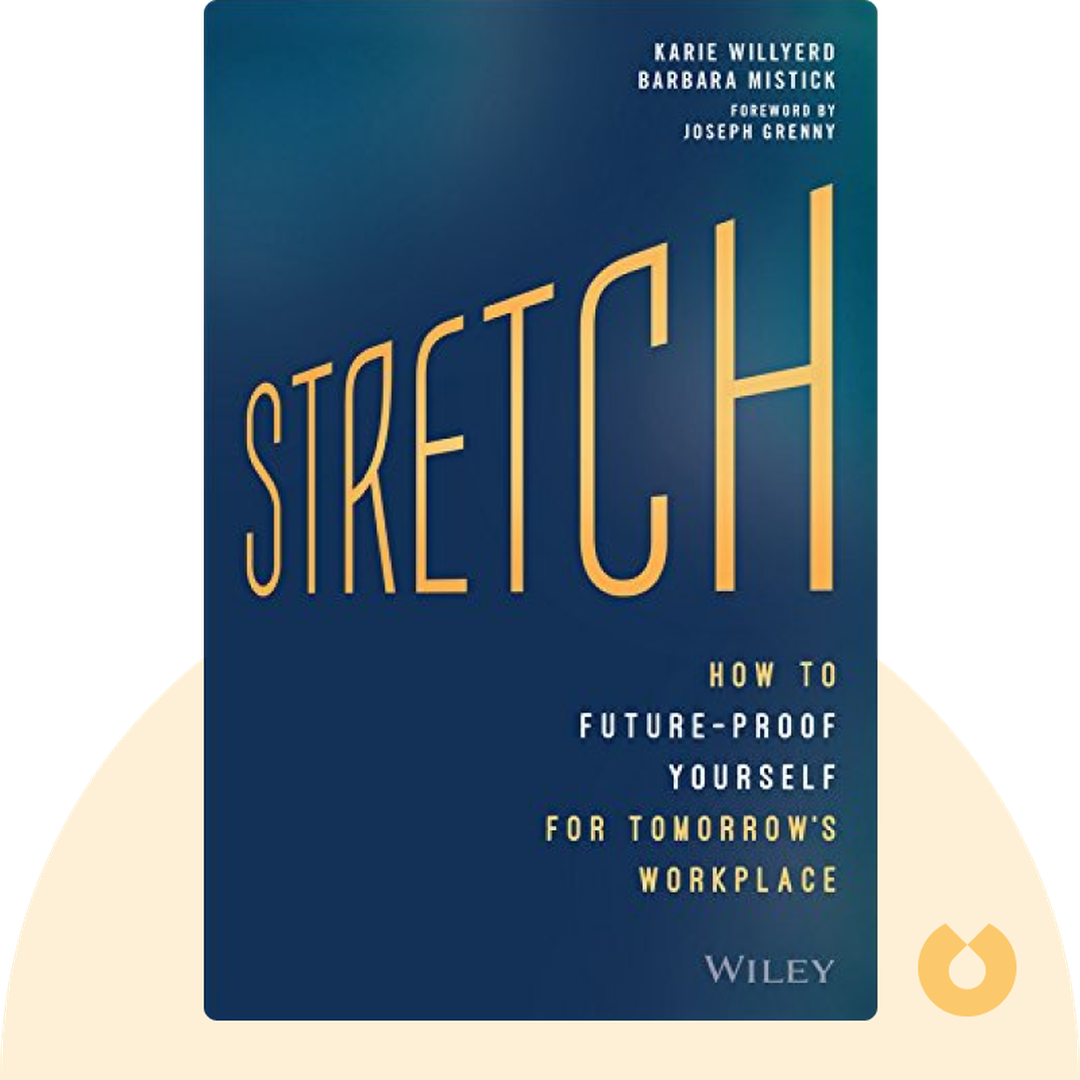
Stretch (2017) is your guide to discovering your true creative potential. These blinks will teach you how to identify the resources, both internal and external, that you need to unlock new possibilities, reach for the stars and excel at life.
Who Should Listen to Stretch?
- Entrepreneurs in search of new strategic approaches
- People who think that more is always better
- Business people stuck in a creative rut
Books Similar to Stretch
Readers who enjoyed this also liked these titles.