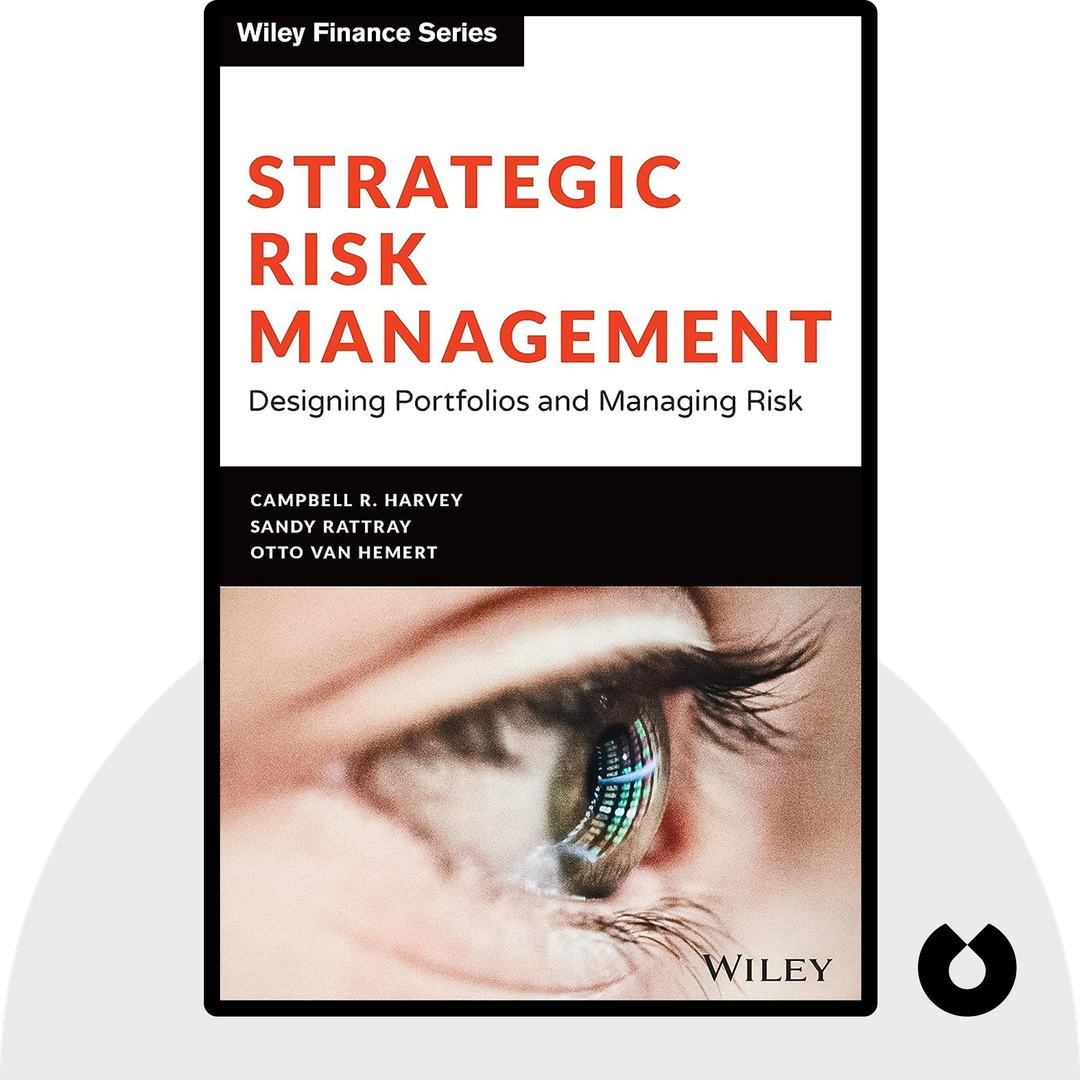
Strategic Risk Management
Start ListeningDownload Try free on iPhoneScan to start in 5 seconds
Categories:
If You're Curious About These Questions...
You should listen to this audiobook
- Did you know that the COVID-19 pandemic fundamentally broke traditional risk management models, and what top experts are now using to replace them?
- Have you ever wondered why most investors treat risk and investment as separate processes, and how a unified approach could transform your portfolio's resilience?
- What's the secret to effectively using drawdown risk controls and volatility targeting to protect your assets without sacrificing growth during market turbulence?
Listen to Strategic Risk Management — Free Audiobook
Loading player...
Key Takeaways from Strategic Risk Management
- Discover how to generate 'crisis alpha' by using diversified trend-following strategies across stocks, bonds, and commodities to protect your returns during market downturns.
- Understand why a perfectly crisis-proof portfolio is an expensive myth, and learn how combining passive hedges with dynamic momentum strategies creates affordable, long-term resilience.
- Master the concept of volatility targeting by dynamically adjusting your portfolio's leverage to maintain steady risk levels, reduce extreme price swings, and improve risk-adjusted returns.
- Learn how to avoid the pitfalls of mechanical portfolio rebalancing by applying strategic techniques that incorporate monthly cash flows and macro asset trends to better manage drawdowns.
- Recognize the crucial human element in risk management by understanding when to evaluate, hire, or replace investment managers as market conditions and personal skills change.
Learning Tools
Reinforce what you learned from Strategic Risk Management
Mind Map
Strategic Risk Management
Crisis Alpha & Resilient Portfolios+
Core Risk Management Strategies+
Fund Management Approaches+
Real-World Application+
Quiz — Test Your Understanding
Question 1 of 7
According to the text, what is the primary mechanism behind the 'crisis alpha' generated by trend-following strategies?
Question 2 of 7
Why does the text suggest that achieving a completely 'crisis-proof' portfolio is often impractical for most investors?
Question 3 of 7
How does a volatility targeting strategy adapt to changing market conditions to protect a portfolio?
Question 4 of 7
What is a major drawback of strictly mechanical portfolio rebalancing (e.g., a monthly 60-40 stock-bond rebalance) during a prolonged market slump?
Question 5 of 7
When managing the human element of a portfolio, why does the text recommend establishing preset drawdown rules for investment managers?
Question 6 of 7
Which of the following best describes the primary strength of discretionary hedge funds compared to systematic funds?
Question 7 of 7
During the COVID-19 pandemic stress test, which specific rebalancing approach was shown to significantly outperform mechanical calendar rebalancing?
Strategic Risk Management — Full Chapter Overview
- 1Recommendation
- 2Crisis alpha
- 3A crisis-resilient portfolio
- 4Risk management strategy 1: Targeting volatility
- 5Risk management strategy 2: Rebalancing strategically
- 6Risk management strategy 3: Drawdown strategies
- 7Two ways to manage funds
- 8Testing the strategy in practice
Strategic Risk Management Summary & Overview
Strategic Risk Management (2021) reimagines risk management in the wake of the COVID-19 pandemic. This new framework emphasizes a unified approach that aligns investment and risk processes – featuring defensive strategies, drawdown risk controls, volatility targeting, and rebalancing.
Who Should Listen to Strategic Risk Management?
- Savvy investors
- Financial professionals
- Finance students and enthusiasts
Books Similar to Strategic Risk Management
Readers who enjoyed this also liked these titles.