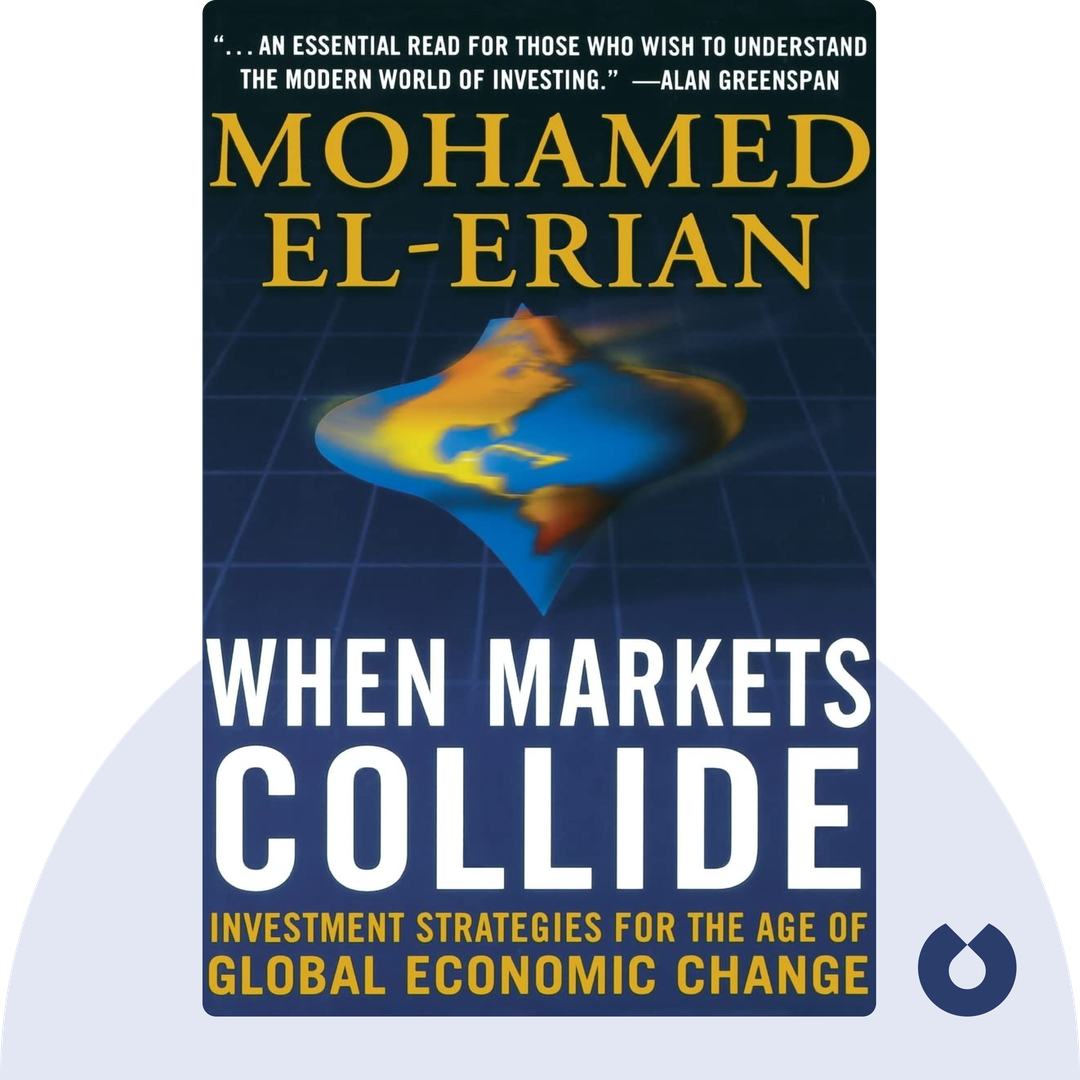
If You're Curious About These Questions...
You should listen to this audiobook
- Have you ever wondered why traditional economic models are failing to predict the massive shifts currently disrupting global markets?
- What if you could turn market volatility into a strategic advantage by identifying the hidden mispricings that most investors miss?
- Are you curious about the secret to maintaining a resilient portfolio even when the world’s most powerful financial systems are under intense pressure?
Listen to When Markets Collide — Free Audiobook
Loading player...
Key Takeaways from When Markets Collide
- Discover why relying on outdated investment assumptions will quietly undermine your portfolio in a world of shifting economic centers.
- Learn how to capitalize on market paralysis by identifying and scooping up 'cherry-quality' assets at discounted 'lemon' prices.
- Understand the 'disposition effect' and how your brain's emotional center tricks you into holding losing investments while selling winners too soon.
- Find out how to overcome costly behavioral biases and herding tendencies by building disciplined processes that block impulsive decisions.
- Master the 'three-year off-the-grid' mindset to construct a resilient asset portfolio that aligns with global macro shifts and performs without constant tinkering.
Learning Tools
Reinforce what you learned from When Markets Collide
Mind Map
When Markets Collide
Navigating Information Failures+
Overcoming Behavioral Biases+
Disciplined Asset Allocation+
Real Assets & Inflation+
Managing Overconfidence+
Quiz — Test Your Understanding
Question 1 of 5
How does the 'market for lemons' concept apply to financial crises according to the text?
Question 2 of 5
Which of the following best defines the 'disposition effect' as described in the book?
Question 3 of 5
What mental exercise does the author recommend for building an effective asset allocation strategy?
Question 4 of 5
Why do the initial benefits of investing in real assets often fade as more institutional investors enter the space?
Question 5 of 5
In the context of the book, what is 'manager risk'?
When Markets Collide — Full Chapter Overview
- 1Recommendation
- 2When noise skews prices, astute investors quickly seize undervalued assets
- 3Biases cloud judgment; awareness fosters wiser, more effective investing
- 4Build a portfolio that thrives for years without constant tinkering
- 5Real assets guard against inflation and bolster long-term portfolio resilience
- 6Overconfidence blinds investors, converting potential gains into needless losses
When Markets Collide Summary & Overview
When Markets Collide (2008) explores the major global shifts disrupting markets and challenges investors to rethink how they read signals and manage risk. It shows how mispricings and investor behavior reveal real opportunities – and how smart allocation and discipline can protect portfolios through uncertainty.
Who Should Listen to When Markets Collide?
- Investors seeking to navigate global market disruptions
- Finance professionals rethinking asset allocation strategies
- Anyone curious about behavioral finance and risk signals
Books Similar to When Markets Collide
Readers who enjoyed this also liked these titles.