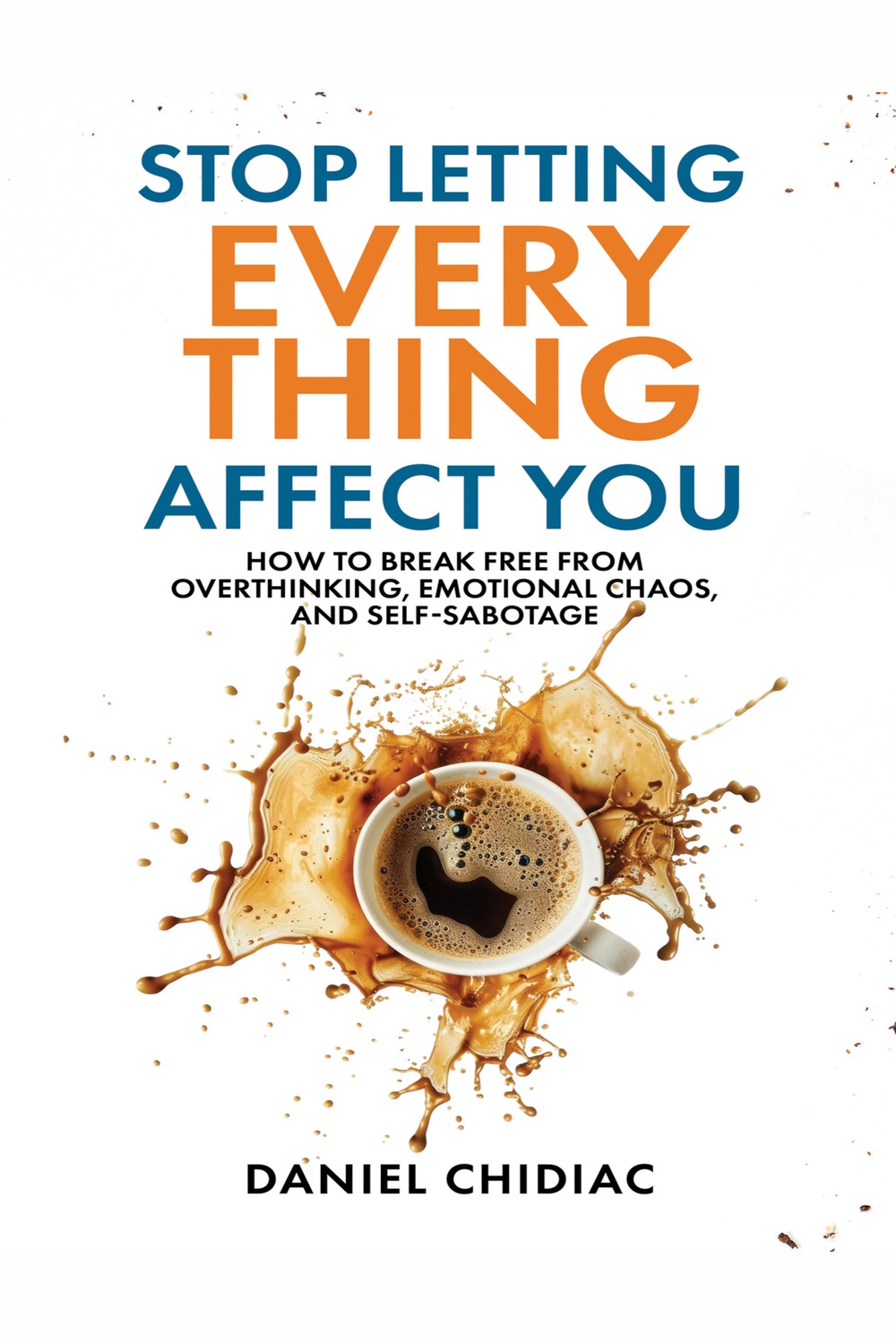
Stop Letting Everything Affect You
If You're Curious About These Questions...
You should listen to this audiobook
- Have you ever wondered why one spilled coffee, delayed message, or careless comment can hijack your entire day?
- What if you could step outside an emotional storm instead of letting every anxious thought or painful feeling define you?
- What’s the secret to setting stronger boundaries and protecting your energy—without becoming cold, guilty, or disconnected?
Listen to Stop Letting Everything Affect You — Cinematic Audio Edition
Key Takeaways from Stop Letting Everything Affect You
- Recognize that minor disruptions only cause meltdowns because your cognitive load is already maxed out. You will learn to manage the accumulated weight of daily worries before your mental system crashes.
- Break the exhausting anxiety loop by separating emotionally convincing thoughts from actual facts. By scheduling a short, daily period specifically for worries, you can stop treating every anxious thought as an emergency.
- Witness your emotions rather than becoming consumed by them by using linguistic distance and focusing on physical sensations. You will learn to precisely name your feelings to create a crucial pause between experiencing an emotion and reacting to it.
- Greet anxiety with gratitude rather than resistance to instantly eliminate the exhausting secondary struggle of fearing your own feelings. Pair this counterintuitive approach with genuine, device-free breaks to quickly restore your emotional regulation.
- Conduct a "control inventory" to shift your focus from impossible external control to actionable internal agency. You will discover how to handle rejection by redefining victory as living by your chosen values rather than seeking validation or revenge.
Learning Tools
Reinforce what you learned from Stop Letting Everything Affect You
Mind Map
Quiz — Test Your Understanding
Stop Letting Everything Affect You — Full Chapter Overview
- 1Recommendation
- 2When the Coffee Becomes the Final Straw
- 3The Prison Built from Repeated Thoughts
- 4Standing Outside the Emotional Storm
- 5Control, Rejection, and the Need to Win
- 6Putting Down What Was Never Yours
- 7The Guilt That Guards the Boundary
- 8When Someone Rewrites Reality
- 9The Empty Space After Walking Away
- 10Peace Beyond Approval and Happiness
Stop Letting Everything Affect You Summary & Overview
Daniel Chidiac examines why minor setbacks, delayed messages, criticism, rejection, and other people’s moods can feel disproportionately powerful. He connects emotional sensitivity with nervous-system overload, unresolved wounds, rumination, the desire for control, and dependence on external validation. His central message is reassuring: reactivity is not an unchangeable identity, but a practiced mental pattern that can be interrupted.
The book then moves from awareness to action. It presents techniques for observing emotions, containing worry, restoring attention, establishing boundaries, recognizing manipulation, and leaving one-sided relationships. Chidiac also explores the grief and uncertainty that follow personal growth, including the uncomfortable space between an old identity and a more authentic one. Ultimately, he argues that peace does not require permanent happiness, universal approval, or forced forgiveness. It develops through acceptance, self-respect, gratitude, deliberate action, and the ability to choose where attention and energy belong.
Who Should Listen to Stop Letting Everything Affect You?
- People whose days are frequently derailed by overthinking, criticism, rejection, or small frustrations.
- Empathetic caregivers and people-pleasers who struggle to set boundaries without guilt.
- Listeners recovering from one-sided, invalidating, or manipulative relationships and rebuilding self-trust.
Books Similar to Stop Letting Everything Affect You
Readers who enjoyed this also liked these titles.