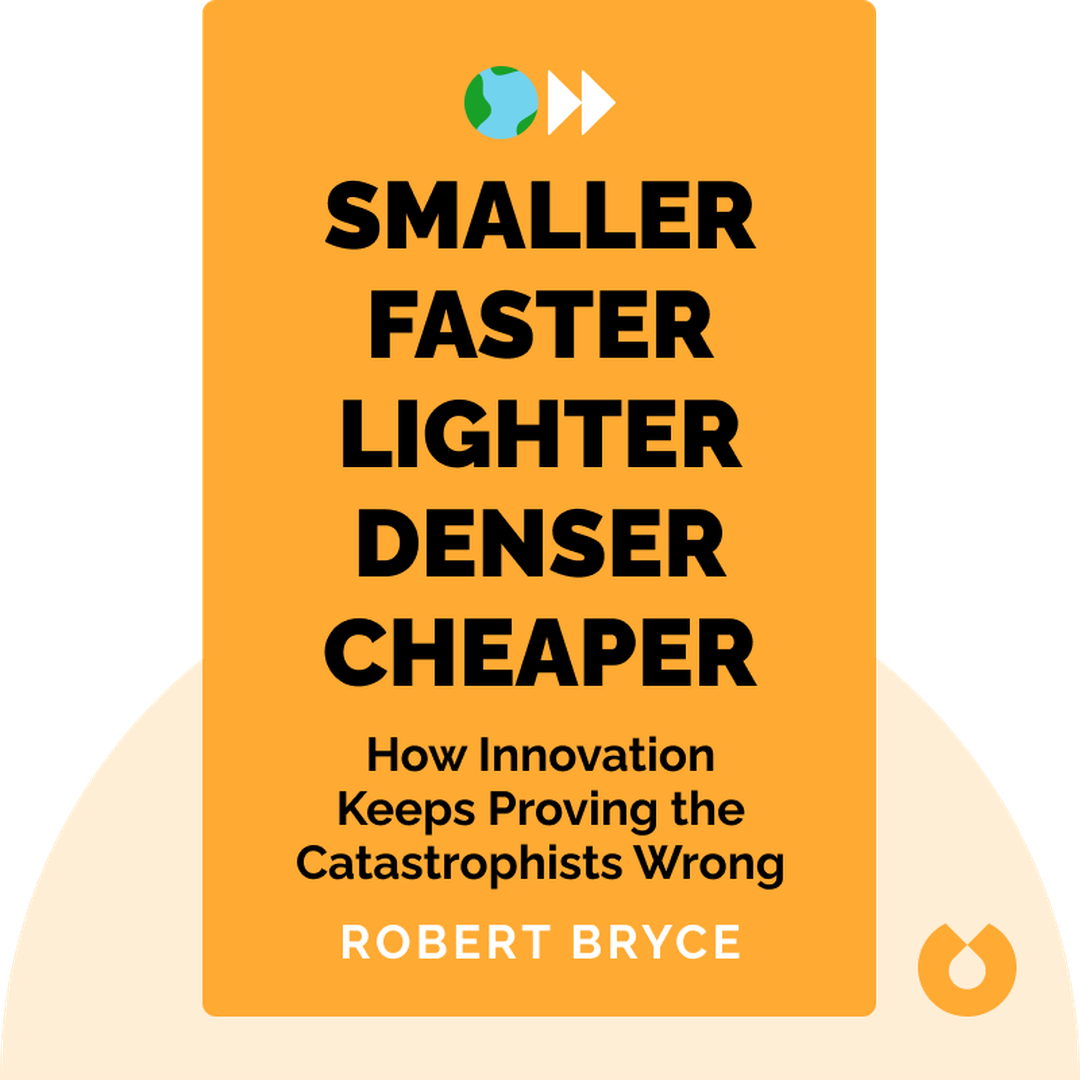
Smaller Faster Lighter Denser Cheaper
Start ListeningDownload Try free on iPhoneScan to start in 5 seconds
Categories:
If You're Curious About These Questions...
You should listen to this audiobook
- What if the solution to our environmental crisis isn't to live with less, but to embrace a future that is actually faster, lighter, and more efficient?
- Have you ever wondered why we’re hardwired to feel pessimistic about the climate, and how shifting our psychology could be the key to our survival?
- Are you curious about how the hidden trend of making technology 'smaller and denser' is paving a path toward global prosperity without sacrificing our modern way of life?
Listen to Smaller Faster Lighter Denser Cheaper — Free Audiobook
Loading player...
Key Takeaways from Smaller Faster Lighter Denser Cheaper
- Learn how to overcome 'collapse anxiety'—the paralyzing fear that the world is doomed—by recognizing that technological innovation is our most powerful tool for solving global crises.
- Understand why the popular 'de-growth' movement is a flawed strategy that would cause mass poverty rather than the environmental salvation its proponents claim.
- Discover how pushing for energy-saving, waste-reducing technologies is the only realistic way to reverse climate change without sacrificing our modern standard of living.
- Realize that while past innovations have occasionally brought negative consequences, retreating to a pre-technological past would be far more devastating for humanity than pushing progress forward.
- Explore how humanity's innate psychological need for speed directly drives the creation of highly improved, cost-effective tools that continuously revolutionize our health and daily lives.
Learning Tools
Reinforce what you learned from Smaller Faster Lighter Denser Cheaper
Mind Map
Smaller Faster Lighter Denser Cheaper
Collapse Anxiety vs. Innovation+
The Flaws of De-Growth+
The Human Need for Speed+
Limitations of Green Energy+
The Future of Dense Energy+
Quiz — Test Your Understanding
Question 1 of 6
What is 'collapse anxiety' as described in the text?
Question 2 of 6
Why does the author argue against the 'de-growth' strategy for combating climate change?
Question 3 of 6
According to the book, what is a major benefit of humanity's innate 'need for speed'?
Question 4 of 6
What is the primary scientific argument the author uses against relying solely on 'green energy' like wind and solar?
Question 5 of 6
According to the text, what would be the most likely consequence if the world switched entirely to green energy tomorrow?
Question 6 of 6
What happened in Germany when the country significantly decreased its reliance on nuclear power?
Smaller Faster Lighter Denser Cheaper — Full Chapter Overview
- 1Recommendation
- 2Worldwide crises trigger collapse anxiety, yet innovation can guide us toward the most effective solutions.
- 3People have forever pursued progress, even though innovation brings downsides too.
- 4Global leaders are promoting a new age of de-growth, but that’s not the true solution.
- 5Speeding up tools can spur the development of newer, better, and cost-efficient technology.
- 6Green power isn’t the fix we wish it was.
- 7Whether we like it or not, energy’s future is gas, oil, and coal.
Smaller Faster Lighter Denser Cheaper Summary & Overview
Smaller Faster Lighter Denser Cheaper (2014) explains the psychology behind our anxiety and pessimism regarding climate change. Rather than giving up and reverting to a medieval way of life, these blinks explain how innovation and new technologies will help humankind survive and continue moving forward.
Who Should Listen to Smaller Faster Lighter Denser Cheaper?
- People curious about the role innovation plays in our future
- Readers interested in alternative approaches to the issue of climate change
- Anyone determined not to surrender to the problems we face today
Books Similar to Smaller Faster Lighter Denser Cheaper
Readers who enjoyed this also liked these titles.