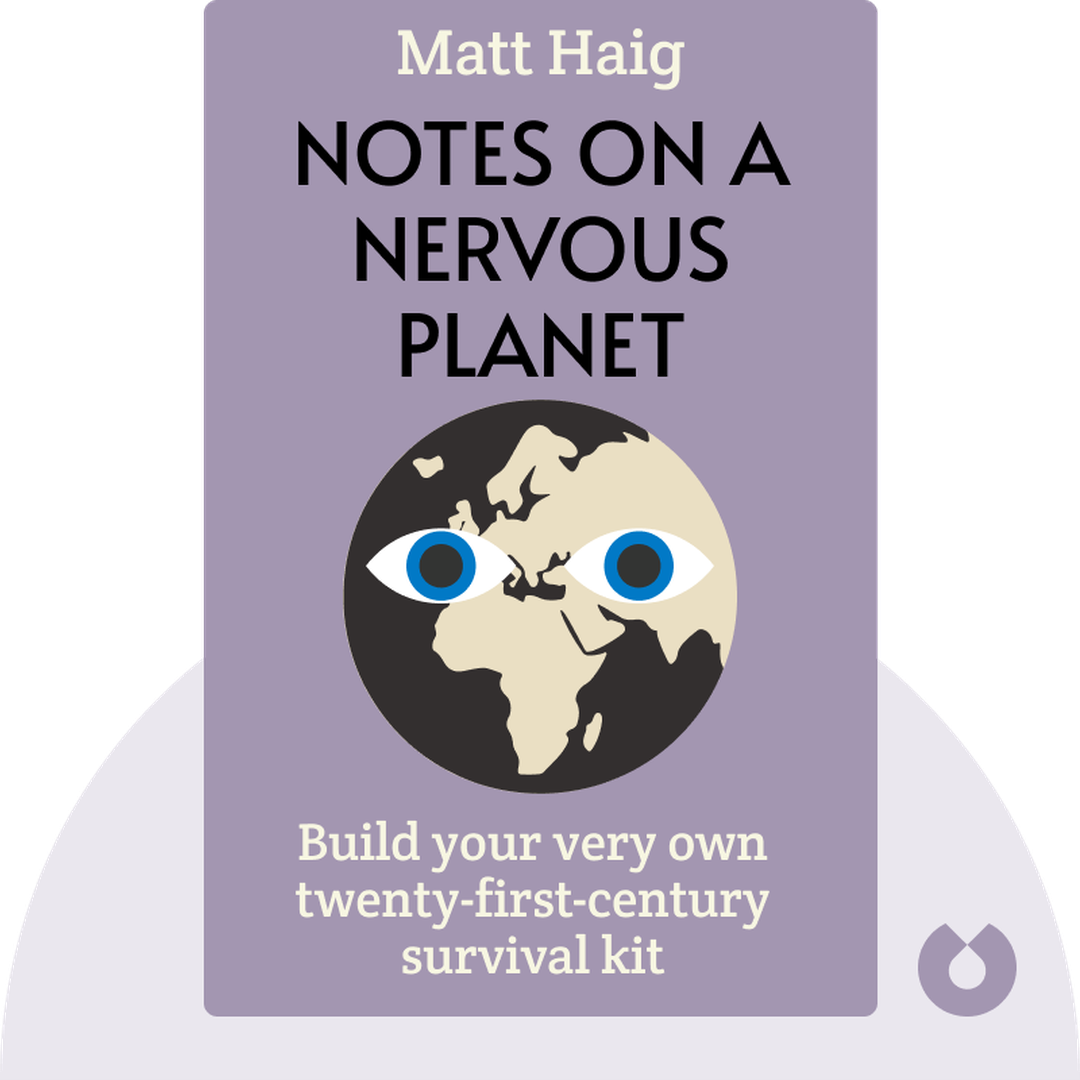
Notes on a Nervous Planet
Start ListeningDownload Try free on iPhoneScan to start in 5 seconds
Categories:
If You're Curious About These Questions...
You should listen to this audiobook
- Have you ever wondered why the very technology meant to bring us together often leaves us feeling more anxious and isolated than ever before?
- Did you know that the modern world is practically designed to keep you stressed, and what is the secret to protecting your mental health from its constant demands?
- What if you could break your phone addiction and reclaim your happiness without having to move to a deserted island?
Listen to Notes on a Nervous Planet — Cinematic Audio Edition
Loading player...
Key Takeaways from Notes on a Nervous Planet
- Understand why rapid technological progress clashes with our ancient human biology, depriving us of basic needs like sleep and real-world connection.
- Discover how news outlets and social media platforms deliberately use shock and catastrophizing to keep you anxious, clicking, and consuming.
- Learn how to combat the overwhelming excess of modern choices and information by intentionally filtering out distractions and limiting what you let into your life.
- Find out how implementing small habits of digital abstinence, like checking the news only twice a day and hiding your phone, can significantly improve your mental well-being.
- Master the art of unplugging to calm your nervous system, realizing that the digital world is not real life and you won't actually miss what you miss.
Learning Tools
Reinforce what you learned from Notes on a Nervous Planet
Mind Map
Notes on a Nervous Planet
The Problem with Modernity+
The Consumerist Trap+
Individual Coping Strategies+
Societal Solutions+
Quiz — Test Your Understanding
Question 1 of 10
According to the text, what is a primary reason the rapid advancement of technology causes so much stress for humans?
Question 2 of 10
How does the author suggest individuals deal with the overwhelming excess of information and choices in modern life?
Question 3 of 10
Why do news outlets and social media platforms often focus on shocking or catastrophic content?
Question 4 of 10
What was the result of the Swedish hospital experiment that reduced nurses' shifts from 8 to 6 hours?
Question 5 of 10
What surprising fact does the author share regarding the fear of aging?
Question 6 of 10
In the book, the author introduces the concept of a 'psychogram' to help readers do what?
Question 7 of 10
Why do modern marketing experts often rely on the concept of FUD (Fear, Uncertainty, Doubt)?
Question 8 of 10
How does the text challenge the philosophy of René Descartes regarding human health?
Question 9 of 10
According to the text, what is an unintended consequence of calling someone 'brave' for speaking out about their depression?
Question 10 of 10
What specific, actionable advice does the author give at the end of the text to help give your inner world a break?
Notes on a Nervous Planet — Full Chapter Overview
- 1Recommendation
- 2Our world is faster, messier than ever, and it’s making us ill today.
- 3To keep sane in a chaotic world, we must trim the overwhelming choices that modern life brings to us all.
- 4Don’t fear unplugging—you won’t miss the things you think you need.
- 5Work less, make time for yourself, and get sufficient sleep.
- 6Remember, nobody really worries about your appearance except you alone.
- 7Awareness is the first step to changing your behavior.
- 8Rather than constantly wanting more, try being happy with what you have already.
- 9As a society, we must improve at addressing mental health issues properly.
Notes on a Nervous Planet Summary & Overview
Notes on a Nervous Planet (2018) is a compassionate guide on how to stay happy and healthy in the messy, modern world. Drawing on personal experience, author Matt Haig explores how technology can exacerbate stress, depression and anxiety, and presents ways to guard against this.
Who Should Listen to Notes on a Nervous Planet?
- People suffering from anxiety, depression and panic disorder
- Anyone who just can’t put their phone down
- Parents, educators and coaches interested in responsible technology use
Books Similar to Notes on a Nervous Planet
Readers who enjoyed this also liked these titles.