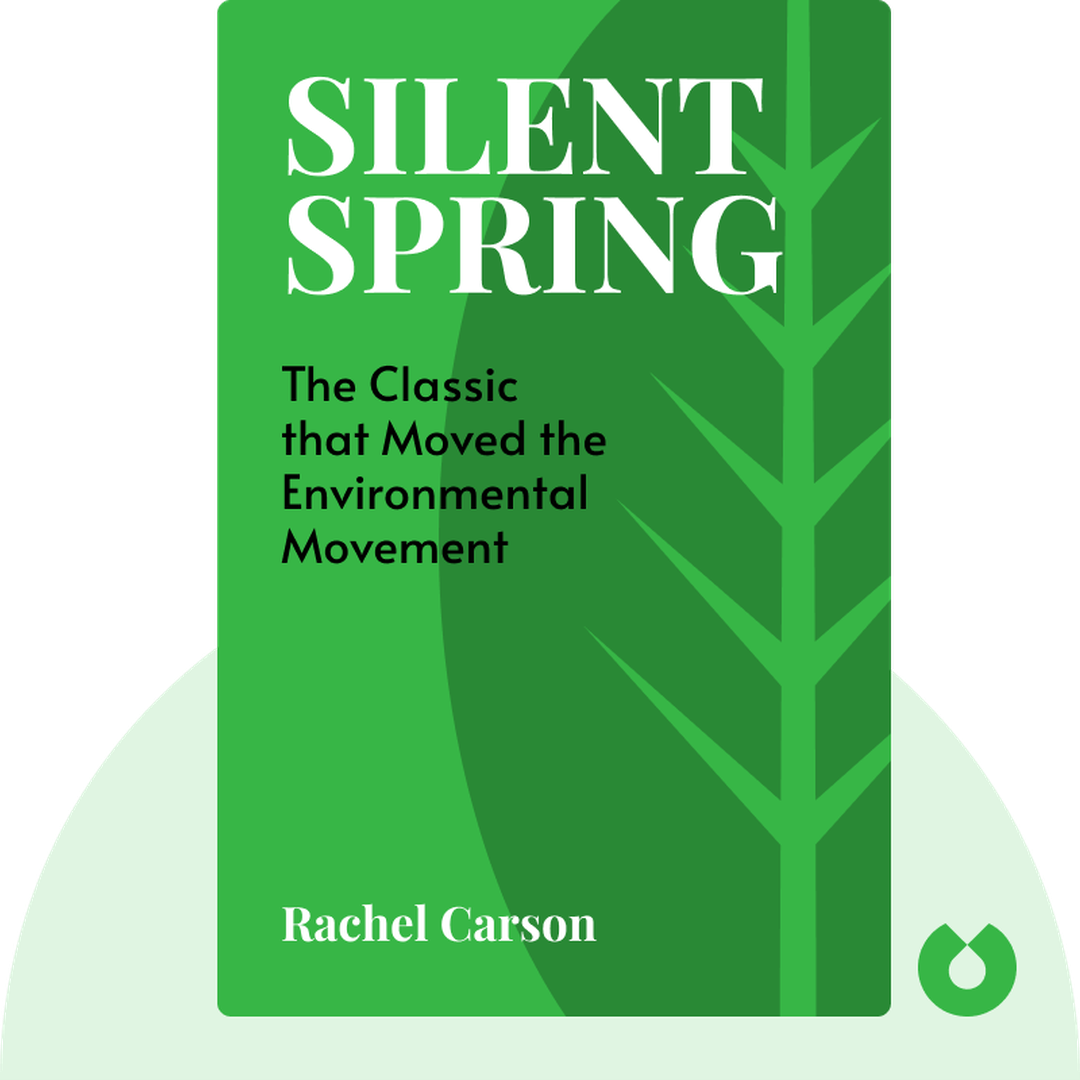
If You're Curious About These Questions...
You should listen to this audiobook
- Have you ever wondered why a season usually filled with the sounds of nature could suddenly fall completely silent?
- Did you know that the manufactured poisons used to kill common pests might be finding their way into your own body?
- What if our modern attempts to control and dominate nature are actually setting the stage for our own destruction?
Listen to Silent Spring — Free Audiobook
Loading player...
Key Takeaways from Silent Spring
- Understand the dangerous pattern of introducing new chemicals with false promises of control, only to face quiet but devastating consequences in our soil, water, and bodies.
- Discover how a single, honest observation about local pesticide spraying sparked a national movement, proving that one person's courage can shift immovable institutions.
- Learn how Rachel Carson brought the concept of ecology to the everyday citizen, revealing that the environment is intimately connected to the water we drink and the soil that grows our food.
- Explore how human industry has reversed the ancient order of life on Earth, shifting nature to be at the mercy of our mega-scale priorities and immediate profits.
- Realize why the public must demand accurate information and reject comforting half-truths about new innovations, embracing the philosophy that the obligation to endure gives us the right to know.
Learning Tools
Reinforce what you learned from Silent Spring
Mind Map
Silent Spring
Rise of Synthetic Pesticides+
Environmental Devastation+
Human Health Threats+
Ecological Imbalance+
Regulatory Failures+
Solutions & Alternatives+
Quiz — Test Your Understanding
Question 1 of 6
What historical event directly contributed to the rapid development of synthetic chemical pesticides?
Question 2 of 6
Why did synthetic chemicals like DDT pose a particularly insidious threat to drinking water systems?
Question 3 of 6
Why did many people in the early 1960s mistakenly believe that DDT was harmless to humans?
Question 4 of 6
How did individuals with no direct, occupational exposure to DDT still end up with significant levels of the chemical in their bodies?
Question 5 of 6
According to the text, why can using chemical pesticides to eliminate a specific pest sometimes result in an even worse pest problem?
Question 6 of 6
What does the author suggest as a healthier, holistic alternative to relying on synthetic chemical pesticides?
Silent Spring — Full Chapter Overview
- 1Recommendation
- 2In the post-WWII era, use of man-made poisons to kill pests surged dramatically worldwide.
- 3The evidence is unequivocal: chemical pesticides cause unintended, deadly damage to the natural world worldwide.
- 4By seeping into our food chain, pesticides pose a poisonous danger to human health as well worldwide.
- 5Using pesticides also disrupts the delicate balance of ecosystems, ultimately causing more harm than good overall.
- 6To counter these chemicals' harmful effects, we must act responsibly and pursue more comprehensive, holistic alternative solutions today.
Silent Spring Summary & Overview
Silent Spring (1962) is about humanity’s misguided attempts to control nature through the use of chemical pesticides. Find out how our using manufactured poisons to kill unwanted pests disrupts the delicate balance of nature and threatens our very existence. Ultimately, these poisons have the power to destroy the environment, infect the food we eat and contaminate our very lives.
Who Should Listen to Silent Spring ?
- Conservation and nature enthusiasts
- Environmentalists
- People concerned about the use of chemical pesticides
Books Similar to Silent Spring
Readers who enjoyed this also liked these titles.