If You're Curious About These Questions...
You should listen to this audiobook
- Did you know that our modern 'nature deficit' is physically altering our brain chemistry and fueling a global mental health crisis?
- Have you ever wondered why spending time in green spaces has such a profound impact on our happiness, according to the latest scientific research?
- What's the secret to reclaiming our well-being in an increasingly urbanized world where access to nature is becoming a luxury?
Listen to Losing Eden — Free Audiobook
Loading player...
Key Takeaways from Losing Eden
- Discover how exposure to soil bacteria and diverse outdoor microbiota can actually boost your serotonin levels and prevent chronic inflammation.
- Learn how the 'extinction of experience' fuels a vicious cycle, linking our modern indoor lifestyles to both ecological apathy and a global mental health crisis.
- Understand the 'biophilia hypothesis' and why human DNA genetically predisposes us to seek out natural, savannah-like landscapes for psychological comfort.
- Uncover the alarming reality that modern children spend less time outdoors than prison inmates, and see why early natural engagement is critical for their development.
- Find out how simple, everyday connections with the natural world—like observing a tree outside your window—can foster emotional stability and aid in psychological recovery.
Learning Tools
Reinforce what you learned from Losing Eden
Mind Map
Losing Eden
Biological & Psychological Needs+
Childhood Development+
Societal Impact & Equity+
Restoring the Relationship+
Quiz — Test Your Understanding
Question 1 of 9
How does exposure to diverse outdoor microorganisms, such as the soil bacteria M. vaccae, affect human health according to the text?
Question 2 of 9
What is the 'extinction of experience' described by ecologist Robert Pyle?
Question 3 of 9
How did Sir Humphry Repton's 18th-century landscape designs support the 'habitat theory'?
Question 4 of 9
According to Attention Restoration Theory (ART), what is the primary psychological benefit of experiencing 'soft fascination' in nature?
Question 5 of 9
What was the primary finding of the University of Illinois study conducted at the Robert Taylor Homes public housing project?
Question 6 of 9
What does the concept of 'equigenesis,' as researched by Professor Rich Mitchell, suggest?
Question 7 of 9
What is the primary goal of the developing legal framework known as 'Wild Law' or 'Earth Jurisprudence'?
Question 8 of 9
How does the author suggest our current vocabulary, such as the term 'Natural Capital,' affects our relationship with nature?
Question 9 of 9
According to the final summary, what physiological benefit is associated with experiencing feelings of awe in nature?
Losing Eden — Full Chapter Overview
- 1Recommendation
- 2A lack of engagement and connection with nature has sparked a global mental health crisis.
- 3We are genetically wired to connect with the natural world.
- 4Building a connection with nature in childhood is essential for mental and physical development.
- 5Nature’s multi-sensory stimulation restores our minds, nervous system, and immune system.
- 6People, and societies as a whole, need connection with the natural world to flourish.
- 7Fair access to nature could help narrow the socioeconomic health gap.
- 8A society-wide shift is needed to repair the relationship between humans and nature.
- 9How we think, write, and talk about nature can reconnect us with our natural biophilia.
- 10To create real, lasting change, we must rethink city design, legislation, and health.
- 11Final summary
Losing Eden Summary & Overview
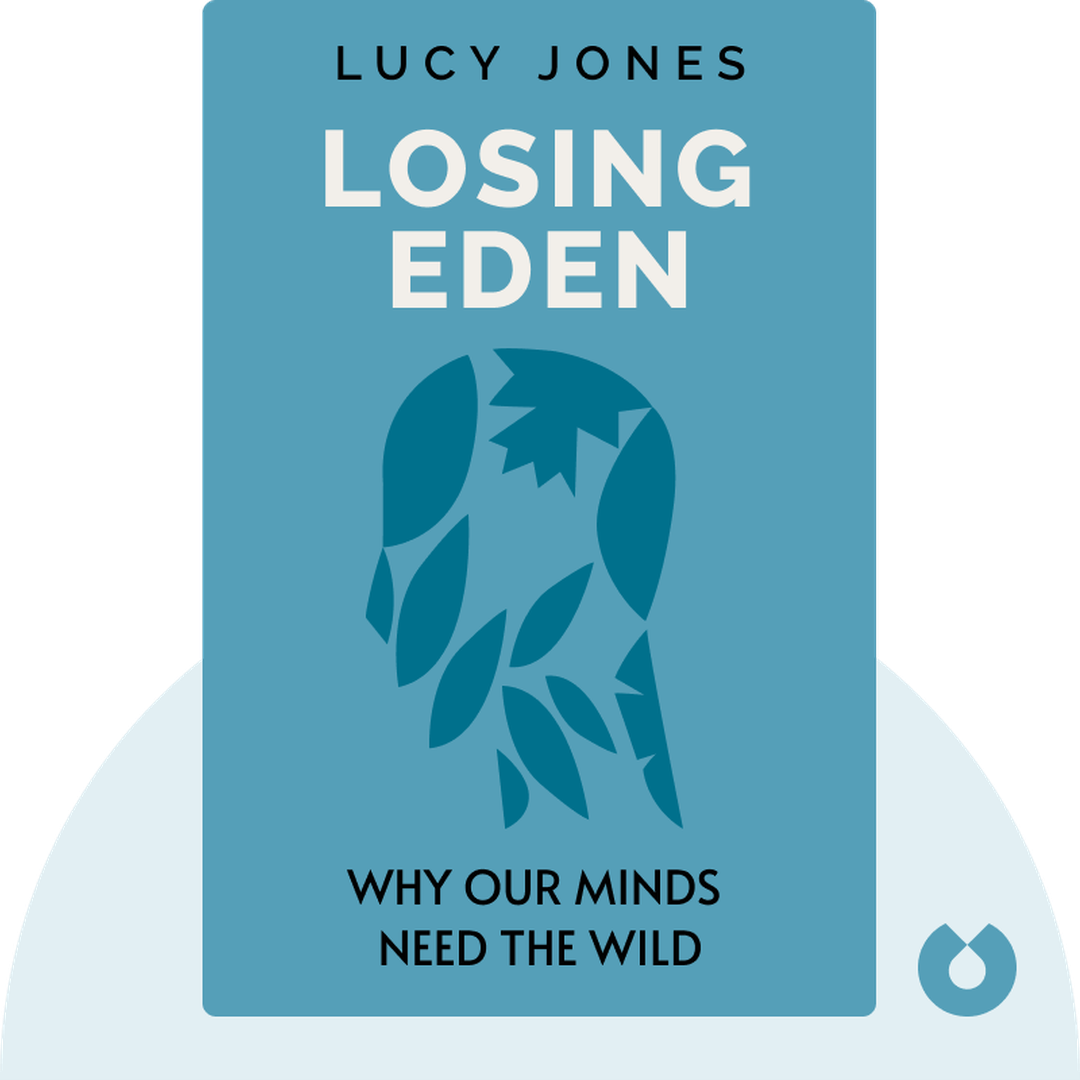
Losing Eden (2020) explores how modern alienation from the natural world is causing a global mental health crisis – and how we can reintroduce nature to our lives. Author Lucy Jones embarks on a fascinating journey through new scientific research that shows why forging a bond with nature is critical for our health and wellness, while also raising awareness about the alarming effects of its absence.
Who Should Listen to Losing Eden?
- Nature lovers who are worried about the future of the planet
- Anyone interested in boosting their mental health
- People concerned with socioeconomic inequality
Books Similar to Losing Eden
Readers who enjoyed this also liked these titles.