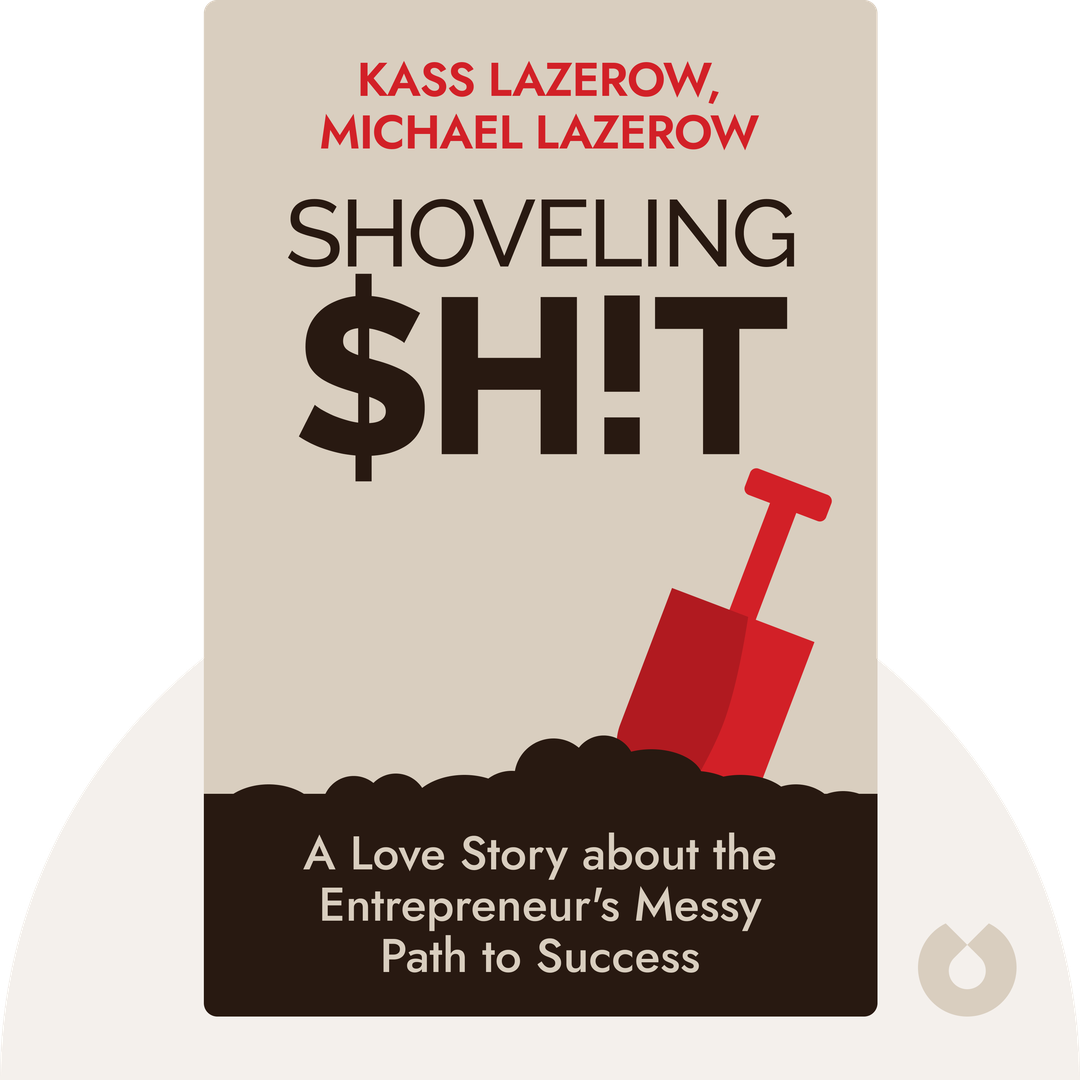
If You're Curious About These Questions...
You should listen to this audiobook
- Have you ever wondered why the 'champagne-popping' lifestyle of successful founders is often a myth, and what the messy reality of the business 'backstage' actually looks like?
- What if the secret to surviving the startup world isn't about having the most brilliant idea, but your willingness to master the 'shit-shoveling' tasks that most people avoid?
- Are you curious about the specific hard-won lessons from high-growth founders that can prepare you for the gritty challenges social media never shows you?
Listen to Shoveling $h!t — Cinematic Audio Edition
Loading player...
Key Takeaways from Shoveling $h!t
- Understand why entrepreneurship is far from a glamorous fantasy and discover why embracing the endless 'crap-shoveling' of crisis management is essential for your success.
- Acknowledge the myth of work-life balance by preparing yourself for the inevitable sacrifices you will make regarding your friendships, family time, and health.
- Learn how to survive the severe personal costs of running a business through honest communication and conscious decision-making about your long-term priorities.
- Discover how to choose the right cofounder by strictly aligning on vision, values, communication, mindset, and workload to avoid the conflict that destroys 65 percent of startups.
- Master early hiring strategies by ensuring your first 20 employees fill your specific skill gaps and using highly incentivized referrals to shape the soul of your business.
Learning Tools
Reinforce what you learned from Shoveling $h!t
Mind Map
Shoveling $h!t
The Entrepreneurial Reality+
The Nonexistent Work-Life Balance+
Solving the People Problem+
The 'Go Gauge' (Evaluating Ideas)+
Fundraising (Feeding the Baby)+
Execution & Focus+
Pivoting & Endurance+
Quiz — Test Your Understanding
Question 1 of 7
What is the authors' primary perspective on work-life balance for entrepreneurs?
Question 2 of 7
According to the authors, what is the most important factor when deciding to work with a cofounder?
Question 3 of 7
When assessing the 'financial model' aspect of the Go Gauge, what specific advice do Kass and Mike give to entrepreneurs?
Question 4 of 7
How should founders view the process of fundraising, according to the book?
Question 5 of 7
In the 'gallon jug' metaphor for company priorities, what does the 'sand' represent?
Question 6 of 7
How do the authors suggest entrepreneurs handle the fear of pivoting their business model?
Question 7 of 7
What is the core metaphor of 'shoveling $h!t' meant to convey about entrepreneurship?
Shoveling $h!t — Full Chapter Overview
- 1Recommendation
- 2Work-life balance doesn’t exist
- 3Fixing the people problem
- 4The Go Gauge
- 5Feeding your baby
- 6Sitting while shoveling
- 7A love of the shovel
Shoveling $h!t Summary & Overview
Shoveling $h!t (2025) is an honest look at the realities of being an entrepreneur. Too many entrepreneurs walk into the business world, not realizing it involves a lot more shit-shoveling and less champagne-popping than social media would have them think. Fortunately, you can go in prepared thanks to these lessons from high-growth founders who’ve just about seen it all.
Who Should Listen to Shoveling $h!t?
- New entrepreneurs or people fantasizing about becoming one
- Risk-taking investors who want to fund entrepreneurial dreams
- Anyone fascinated by the “backstage” of the business world
Books Similar to Shoveling $h!t
Readers who enjoyed this also liked these titles.