Theme Song
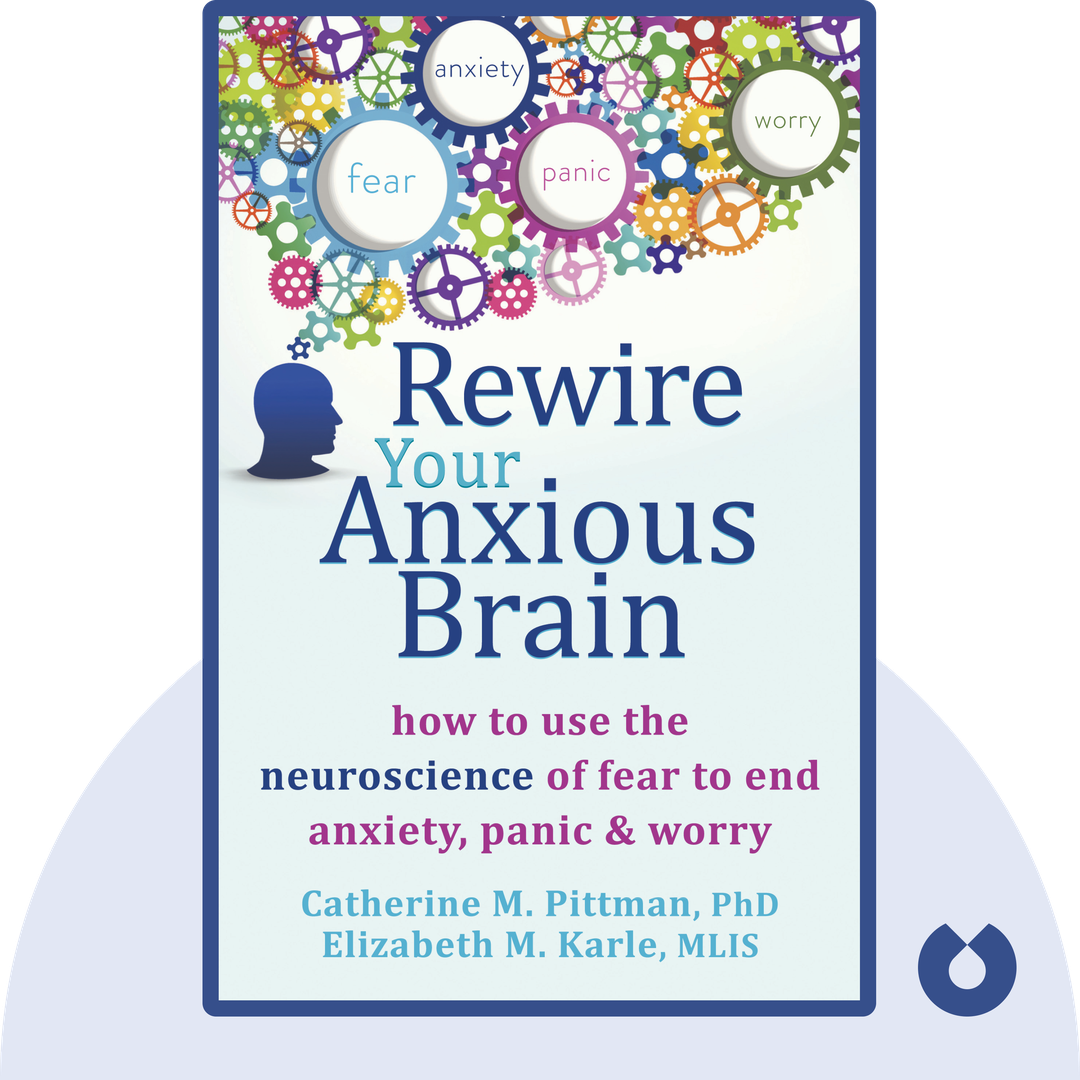
Rewire Your Anxious Brain
Start ListeningDownload Try free on iPhoneScan to start in 5 seconds
Categories:
If You're Curious About These Questions...
You should listen to this audiobook
- What's the secret to calming your anxious mind when your brain is wired to worry?
- Did you know that your brain has two anxiety centers, and understanding the difference between them could be the key to overcoming anxiety?
- What if you could rewire your brain to respond to fear in a way that frees you from anxiety's grip?
Listen to Rewire Your Anxious Brain — Cinematic Audio Edition
Loading player...
Key Takeaways from Rewire Your Anxious Brain
- Discover the two distinct anxiety pathways in your brain—the primal, subconscious amygdala and the worrying, overthinking cortex—to better understand and manage your panic.
- Understand why logic fails during a panic attack, as the amygdala operates entirely on emotional memories and physiological responses rather than language or reason.
- Learn how to rewire amygdala-based anxiety using the 'activate to generate' exposure technique, intentionally triggering anxiety to forge new, calmer neural pathways.
- Master the physical techniques of deep breathing and targeted muscle relaxation to successfully ride out an anxiety spike and provide corrective, calming information to your brain.
- Find out how the cortex uses conscious thoughts, mental images, and sensory interpretations to falsely signal danger to the amygdala, trapping you in an unnecessary cycle of worry.
Learning Tools
Reinforce what you learned from Rewire Your Anxious Brain
Mind Map
Rewire Your Anxious Brain
Core Brain Pathways+
Amygdala-Based Anxiety+
Rewiring the Amygdala+
Cortex-Based Anxiety+
Rewiring the Cortex+
Quiz — Test Your Understanding
Question 1 of 6
What are the two primary regions of the brain responsible for creating different types of anxiety?
Question 2 of 6
Why is it generally ineffective to use logic to calm down someone who is experiencing an amygdala-based panic response?
Question 3 of 6
According to the authors' concept of 'activate to generate,' what is a crucial requirement for exposure therapy to successfully rewire amygdala-based anxiety?
Question 4 of 6
How does the cortex contribute to the experience of anxiety?
Question 5 of 6
What does the term 'cognitive fusion' refer to in the context of cortex-based anxiety?
Question 6 of 6
Which of the following is recommended as an effective strategy for dealing with persistent, anxiety-inducing thoughts in the cortex?
Rewire Your Anxious Brain — Full Chapter Overview
- 1Recommendation
- 2How the amygdala communicates through emotional memories
- 3Rewiring amygdala-based anxiety through exposure
- 4How the cortex creates thoughts and images that can trigger anxiety
- 5Reducing cortex-based anxiety by changing your thought patterns
- 6Final Summary
Rewire Your Anxious Brain Summary & Overview
Rewire Your Anxious Brain (2015) is a powerful guide to overcoming anxiety. Based on the latest research in neuroscience, it explains how two separate regions of the brain are responsible for producing anxiety – and how each requires different strategies and approaches.
Who Should Listen to Rewire Your Anxious Brain?
- Anxiety sufferers
- Therapists looking for new strategies
- Brain science enthusiasts
Books Similar to Rewire Your Anxious Brain
Readers who enjoyed this also liked these titles.