If You're Curious About These Questions...
You should listen to this audiobook
- Did you know that your OCD is driven by two specific parts of the brain that speak different languages, and using the wrong approach might actually be fueling your anxiety?
- What if you could bypass the logic-defying loops of intrusive thoughts and physically reshape the neural pathways that trigger your compulsions?
- Have you ever wondered why traditional logic fails to stop an obsession, and what unique strategy actually works to silence the false alarms in your brain?
Listen to Rewire Your Ocd Brain — Free Audiobook
Loading player...
Key Takeaways from Rewire Your Ocd Brain
- Understand the crucial difference between temporary worries, lingering anxieties, and relentless obsessions that trap your mind in repetitive cycles.
- Discover why compulsive behaviors only offer temporary relief and why true healing requires addressing the neurological root causes of your anxiety.
- Explore the two distinct sensory pathways in your brain to understand why some anxious reactions happen before you are even consciously aware of them.
- Learn how your brain's amygdala acts as an illiterate watchman, bypassing logic to trigger urgent, subconscious panic responses to false threats.
- Recognize how conscious overthinking in your cortex can accidentally signal your amygdala to launch an uncontrollable defense response.
Learning Tools
Reinforce what you learned from Rewire Your Ocd Brain
Mind Map
Rewire Your Ocd Brain
Understanding Obsessions+
The Amygdala's Role+
Cortex-Driven Anxiety+
Managing Symptoms+
Rewiring the Brain+
Quiz — Test Your Understanding
Question 1 of 7
According to the text, what is the primary distinction between a worry and an obsessive thought?
Question 2 of 7
Why does the brain sometimes send sensory information directly from the thalamus to the amygdala, bypassing the cortex?
Question 3 of 7
What does the term 'cognitive fusion' refer to in the context of cortex-induced anxiety?
Question 4 of 7
What is the primary difference between how a person with OCD and the general population handle random, disturbing thoughts?
Question 5 of 7
How can observing and acknowledging your physical symptoms during a panic attack help reduce anxiety?
Question 6 of 7
According to the text, why is exercise highly recommended once the brain's defense response has been triggered?
Question 7 of 7
When using exposure therapy to rewire the brain, why is it crucial to resist engaging in compulsive behaviors?
Rewire Your Ocd Brain — Full Chapter Overview
- 1Recommendation
- 2Worries, Anxiety, and Obsessions
- 3The Amygdala’s Role in Anxiety and Obsession
- 4How Your Cortex Creates Anxiety
- 5Managing Obsessive Behaviors
- 6Rewiring Your Brain
- 7Final summary
Rewire Your Ocd Brain Summary & Overview
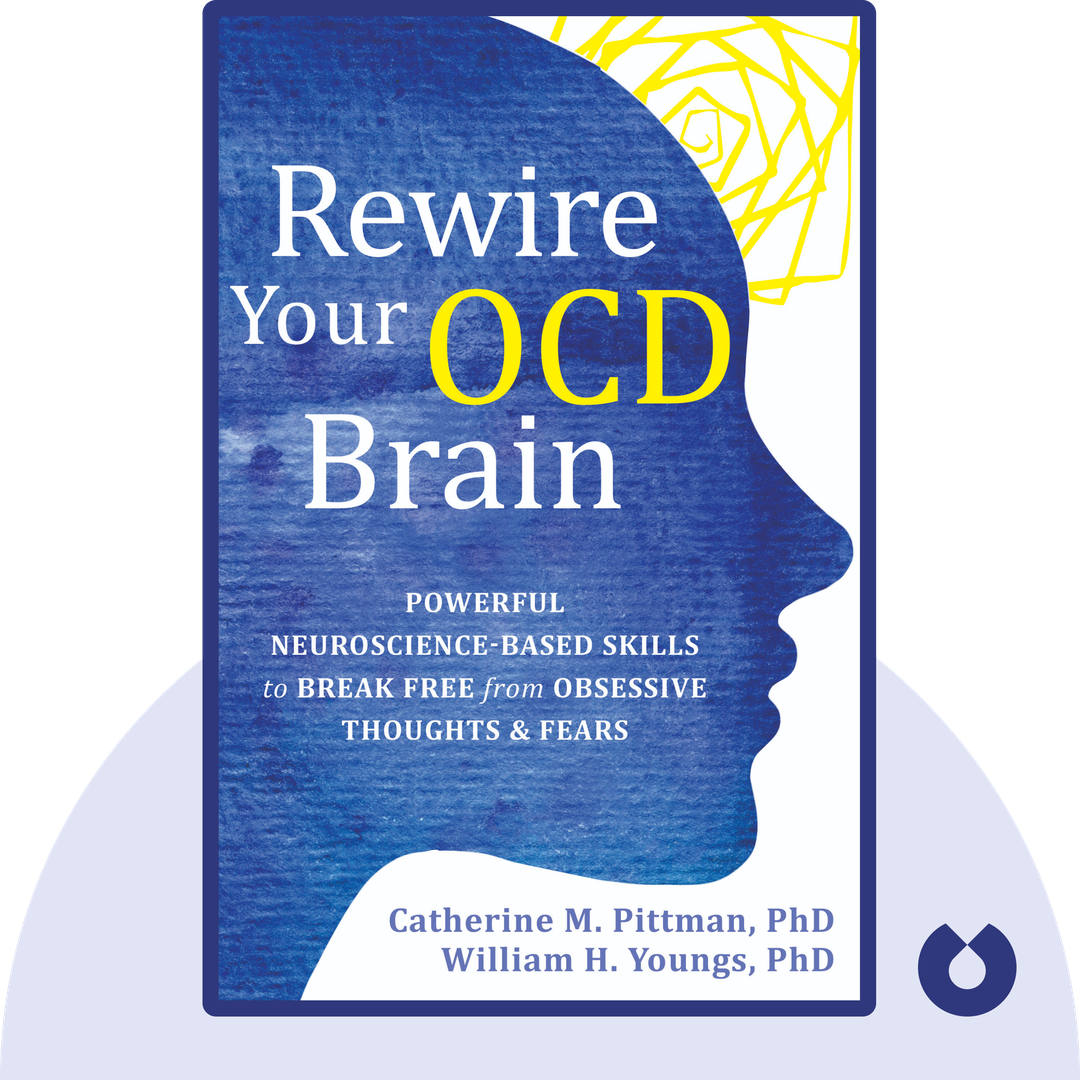
Rewire Your OCD Brain (2021) presents compelling evidence behind the origins of anxiety, and explains how this knowledge can be combined with easy-to-apply hacks to manage obsessive behavior and regain control over your life.
Who Should Listen to Rewire Your Ocd Brain?
- People dealing with anxiety, compulsive behaviors, or panic attacks
- Anyone trying to understand family members or friends dealing with OCD
- Therapists helping clients to manage their obsessions
Books Similar to Rewire Your Ocd Brain
Readers who enjoyed this also liked these titles.