If You're Curious About These Questions...
You should listen to this audiobook
- What if the cognitive decline associated with Alzheimer’s wasn’t an inevitable fate, but a condition that could actually be reversed?
- Did you know that specific, evidence-based lifestyle changes can serve as a powerful defense to fortify your brain health at any age?
- What’s the secret to moving beyond basic caregiving and implementing strategies that could significantly improve a loved one's quality of life and cognition?
Listen to Reversing Alzheimer's — Free Audiobook
Loading player...
Key Takeaways from Reversing Alzheimer's
- Understand why the traditional medical focus on brain plaques is flawed, and learn how targeting 12 modifiable risk factors gives you control over your cognitive destiny.
- Discover why relying on a single miracle drug is ineffective, and explore the comprehensive, multifaceted protocol that can actually prevent and reverse cognitive decline.
- Learn how to build an effortless brain-boosting routine by establishing morning and evening 'bookends' that incorporate a high-fat, low-carb diet, restorative sleep, and a non-toxic environment.
- Find out how to efficiently stack brain-healthy habits into your daily schedule, allowing you to combine physical activity, cognitive engagement, and social connection without overwhelm.
- Uncover the biological reasons why regular exercise acts as a 'fertilizer' for your brain, increasing hippocampus volume and promoting the growth of new neural connections.
Learning Tools
Reinforce what you learned from Reversing Alzheimer's
Mind Map
Reversing Alzheimer's
Understanding Alzheimer's+
Brain-Boosting Routines+
Physical Exercise+
The Ketogenic Diet+
Optimizing the Environment+
Quiz — Test Your Understanding
Question 1 of 7
Why does the book suggest that traditional Alzheimer's research has been fundamentally flawed?
Question 2 of 7
According to the text, what is the most effective approach to treating and preventing Alzheimer's?
Question 3 of 7
How does the book suggest individuals begin building a brain-boosting routine?
Question 4 of 7
What is 'dual-task training' in the context of brain-boosting exercise?
Question 5 of 7
How does the ketogenic diet benefit brain health, according to the book?
Question 6 of 7
What is the long-term goal of using the ketogenic diet for cognitive decline?
Question 7 of 7
Which of the following is recommended for upgrading your kitchen to support a brain-nourishing environment?
Reversing Alzheimer's — Full Chapter Overview
- 1Recommendation
- 2So what is Alzheimer’s?
- 3Create a brain-boosting routine.
- 4Move your body.
- 5Choosing the right diet.
- 6Improving your environment.
Reversing Alzheimer's Summary & Overview
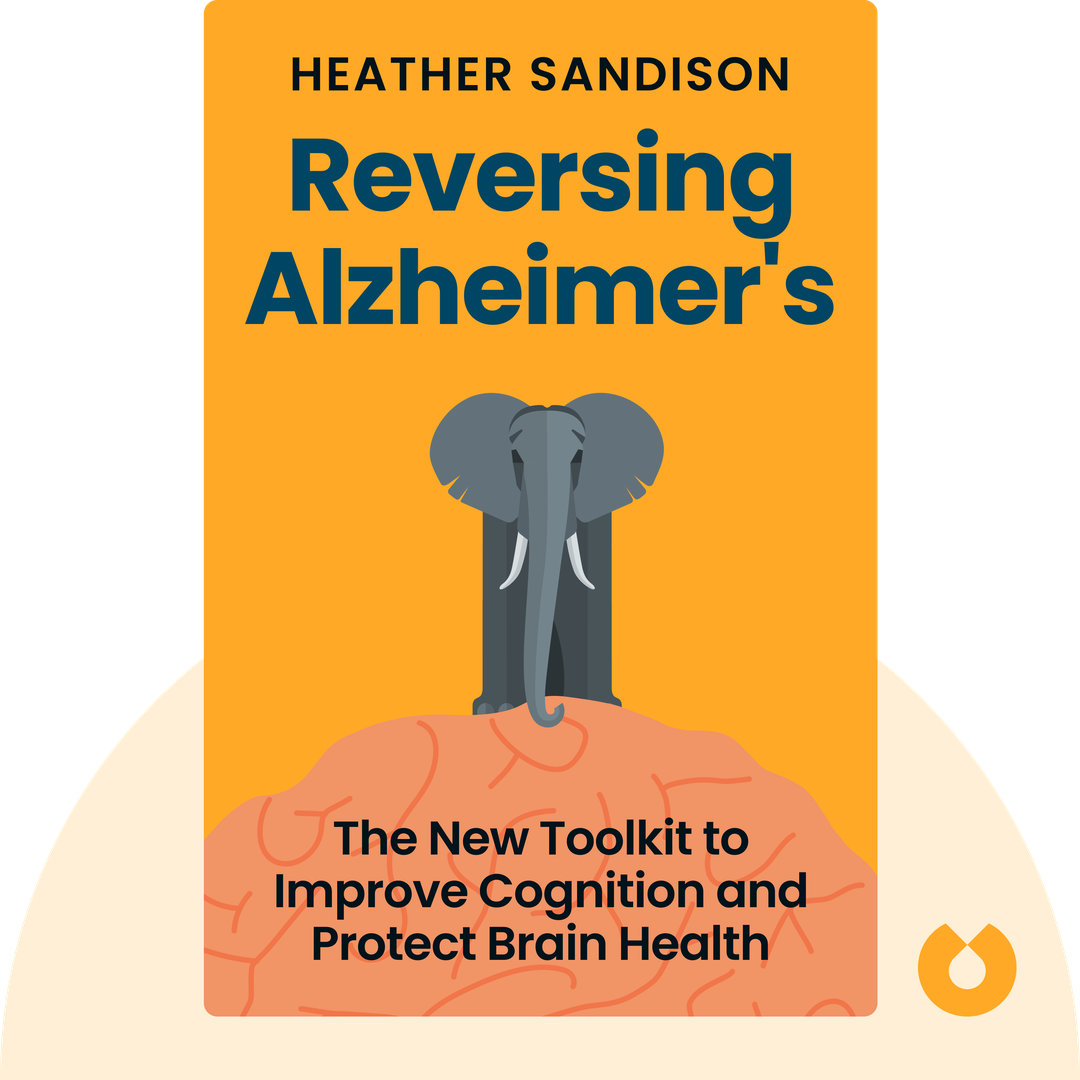
Reversing Alzheimer's (2024) offers a groundbreaking perspective on combating a devastating disease, presenting evidence-based strategies to improve cognition and quality of life for those affected. Drawing from clinical practice and cutting-edge research, it provides actionable steps for patients and caregivers to fortify brain health and potentially reverse cognitive decline – challenging the notion of Alzheimer's as an inevitable fate.
Who Should Listen to Reversing Alzheimer's?
- Family members and caregivers of those with Alzheimer's or dementia
- Healthcare professionals specializing in geriatrics or neurology
- People interested in preventative measures against age-related cognitive issues
Books Similar to Reversing Alzheimer's
Readers who enjoyed this also liked these titles.