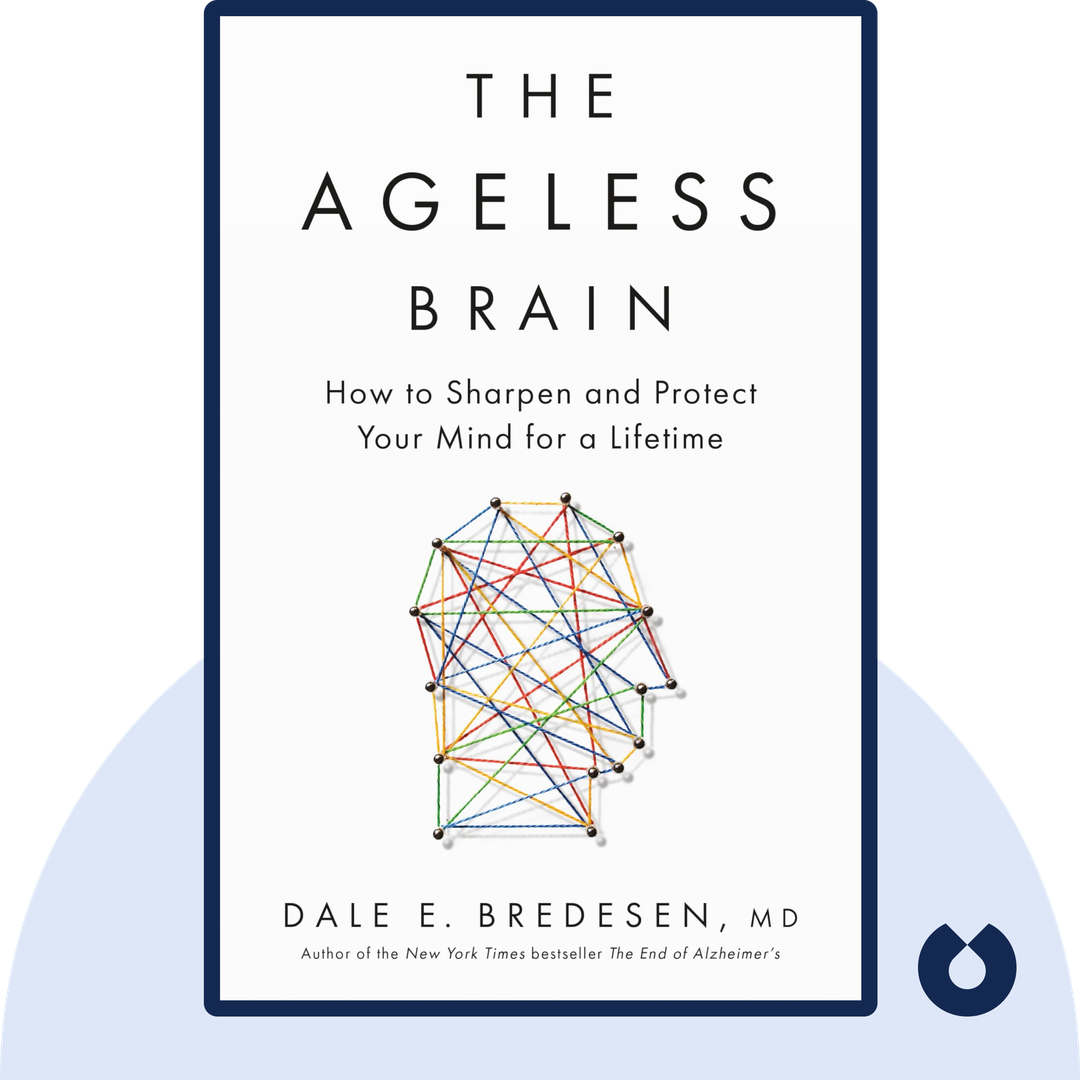
If You're Curious About These Questions...
You should listen to this audiobook
- Did you know that cognitive decline doesn't have to be an inevitable part of aging—and that it might even be possible to reverse it?
- Have you ever wondered which simple daily habits are the real keys to shielding your brain from memory loss and disease?
- What if you could follow a scientifically-backed 'roadmap' to keep your mind as sharp and agile in your 80s as it was in your 20s?
Listen to The Ageless Brain — Free Audiobook
Loading player...
Key Takeaways from The Ageless Brain
- Understand why cognitive decline is not an inevitable part of aging, and how proactive lifestyle changes can prevent or even reverse memory loss.
- Learn to recognize early warning signs of dementia instead of dismissing brain fog as normal, allowing you to intervene before significant impairment occurs.
- Discover the specific blood tests and biomarkers, such as GFAP and homocysteine, that can detect brain inflammation up to ten years before Alzheimer's symptoms appear.
- Find out how to evaluate your current mental sharpness using accessible cognitive assessments like the MoCA or SLUMS exam to establish a baseline for your brain health.
- Master a brain-boosting, mildly ketogenic diet by focusing on phytonutrients, low-mercury fish, and whole, low-glycemic fruits while eliminating ultraprocessed foods.
Learning Tools
Reinforce what you learned from The Ageless Brain
Mind Map
The Ageless Brain
Core Philosophy+
Diagnostics & Testing+
Diet & Nutrition+
Physical Activity & Sleep+
Brain Training & Neuroplasticity+
Quiz — Test Your Understanding
Question 1 of 6
What is Dr. Dale Bredesen's central argument regarding cognitive decline?
Question 2 of 6
According to the text, why is it recommended to establish a baseline GFAP (glial fibrillary acidic protein) level at age 35?
Question 3 of 6
Which dietary approach does Bredesen recommend for optimizing brain health?
Question 4 of 6
What surprising fact does the author reveal about sleep and cognitive health?
Question 5 of 6
How does Bredesen suggest structuring a 'brain training' routine to maximize neuroplasticity?
Question 6 of 6
Why does the text suggest that social interactions, especially with strangers or those with different views, protect cognitive health?
The Ageless Brain — Full Chapter Overview
- 1Recommendation
- 2Cognitive decline can be avoided
- 3Testing for brain health
- 4Diet
- 5Exercise and sleep
- 6Cognitive training
The Ageless Brain Summary & Overview
The Ageless Brain (2025) presents a comprehensive approach to preventing and reversing cognitive decline. Through diet, exercise, and other lifestyle changes, it integrates cutting-edge neuroscience with practical strategies aimed at maintaining and enhancing brain health throughout one's life.
Who Should Listen to The Ageless Brain?
- People of any age who want to prevent cognitive decline
- Caregivers of those with memory loss or Alzheimer’s
- Anyone who wants to improve their overall brain health and longevity
Books Similar to The Ageless Brain
Readers who enjoyed this also liked these titles.