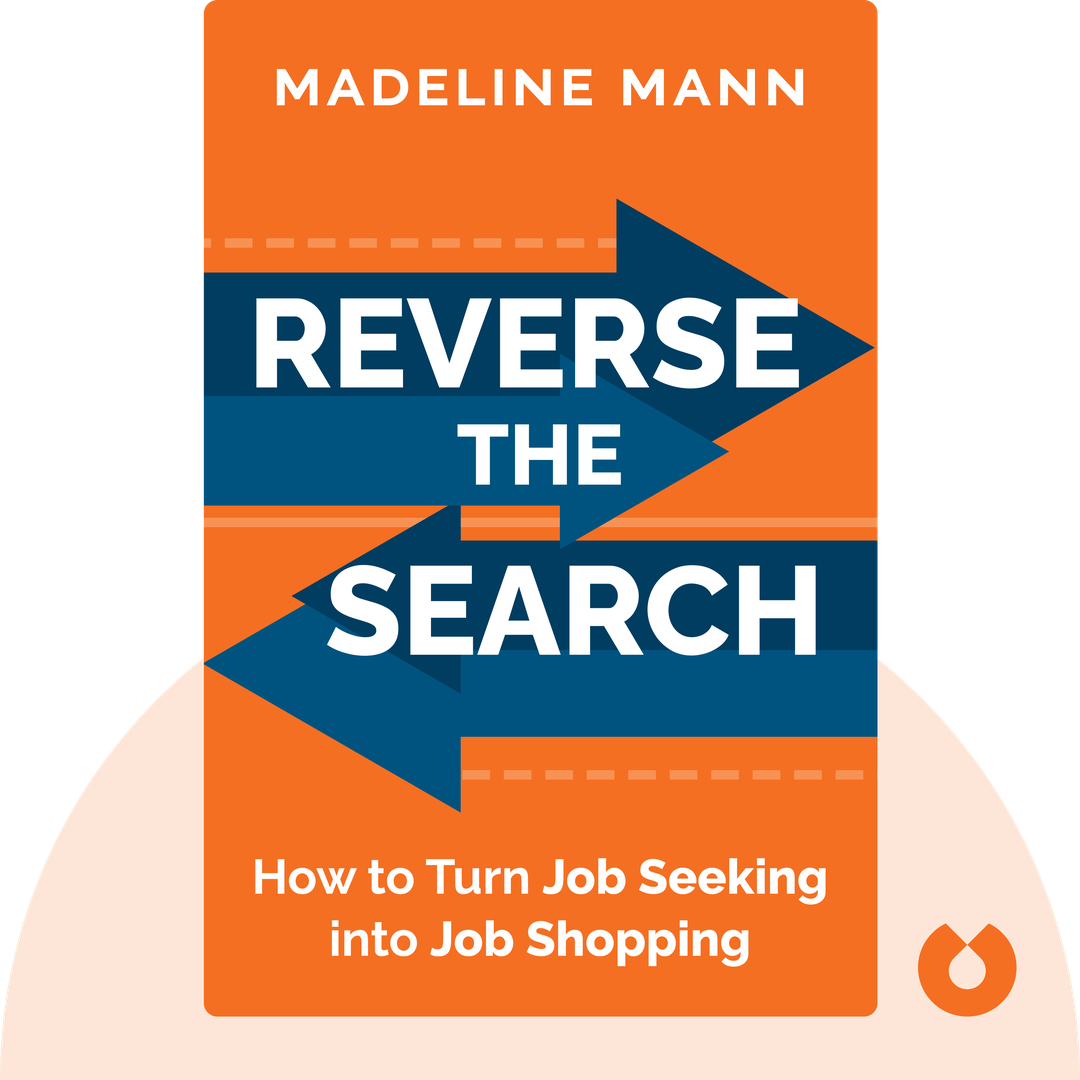
If You're Curious About These Questions...
You should listen to this audiobook
- What if you could stop being a desperate job seeker and start acting like a strategic “shopper” who chooses the perfect employer?
- Have you ever wondered why some professionals attract top-tier job offers while others spend months stuck in a cycle of endless, fruitless applications?
- Are you curious about the secret to gaining so much leverage in an interview that you can effectively name your price and secure the career you actually want?
Listen to Reverse the Search — Cinematic Audio Edition
Loading player...
Key Takeaways from Reverse the Search
- Discover the 'Job Shopper' method to shift from passively sending out applications to actively positioning yourself as a low-risk, high-value candidate.
- Understand why aiming for roles you are overqualified for or treating job hunting as a sheer numbers game actually sabotages your chances of getting hired.
- Master the 'Well-th Formula' to pinpoint your ideal career direction by aligning your core values, natural strengths, and realistic market demand.
- Learn how to avoid floating down the 'lazy river' of your career by ruthlessly filtering new opportunities against your top five non-negotiables.
- Transform your résumé from a chronological autobiography into a compelling, keyword-driven sales pitch designed to solve a specific employer's immediate problems.
Learning Tools
Reinforce what you learned from Reverse the Search
Mind Map
Reverse the Search
Job Shopper Mindset+
Define Your Direction+
Résumé & Online Presence+
Networking as the Shortcut+
Interviewing & Negotiating+
Quiz — Test Your Understanding
Question 1 of 9
According to the Job Shopper method, why is it usually a mistake to apply for roles where you are clearly overqualified?
Question 2 of 9
What is the primary danger of treating your job hunt like a 'numbers game' and sending out massive volumes of applications?
Question 3 of 9
Which three elements make up the 'Well-th Formula' for defining your ideal career direction?
Question 4 of 9
How does the author suggest you should approach writing your résumé?
Question 5 of 9
Why is it important to have at least 500 connections on LinkedIn when looking for a job?
Question 6 of 9
What does the '60 Seconds of Value' concept in networking refer to?
Question 7 of 9
What is the 'Consultative Approach' to job interviews?
Question 8 of 9
When sharing stories about past experiences in an interview, what does the 'CAR Method' stand for?
Question 9 of 9
What is the recommended strategy if an employer asks for your salary expectations early in the interview process?
Reverse the Search — Full Chapter Overview
- 1Recommendation
- 2The Job Shopper mindset change
- 3Clarify your direction
- 4Why your résumé and online presence matter most
- 5Your network is your shortcut
- 6How to nail the interview and negotiate like a pro
Reverse the Search Summary & Overview
Reverse the Search (2025) provides a framework to transform your job hunt from frustrating seeking into strategic shopping. You’ll learn practical steps to define exactly what you want, attract attention from employers, and negotiate offers effectively. Gain the leverage needed to find fulfilling work and leave draining job searches behind.
Who Should Listen to Reverse the Search?
- Job seekers exhausted by applications yielding few results or offers
- Professionals seeking fulfilling work with better pay and negotiation power
- Strategic individuals wanting a proven system for landing ideal opportunities
Books Similar to Reverse the Search
Readers who enjoyed this also liked these titles.