If You're Curious About These Questions...
You should listen to this audiobook
- What if the secret to landing your next role faster wasn't working harder on your own, but refusing to search alone?
- Have you ever wondered why traditional job hunting feels like an isolating nightmare—and how a simple shift in community could change your entire career trajectory?
- What’s the secret to building the 'emotional scaffolding' necessary to find a job that perfectly aligns with your personal goals and values?
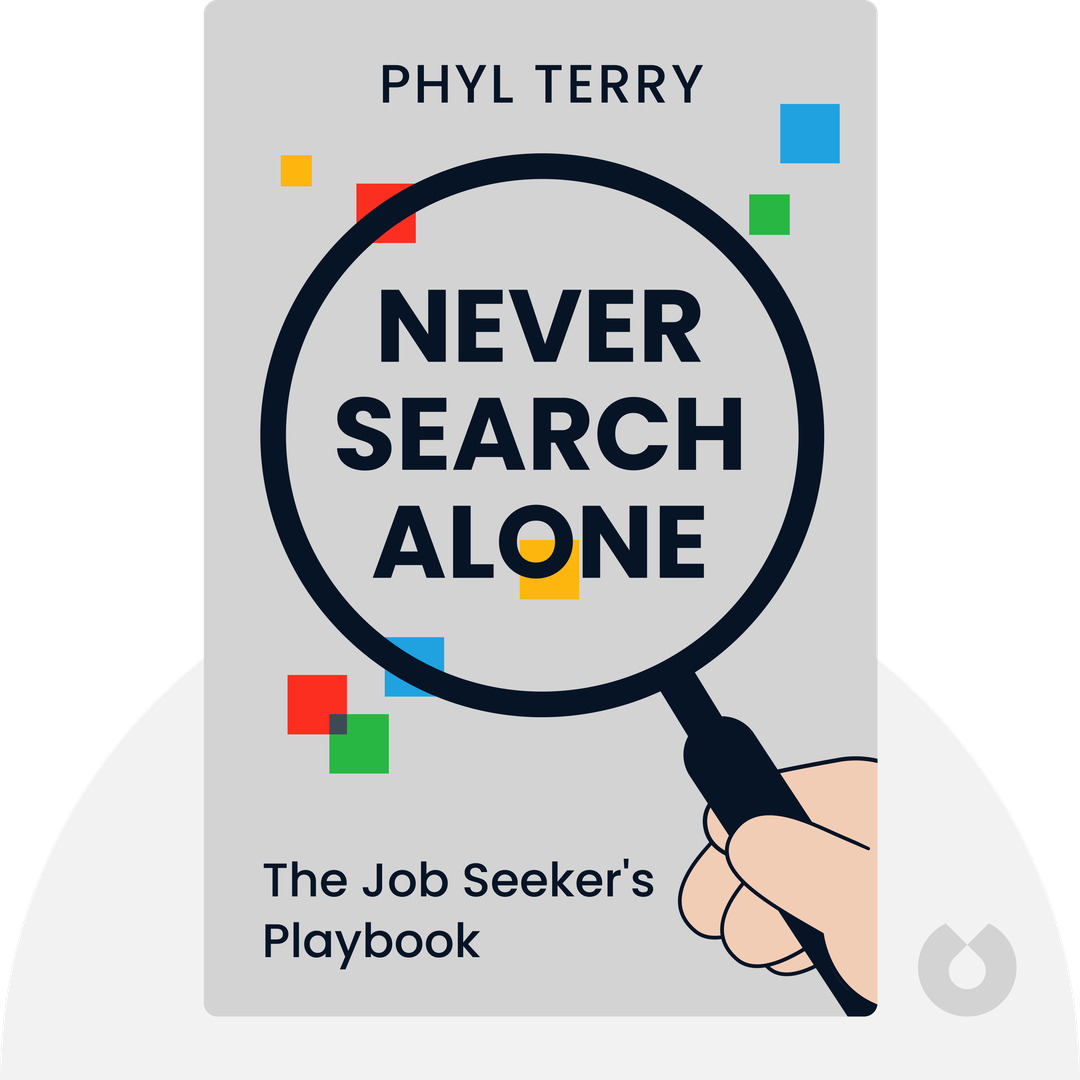
Listen to Never Search Alone — Cinematic Audio Edition
Loading player...
Key Takeaways from Never Search Alone
- Discover how forming a 'Job Search Council' of four to six peers transforms job hunting from a lonely, stressful struggle into a supportive, community-driven success.
- Learn the exact steps to build your search party, including why using the phrase 'ask for help' attracts cooperative members and why you must group people by their current employment status.
- Master a new approach to networking that eliminates awkwardness by asking your contacts for honest feedback and valuable market insights rather than direct job favors.
- Uncover strategic ways to extract value from your connections, such as asking former colleagues for constructive critiques and treating recruiters as industry experts for realistic market assessments.
- Understand why slowing down to clarify your true career goals is far more effective than blindly sending out random applications while you are emotionally vulnerable.
Learning Tools
Reinforce what you learned from Never Search Alone
Mind Map
Never Search Alone
The Job Search Council (JSC)+
Building the JSC+
Strategic Networking+
Self-Discovery & Goals+
Market Research & Fit+
The Interview Process+
Negotiation Strategy+
Quiz — Test Your Understanding
Question 1 of 7
What is the primary purpose of a Job Search Council (JSC) as described in the book?
Question 2 of 7
When forming a Job Search Council, why does the author recommend keeping unemployed searchers separate from employed searchers?
Question 3 of 7
How does the book suggest you change your approach to traditional networking?
Question 4 of 7
What is 'inversion thinking' in the context of discovering your career goals?
Question 5 of 7
What does achieving 'Candidate-Market Fit' require a job seeker to do?
Question 6 of 7
What strategy does the author recommend using during the interview process to impress interviewers and gain negotiating power?
Question 7 of 7
According to the book, what is a common mistake people make when negotiating a job offer?
Never Search Alone — Full Chapter Overview
- 1Recommendation
- 2The power of joining forces
- 3Forming your search team
- 4Networking the proper way
- 5Finding what you want
- 6Conducting your research
- 7Interviewing your prospective colleagues
- 8Negotiating effectively
Never Search Alone Summary & Overview
Never Search Alone (2022) reveals how to transform the isolating nightmare of job hunting into a collaborative, community-driven process that delivers better opportunities faster. You'll discover the power of community can support your career transition while expanding your network and providing crucial emotional scaffolding – ensuring you land roles that truly fit your goals and values.
Who Should Listen to Never Search Alone?
- Recent college graduates seeking their first professional job
- Mid-career professionals who want to find better job opportunities
- Anyone currently unemployed who wants to transform their job search into a structured, community-supported process
Books Similar to Never Search Alone
Readers who enjoyed this also liked these titles.