If You're Curious About These Questions...
You should listen to this audiobook
- Have you ever wondered how the same intensity that fuels a panic attack can be harnessed to create life-changing art?
- What if the most effective tools for surviving your darkest moments are actually small, unusual habits you’ve never thought to try?
- Are you curious about how someone who was once too afraid to leave their house learned to see the world with a sense of wonder and optimism again?
Listen to Reasons to Stay Alive — Free Audiobook
Loading player...
Key Takeaways from Reasons to Stay Alive
- Learn how to fight fear with fear by allowing yourself to fully feel your discomfort rather than numbing it or hiding in your comfort zone.
- Discover how books can become a crucial lifeline during a mental health crisis, providing companionship and the vocabulary needed to understand your experiences.
- Understand why repressing early warning signs of anxiety and trying to drown them out to fit in can escalate manageable feelings into a full-blown breakdown.
- Find out why there is no one-size-fits-all cure for depression, and how both intense physical symptoms and our social environments play a critical role in mental well-being.
- Explore how practices like running and meditation can help alleviate suffering, and discover the surprising reason why being depressed made Abraham Lincoln a great leader.
Learning Tools
Reinforce what you learned from Reasons to Stay Alive
Mind Map
Reasons to Stay Alive
The Experience of Breakdown+
Warning Signs & Causes+
Isolation & Stigma+
Books as a Lifeline+
Strategies for Recovery+
The Gifts of Depression+
Quiz — Test Your Understanding
Question 1 of 8
What prevented Matt Haig from taking his own life during his severe panic attack in Ibiza?
Question 2 of 8
According to Haig, why did his early feelings of anxiety eventually escalate into a full-blown breakdown?
Question 3 of 8
What is the book's perspective on the scientific understanding of what causes depression and anxiety?
Question 4 of 8
Why does Haig believe men are at a significantly higher risk of dying by suicide compared to women?
Question 5 of 8
How did reading books serve as a lifeline for Haig during his deep depression?
Question 6 of 8
How did Haig use his own fear to help himself take a spontaneous trip to Paris?
Question 7 of 8
According to the text, what is a potential positive outcome of experiencing depression and anxiety?
Question 8 of 8
Which of the following best describes Haig's view on recovery from depression?
Reasons to Stay Alive — Full Chapter Overview
- 1Recommendation
- 2Matt Haig abruptly started suffering severe anxiety, and it touched every single part of his life.
- 3There were warning signs that might have warned Haig about the approaching breakdown.
- 4We still don’t know precisely what causes anxiety and depression, and no universal remedy will truly fix it.
- 5Those with depression, particularly men, endure significant social isolation too.
- 6Books turned into Haig’s lifeline by giving him language to make sense of his experience.
- 7Haig began recovering by moving toward the things he feared most.
- 8Experiencing anxiety and depression can leave you more perceptive and empathetic.
- 9Recovering from depression isn’t linear.
Reasons to Stay Alive Summary & Overview
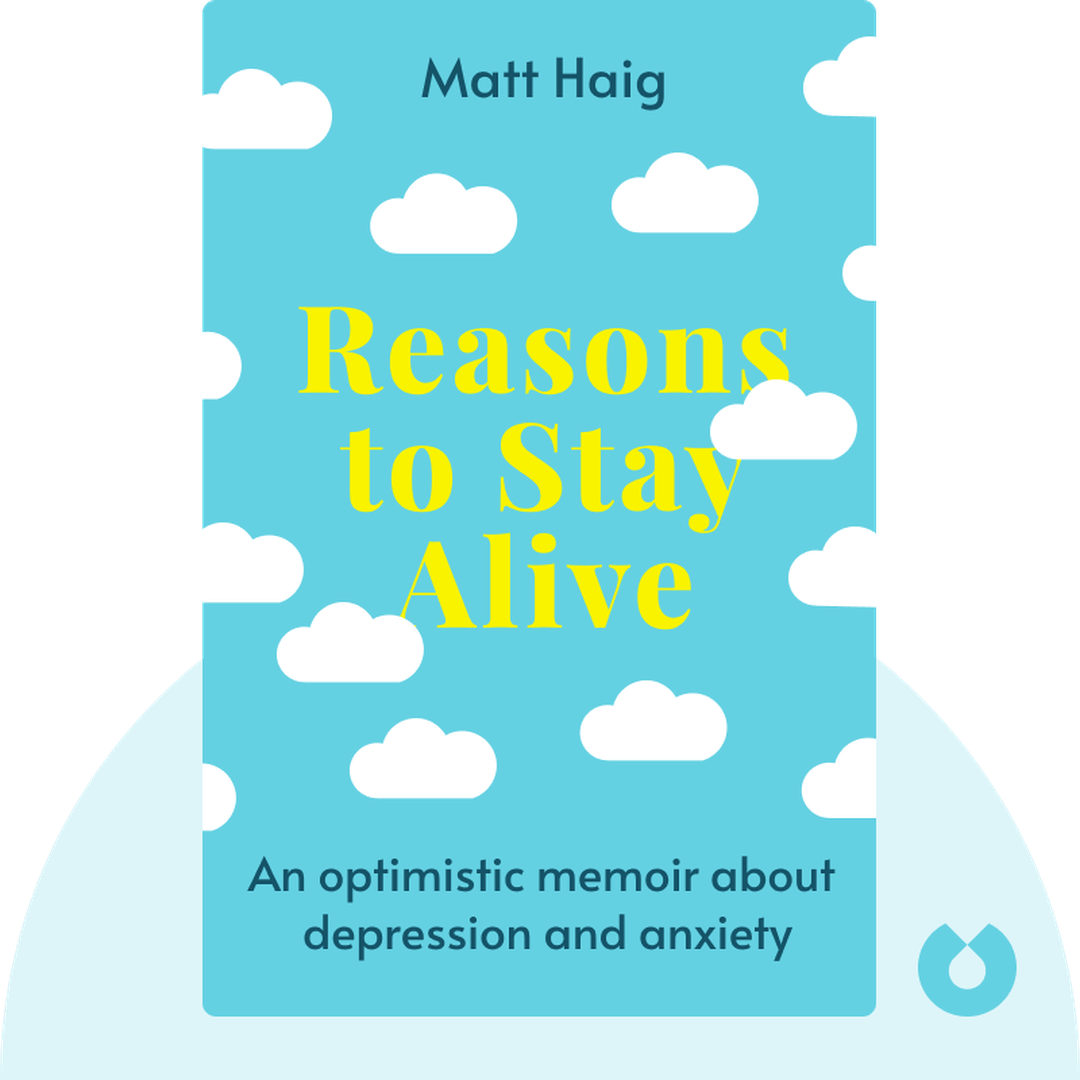
Reasons to Stay Alive (2015) tells the story of Matt Haig’s struggle with depression and anxiety, which was so severe that he had constant panic attacks and feared leaving the house. It reveals how Haig learned to channel his natural intensity into the creation of art and developed some unusual techniques for easing his distressed mind.
Who Should Listen to Reasons to Stay Alive?
- Memoir lovers who want to read a heartfelt story of personal growth
- Social workers and psychologists who want a glimpse of what’s going on in their clients’ heads
- People struggling with depression and anxiety who want to borrow some faith and optimism
Books Similar to Reasons to Stay Alive
Readers who enjoyed this also liked these titles.