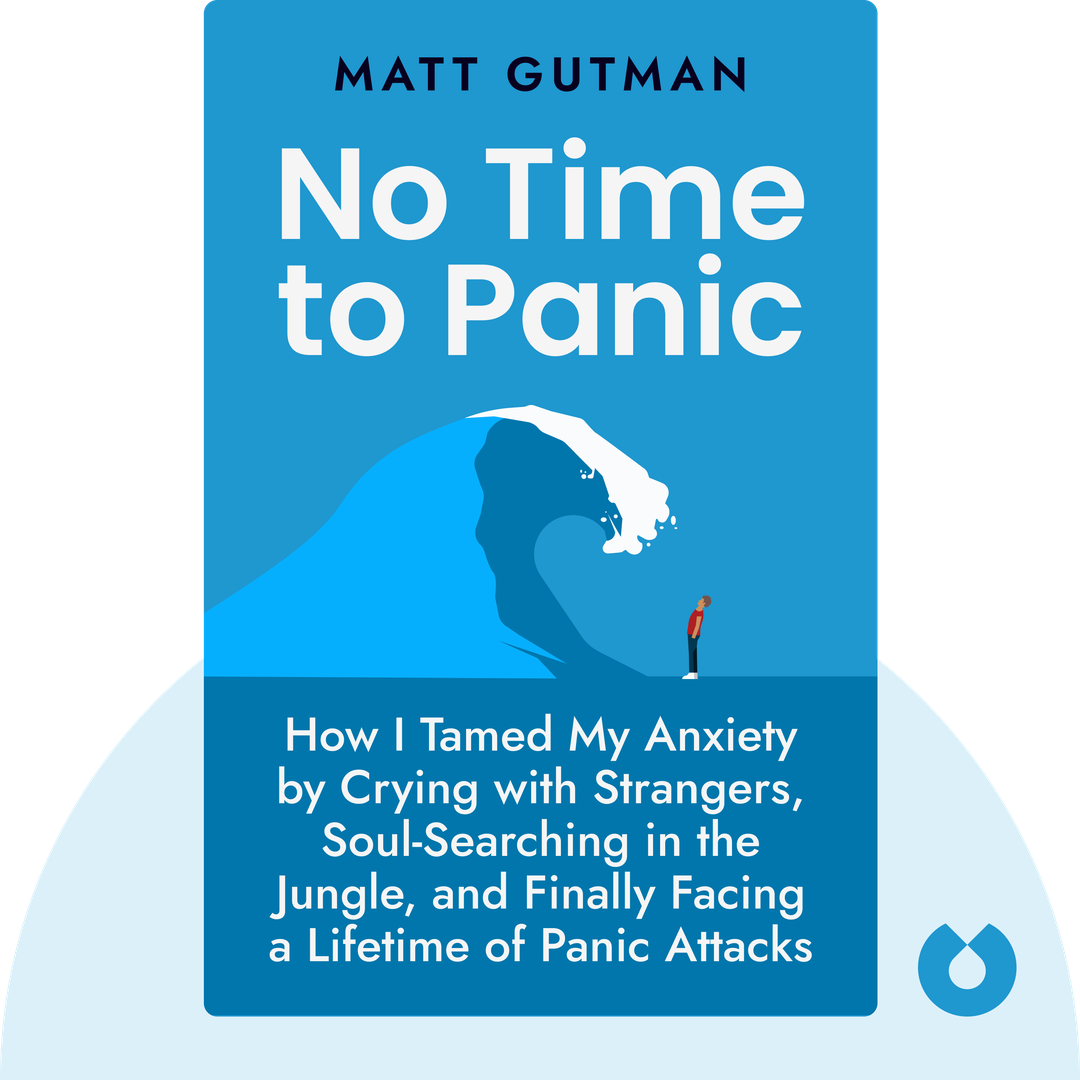
If You're Curious About These Questions...
You should listen to this audiobook
- Have you ever wondered how a top news correspondent could experience a massive panic attack on live television, and what it teaches us about the hidden science of fear?
- Did you know that your body's most terrifying anxiety symptoms are actually a 'misfired' survival instinct from our evolutionary past?
- What if you could decode the complex chemistry of a panic attack to finally discover a treatment path that actually works for your brain?
Listen to No Time to Panic — Free Audiobook
Loading player...
Key Takeaways from No Time to Panic
- Learn how a devastating on-air mistake during a high-profile tragedy forced veteran journalist Matt Gutman to finally confront the debilitating panic attacks he hid for decades.
- Understand the biological mechanics of a panic attack and how an overactive amygdala bypasses rational thought to trigger a terrifying, yet false, fight-or-flight response.
- Discover the evolutionary origins of anxiety and why a prehistoric survival tactic for anticipating danger now causes modern humans to panic over abstract threats like social judgment.
- Find out why panic disorders remain deeply stigmatized and lack formal support networks due to their invisible nature and the lingering shame of early psychoanalytic theories.
- Explore the wide range of expert insights and treatments—from traditional therapy to experimental psychedelics—that can illuminate a path forward for chronic anxiety sufferers.
Learning Tools
Reinforce what you learned from No Time to Panic
Mind Map
No Time to Panic
Author's Catalyst+
The Science of Panic+
Evolutionary Origins+
Stigma & Isolation+
Treatment Modalities+
Six Practical Steps+
Quiz — Test Your Understanding
Question 1 of 7
What major professional incident forced Matt Gutman to finally confront his panic disorder publicly?
Question 2 of 7
According to the book, what biological mechanism occurs during a panic attack?
Question 3 of 7
How did the evolutionary development of 'planning through anxiety' provide early apes with a survival advantage?
Question 4 of 7
Why are formal support groups for panic disorders so scarce compared to groups for other conditions like addiction?
Question 5 of 7
What is the two-pronged approach of Cognitive Behavioral Therapy (CBT) for panic disorder recommended by Dr. Michael Telch?
Question 6 of 7
How does psychiatrist Dr. Ellen Vora suggest individuals reframe the act of intensive crying?
Question 7 of 7
According to Gutman’s final takeaways, what is a crucial fact to remember about the acute danger assessment phase of a panic attack?
No Time to Panic — Full Chapter Overview
- 1Recommendation
- 2Panic Basics
- 3Anxiety’s Ancient Roots
- 4Panic Attacks Remain Stigmatized
- 5There’s No Guaranteed Cure for Anxiety
- 6Keep It Simple to Fight Panic
- 7Final summary
No Time to Panic Summary & Overview
No Time to Panic (2023) is a personal exploration of the causes and treatments of panic attacks. It’s grounded in the latest science and informed by interviews with leading specialists in the field.
Who Should Listen to No Time to Panic?
- People who suffer from panic attacks, anxiety, or related disorders
- Those close to someone who has a panic disorder
- Anyone who’s interested in psychology, evolutionary biology, or neuroscience
Books Similar to No Time to Panic
Readers who enjoyed this also liked these titles.