If You're Curious About These Questions...
You should listen to this audiobook
- Have you ever wondered why even the most brilliant executive strategies often fail to produce real-world results once they reach the front lines?
- What if you could bridge the invisible gap between decision-makers and staff to ensure every new business investment actually pays off?
- What’s the secret to transforming your organization’s daily operations into a high-performance engine that consistently delivers radical outcomes?
Listen to Radical Outcomes — Free Audiobook
Loading player...
Key Takeaways from Radical Outcomes
- Understand why expensive technological investments often fail to improve bottom lines due to a critical disconnect between C-suite strategies and front-line interactions.
- Avoid the common trap of translating strategic visions into random lists of tasks, ensuring your company stays focused on the desired customer experience.
- Discover the key habit of high-performing organizations: consistently measuring the actual business impact of new initiatives rather than just the activities themselves.
- Learn why intense, week-long training sessions hinder employee productivity and how delivering information in manageable, bite-size pieces improves technology adoption.
- Find out how to alleviate the frustration felt across executives, enablement teams, and front-line staff by aligning everyone around clearly measured outcomes.
Learning Tools
Reinforce what you learned from Radical Outcomes
Mind Map
Radical Outcomes
The Implementation Gap+
Measuring Outcomes+
Effective Upskilling+
Designing Learning Experiences+
Employee Experience (EX)+
Business Architecture+
Embracing Imperfection+
Quiz — Test Your Understanding
Question 1 of 7
According to the text, how are the main groups within a typical medium-to-large organization categorized?
Question 2 of 7
What critical mistake do many enablement teams make when translating executive strategies into action?
Question 3 of 7
Based on psychological research mentioned in the book, what is the most effective way for staff to learn how to use a new piece of technology?
Question 4 of 7
Why does data visualist Edward Tufte argue against using PowerPoint to pass complex information up the chain of command?
Question 5 of 7
What irony does the author point out regarding how modern businesses handle experiences?
Question 6 of 7
In the context of the book, what is the primary benefit of building a great 'business architecture'?
Question 7 of 7
What approach does Amazon use to foster innovation and avoid the trap of waiting for 'perfect' work?
Radical Outcomes — Full Chapter Overview
- 1Recommendation
- 2Companies are adopting new technologies yet failing to fully capitalize on them all.
- 3Not measuring outcomes stops organizations from actually achieving them.
- 4The strongest learning outcomes arise from receiving information in bite-sized pieces only.
- 5When it comes to sharing information, remember to design the learning experience well.
- 6The experience your company delivers is vital, but many perfect it for customers while getting it wrong for employees.
- 7Your company requires strong architecture to support your ambitious outcomes.
- 8You can get the best outcomes by revealing your work in progress.
Radical Outcomes Summary & Overview
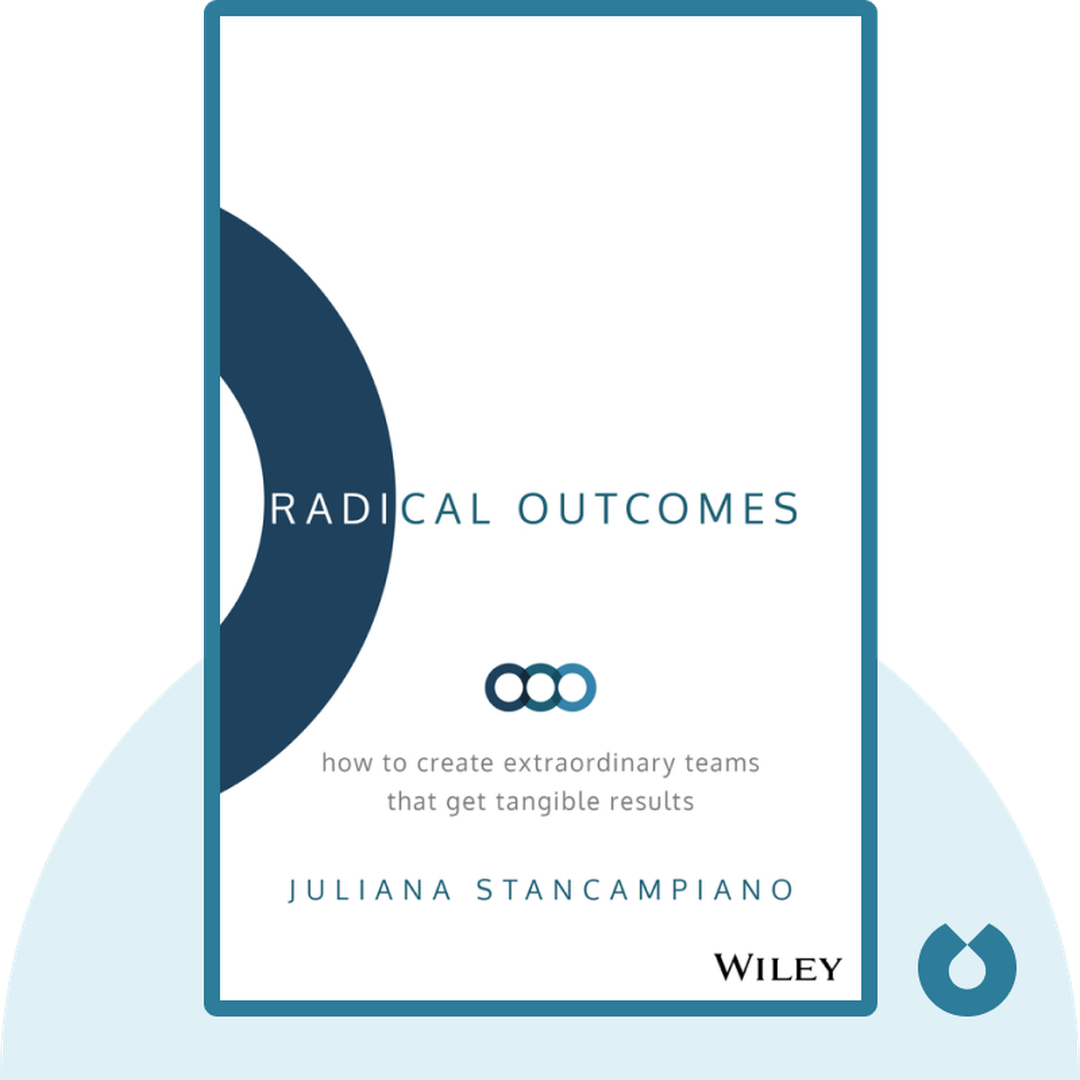
Radical Outcomes (2019) explores ways to translate top-level strategies into great results for your business. Revealing the common disconnect between decision-making executives and front-line staff, it explores how all levels of an organization can work better together to drive radically improved outcomes.
Who Should Listen to Radical Outcomes?
- Team leaders looking for a fresh perspective
- Executives poised to invest in new business technologies
- Learning and development managers seeking new insight
Books Similar to Radical Outcomes
Readers who enjoyed this also liked these titles.