If You're Curious About These Questions...
You should listen to this audiobook
- Have you ever wondered why the most successful leaders are abandoning 'tried and tested' methods to embrace a philosophy that is both daringly radical and intensely practical?
- What if the secret to outperforming your competition lies in looking far beyond your own industry for the next big breakthrough?
- Are you curious about how the world’s most innovative companies stay ahead of the curve by fundamentally rethinking their approach to leadership?
Listen to Practically Radical — Free Audiobook
Loading player...
Key Takeaways from Practically Radical
- Discover how to redefine your competitive terrain rather than just racing your rivals, using the 'vuja dé' approach to find fresh perspectives on familiar business models.
- Learn how to leverage your company's storied history to renew its identity and fend off cheaper newcomers, just as the Swiss watch industry did to reclaim market leadership.
- Understand why the most groundbreaking innovations often come from looking outside your own sector, such as Henry Ford adopting his iconic assembly line from a slaughterhouse.
- Find out how to ride out the controversy of implementing unusual outside strategies—like a hospital adopting Toyota's manufacturing techniques—to drastically boost operational efficiency.
- Master the strategy of excelling profoundly in one specific area instead of being average at everything, enabling you to deliver unparalleled customer experiences that defy industry norms.
Learning Tools
Reinforce what you learned from Practically Radical
Mind Map
Practically Radical
Redefine the Terrain+
Borrow Outside Ideas+
Excel in One Area+
Engage with a Human Face+
Humbitious Leadership+
Harness External Brainpower+
Quiz — Test Your Understanding
Question 1 of 7
How did the advertising agency TBWA help Pedigree overcome its market struggles?
Question 2 of 7
What controversial strategy did Gary Kaplan use to improve efficiency at Virginia Mason Medical Hospital?
Question 3 of 7
According to the book, what was the primary reason Zappos was able to successfully compete with Amazon before being acquired?
Question 4 of 7
Based on Gallup's research mentioned in the text, what differentiates 'emotionally engaged' customers from those who are merely 'rationally satisfied'?
Question 5 of 7
What does the concept of 'humbition,' advocated by Jane Harper, suggest leaders should do?
Question 6 of 7
How did the software company Rite-Solutions encourage innovation from the bottom of the organization?
Question 7 of 7
Why did Netflix announce a public competition with a million-dollar prize in 2006?
Practically Radical — Full Chapter Overview
- 1Recommendation
- 2Redefine the field of competition rather than trying to outmatch your rivals directly.
- 3Seek ideas beyond your industry and weather the controversy that inevitably follows when you break the mold.
- 4Excel in one domain instead of staying average at many things if you want real impact and to change the game.
- 5Companies that connect with customers through a human touch are far likelier to succeed today.
- 6Strive to be a humble, ambitious leader and search for ideas in every area of your company daily.
- 7People beyond your company are frequently a powerful source of innovation.
Practically Radical Summary & Overview
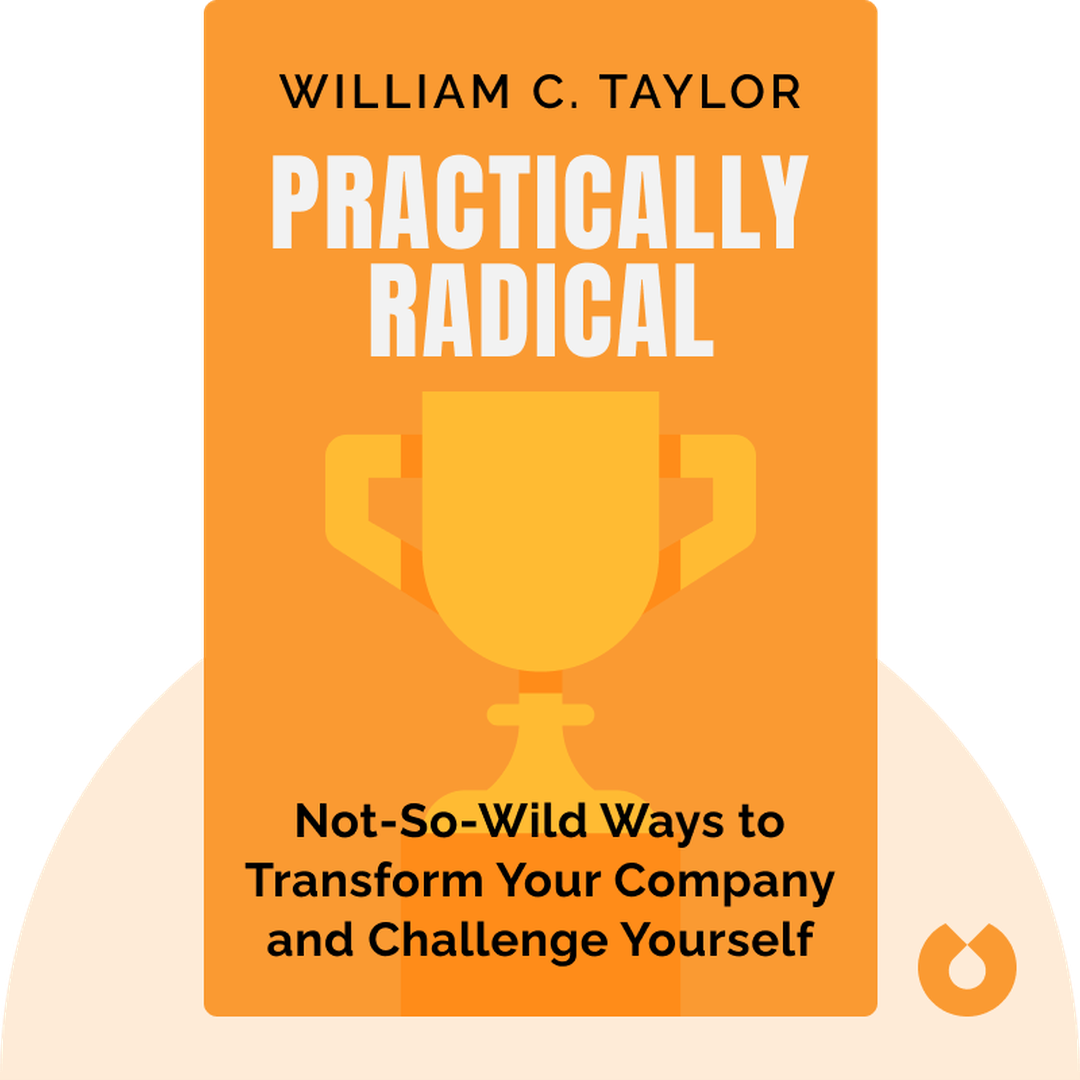
Practically Radical (2011) is a strategic guide to navigating today’s fast-moving world of business for leaders keen to set themselves apart from the crowd. Full of clever tips and insights from today’s most innovative companies, it argues for the need to rethink tried and tested methods and learn to think outside the box.
Who Should Listen to Practically Radical?
- CEOs and leaders
- Entrepreneurs and innovators
- Anyone looking to boost their business
Books Similar to Practically Radical
Readers who enjoyed this also liked these titles.