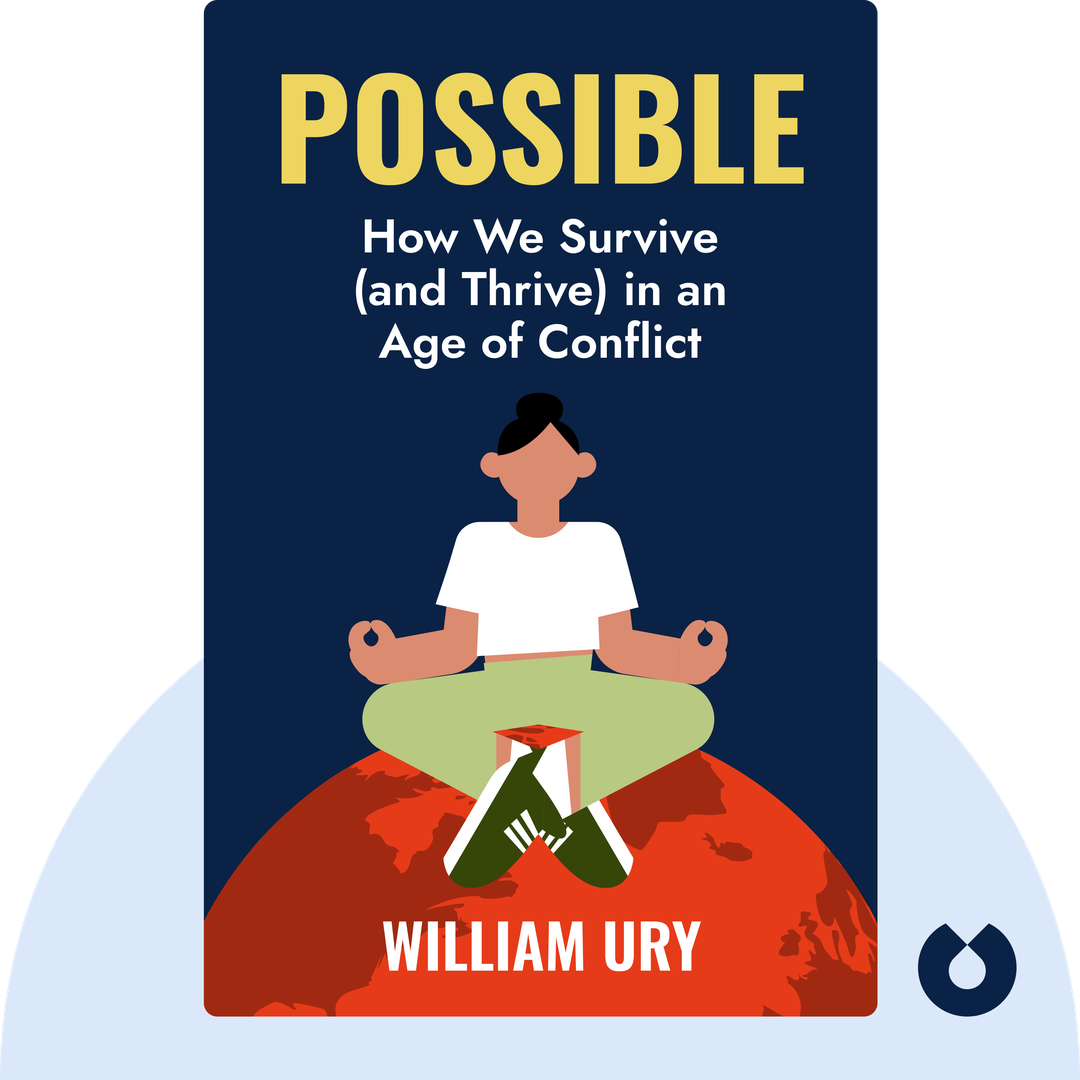
If You're Curious About These Questions...
You should listen to this audiobook
- What if the conflicts you dread most were actually the hidden gateway to your biggest creative breakthroughs and strongest relationships?
- What’s the secret to turning a hostile confrontation into a cooperative success story, even when the other side refuses to budge?
- Are you curious about the specific mindset shifts that allow master negotiators to find 'the possible' in situations that seem completely hopeless?
Listen to Possible — Free Audiobook
Loading player...
Key Takeaways from Possible
- Discover the concept of 'possibilism' and how viewing conflicts as natural catalysts for growth can transform destructive disputes into constructive opportunities.
- Master the 'three victories' of conflict resolution by learning to gain perspective, build solutions that address mutual needs, and mobilize community support.
- Understand how 'going to the balcony' and pausing during a dispute creates a crucial gap between stimulus and response, allowing for calmer, intentional decisions.
- Learn how to 'zoom in' during disagreements to peel back superficial wants and uncover the true core needs driving your stance.
- Find out why 'zooming out' is essential for understanding the broader context of a conflict and identifying your best alternative to a negotiated agreement (BATNA).
Learning Tools
Reinforce what you learned from Possible
Mind Map
Possible
Core Philosophy: Possibilism+
Victory 1: The Balcony+
Victory 2: The Golden Bridge+
Victory 3: The Third Side+
Quiz — Test Your Understanding
Question 1 of 6
What is the core philosophy of 'possibilism' as described by William Ury?
Question 2 of 6
How does Ury summarize his extensive conflict resolution experience into a single sentence?
Question 3 of 6
In the context of 'going to the balcony,' what is the primary purpose of 'zooming out'?
Question 4 of 6
According to Ury's concept of the 'golden bridge,' what must you do before you can effectively listen to others?
Question 5 of 6
When building a 'golden bridge,' what role do 'besitos' (little kisses) play in the negotiation process?
Question 6 of 6
What does the strategy of 'swarming' entail within the 'third side' framework?
Possible — Full Chapter Overview
- 1Recommendation
- 2The three victories
- 3The balcony
- 4The golden bridge
- 5The third side
Possible Summary & Overview
Possible (2024) introduces a groundbreaking strategy for confronting the increase in conflicts that threaten aspects of daily life, from personal relationships to global dynamics. It posits that by engaging with conflict constructively, you can unlock the potential for creative problem-solving and strengthen relationships. This approach will equip you with the tools to transform adversarial interactions into cooperative successes, paving the way for progress in every aspect of your life.
Who Should Listen to Possible?
- Conflict resolution mediators and professionals
- Leaders and managers
- Individuals navigating personal or workplace conflicts
Books Similar to Possible
Readers who enjoyed this also liked these titles.