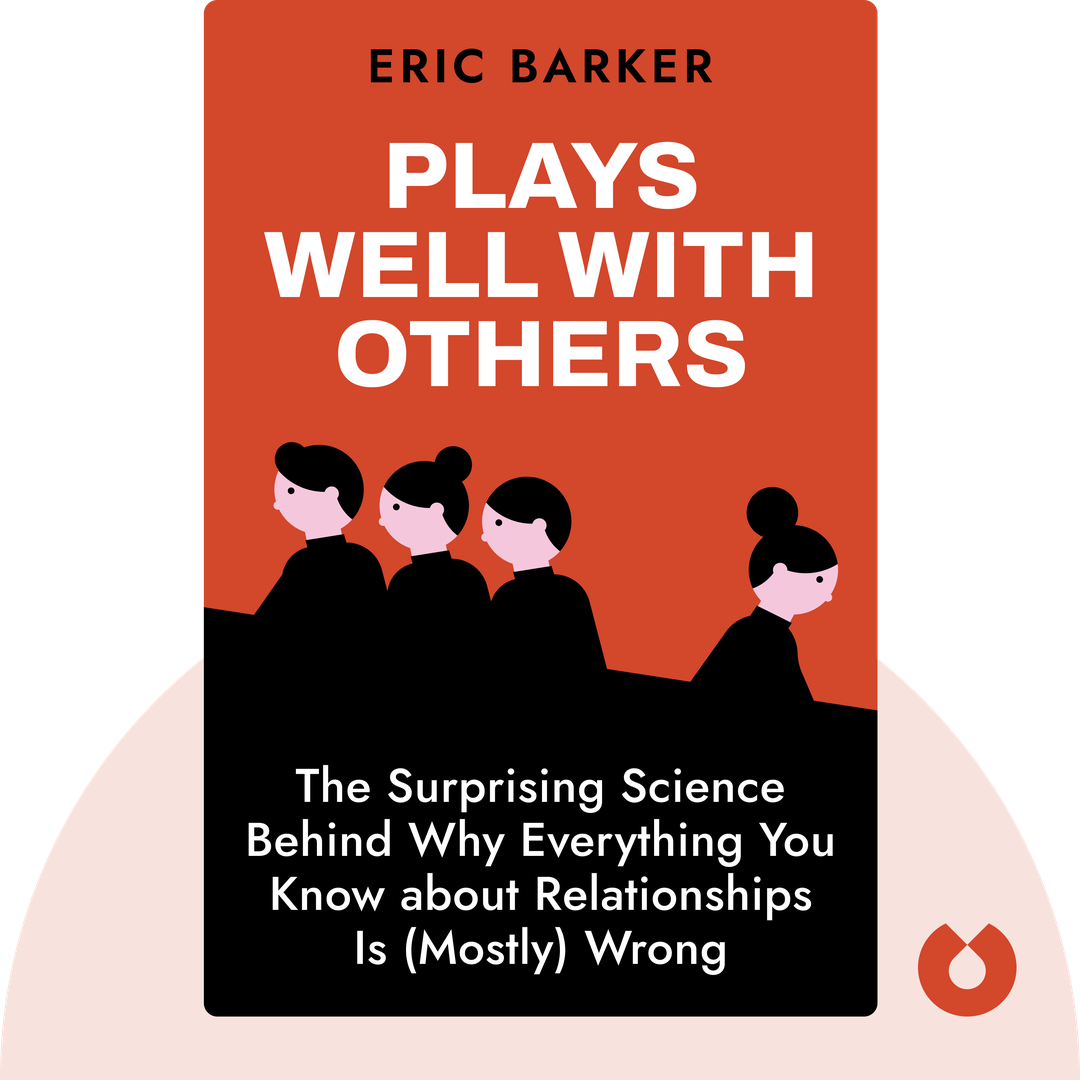
Plays Well with Others
Start ListeningDownload Try free on iPhoneScan to start in 5 seconds
Categories:
If You're Curious About These Questions...
You should listen to this audiobook
- Why is FBI criminal profiling statistically comparable to flipping a coin, and what does this reveal about the hidden dangers of the 'First Impression Paradox'?
- What did evolutionary biologist George Price's tragic attempt to disprove his own theories on altruism ultimately reveal about human selflessness?
- What is 'negative sentiment override,' and how can identifying Dr. John Gottman's 'Four Horsemen of the Apocalypse' save a romantic relationship from failure?
Listen to Plays Well with Others — Free Audiobook
Loading player...
Key Takeaways from Plays Well with Others
- First impressions are heavily skewed by confirmation bias, requiring us to use active listening and open-ended questions to overcome our flawed snap judgments.
- Evolutionary science suggests humans are hardwired for selflessness, making vulnerability and consistent effort the biological and practical foundations of true friendship.
- Modern romantic relationships require a balance of Enlightenment-era reason and Romantic-era shared illusions to survive the high expectations of contemporary life.
- To prevent a relationship from ending in divorce, couples must actively identify and eliminate four toxic communication patterns: criticism, contempt, defensiveness, and stonewalling.
- True purpose and meaning in life are derived from belonging and interdependence, requiring us to reject radical individualism in favor of supportive communities.
Learning Tools
Reinforce what you learned from Plays Well with Others
Mind Map
Plays Well with Others
First Impressions & Biases+
The Art of Friendship+
Romantic Relationships+
Community & Social Support+
Purpose & Belonging+
Quiz — Test Your Understanding
Question 1 of 7
What does Eric Barker call the phenomenon where our brains lock in an initial, often biased, judgment of someone?
Question 2 of 7
What did scientist George Price's genetic research initially propose about human altruism?
Question 3 of 7
According to the text, what is the recommended strategy for dealing with narcissists if you choose to maintain a connection with them?
Question 4 of 7
How does the text contrast historical marriages with modern relationships?
Question 5 of 7
According to Dr. John Gottman's 'Four Horsemen,' what is the proper way to avoid the relationship trap of 'criticism'?
Question 6 of 7
What key lesson is drawn from the 1866 event involving lepers on Molokai Island?
Question 7 of 7
According to the text, what is the fundamental 'meaning of life' as revealed by recent studies?
Plays Well with Others — Full Chapter Overview
- 1Recommendation
- 2Don’t rely on first impressions
- 3Learning the craft of friendship
- 4The difficulties and benefits of romantic relationships
- 5The secret to enduring love
- 6Why social support matters
- 7Other people can help you discover your purpose
Plays Well with Others Summary & Overview
Plays Well with Others (2022) debunks relationship myths and offers advice on how to form and maintain strong bonds. Improve your friendships and romantic relationships, as well as your ability to resolve conflicts, forgive others, and deal with difficult people.
Who Should Listen to Plays Well with Others?
- Professionals seeking better workplace relationships
- Team leaders aiming for harmony and collaboration
- All those interested in interpersonal dynamics
Books Similar to Plays Well with Others
Readers who enjoyed this also liked these titles.