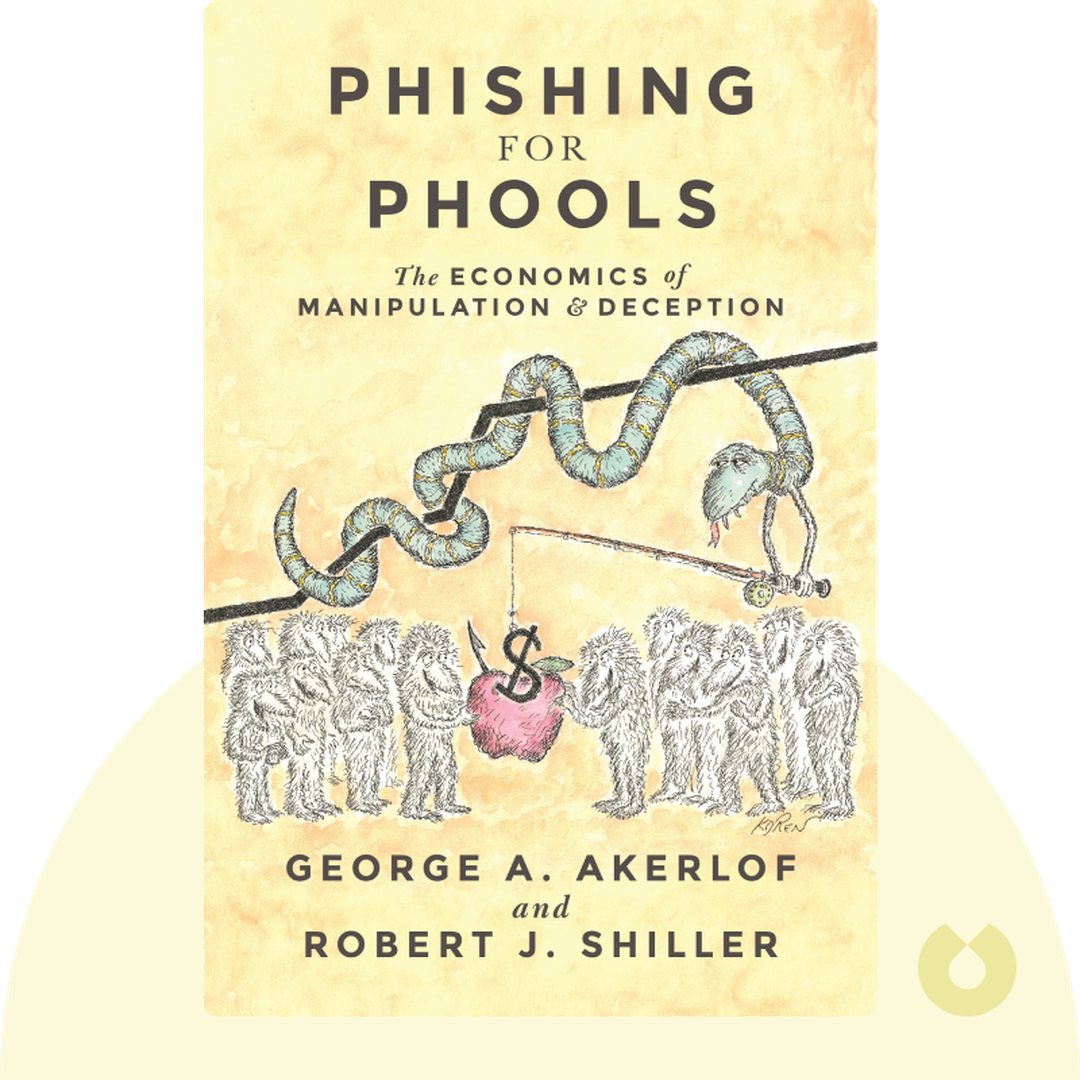
If You're Curious About These Questions...
You should listen to this audiobook
- Did you know that the very free markets we trust to be efficient are actually designed to systematically manipulate you into acting against your own self-interest?
- Have you ever wondered why we constantly fall for marketing traps and financial pitfalls, even when we think we’re being rational consumers?
- What if the 'invisible hand' of the economy isn't just guiding growth, but is actively working to 'phish' for your money through psychological deceit?
Listen to Phishing for Phools — Free Audiobook
Loading player...
Key Takeaways from Phishing for Phools
- Understand why free markets are not perfectly rational systems, but rather ideal environments for companies to exploit consumer weaknesses through temptation.
- See how everyday retail environments manipulate your buying habits, such as supermarkets placing essential items at the back of the store to force you past extra merchandise.
- Learn how 'reputation mining' triggered the 2008 financial crisis when established credit rating agencies leveraged their trusted status to approve high-risk financial products.
- Discover how advertisers graft compelling narratives into your internal thoughts, using emotional stories and positive wordplay to unconsciously influence what you buy.
- Find out why paying with credit cards acts as a subtle psychological trap, causing consumers to spend significantly more money and leave larger tips than they would with cash.
Learning Tools
Reinforce what you learned from Phishing for Phools
Mind Map
Phishing for Phools
Core Concepts+
Retail & Advertising Tactics+
Corporate & Political Deception+
Protection Strategies+
Quiz — Test Your Understanding
Question 1 of 7
According to the book, what fundamentally contradicts the traditional economic view that free markets are purely rational and mutually beneficial?
Question 2 of 7
How did 'reputation mining' by credit rating agencies contribute to the 2008 financial crisis?
Question 3 of 7
What psychological effect do credit cards have on consumer behavior compared to paying with cash, according to cited research?
Question 4 of 7
Why does the book refer to the average voter as an 'information phool'?
Question 5 of 7
How did the tobacco industry use 'phishing' tactics when scientists first linked smoking to cancer?
Question 6 of 7
How does the Uniform Commercial Code help protect consumers from being 'phished'?
Question 7 of 7
What actionable budgeting strategy is recommended to help resist the temptation of being phished?
Phishing for Phools — Full Chapter Overview
- 1Recommendation
- 2Though not rational, free markets today teem with irrational lures for the phool consumer everywhere.
- 3Reputation mining, one method of phishing for phools, played a central role in the 2008 financial crisis.
- 4Advertisers phish by crafting stories that slip into our minds, tugging at our emotions.
- 5Politicians phish by withholding sufficient policy information; big pharma similarly often phishes in comparable ways too.
- 6Innovations also create avenues for phishing and the tobacco industry is the master of them all.
- 7Wise laws and standardization can help keep consumers from being phished.
Phishing for Phools Summary & Overview
Phishing for Phools (2015) reveals the ways in which modern free-market systems, so often praised as the epitome of rational exchange, are fueled instead by willful deceit, with the goal of pushing you to act against your self-interest.
Who Should Listen to Phishing for Phools?
- Economists or students examining free-market systems
- Any consumer interested in how the market works
- Socially-conscious business owners
Books Similar to Phishing for Phools
Readers who enjoyed this also liked these titles.