If You're Curious About These Questions...
You should listen to this audiobook
- Have you ever wondered why even the most well-meaning companies often lose their soul and turn 'evil' as they grow?
- What’s the secret to building a business that prioritizes people over profit while actually becoming more successful in the long run?
- Did you know there are four distinct stages every business cycles through, and that knowing where you stand could be the difference between lasting integrity and total collapse?
Listen to People Over Profit — Free Audiobook
Loading player...
Key Takeaways from People Over Profit
- Understand the four predictable phases that most corporations cycle through over their lifespan: honesty, efficiency, deception, and redemption.
- Discover why companies in their initial 'honest era' thrive by prioritizing people over profit, offering strong employee benefits and high-quality service.
- Learn how the relentless pursuit of efficiency can push a business into the 'deceptive era,' causing leaders to sacrifice integrity and customer safety to stay competitive.
- Find out how companies can successfully navigate the 'apologetic era' and rebuild lost consumer trust by openly admitting guilt and righting their past wrongs.
- Master the core beliefs required to keep your business permanently in the honest phase, starting with the foundational rule that people must always come first.
Learning Tools
Reinforce what you learned from People Over Profit
Mind Map
People Over Profit
The Corporate Cycle+
Seven Core Beliefs of Honest Companies+
Taking Action+
Feedback & Evaluation+
Quiz — Test Your Understanding
Question 1 of 8
What are the four predictable, successive stages that a company typically goes through according to the book?
Question 2 of 8
According to the text, what is the primary danger when a company enters the 'efficient era'?
Question 3 of 8
How did the Ford Motor Company's handling of the Ford Pinto reflect the behaviors of the 'deceptive era'?
Question 4 of 8
To remain in the honest era, the book states that a company must prioritize and respect three specific groups of stakeholders. Who are they?
Question 5 of 8
How does the book define 'authenticity' in the context of maintaining an honest business?
Question 6 of 8
What lesson does the book draw from Apple's handling of their flawed Maps app?
Question 7 of 8
According to the author, what is the most effective way for consumers to break the cycle of good companies turning bad?
Question 8 of 8
What actionable advice does the final summary give for ensuring and maintaining high quality in a business?
People Over Profit — Full Chapter Overview
- 1Recommendation
- 2Corporations aren't born good or bad; they pass through phases over time.
- 3Companies start their cycle by remaining honest and efficient.
- 4Companies ultimately turn deceptive, and then attempt to apologize for it.
- 5Honest businesses won’t tamper with their customers, or the truth.
- 6To remain honest, be transparent, authentic and generous.
- 7Quality will build connections with customers, and courage will push you forward bravely.
- 8Move from consumer to company founder and make the change you want to see.
People Over Profit Summary & Overview
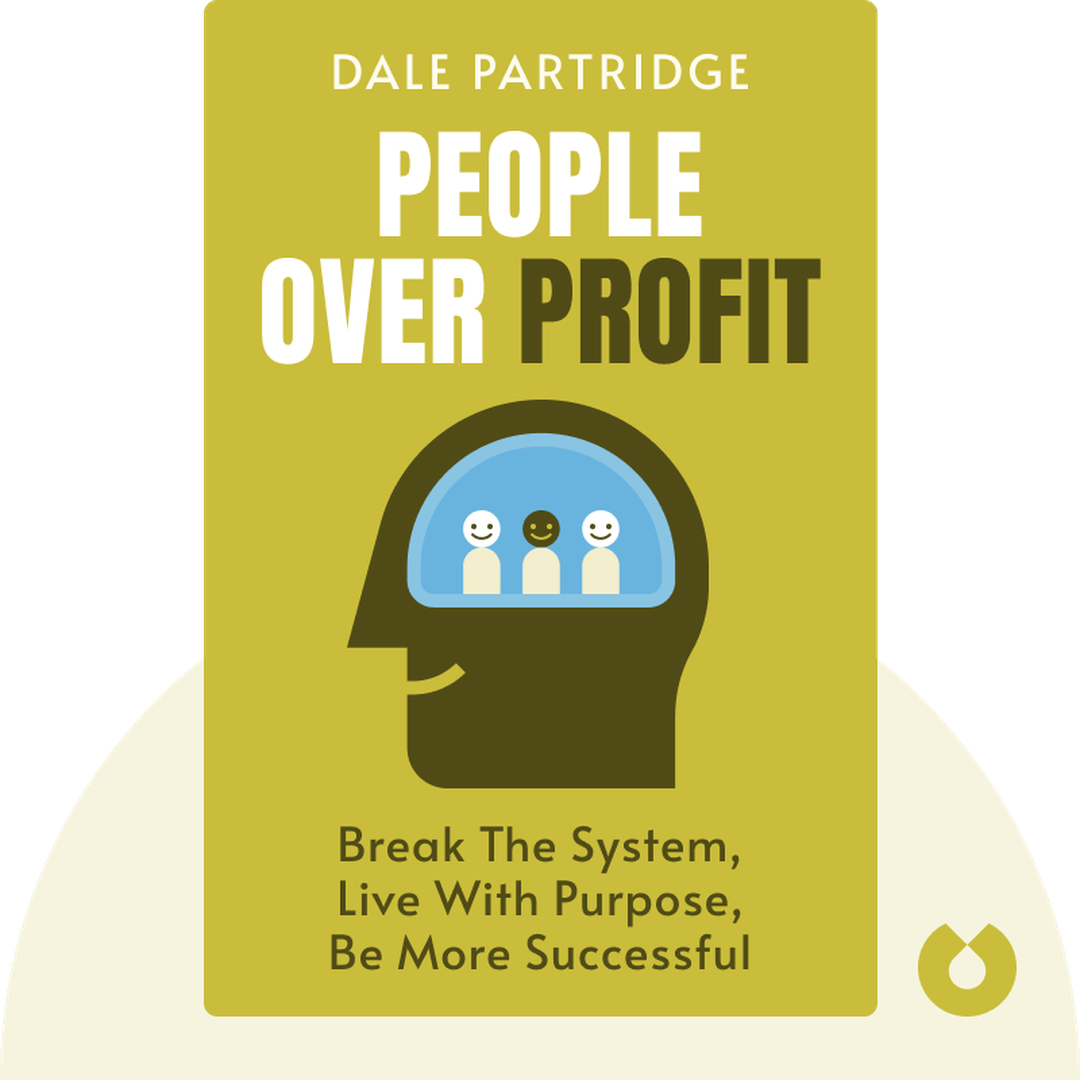
People Over Profit (2015) is your guide to capitalism, past, present and future. These blinks explain what really creates evil companies, and the principles that’ll guide you to create and grow a business with integrity.
Who Should Listen to People Over Profit?
- Entrepreneurs hoping to shift their business activity onto a more ethical path
- Consumers who intend to make their opinions count in the marketplace
- Anyone eager to learn more about socially responsible business practices
Books Similar to People Over Profit
Readers who enjoyed this also liked these titles.