If You're Curious About These Questions...
You should listen to this audiobook
- Did you know that companies prioritizing social value often achieve higher financial returns than those focused solely on short-term profits?
- What’s the secret to expanding your business’s impact so that everyone—from employees to investors—gets a bigger slice of the pie?
- Have you ever wondered why the most successful leaders focus on stakeholder well-being as a primary driver of long-term growth?
Listen to Grow the Pie — Free Audiobook
Loading player...
Key Takeaways from Grow the Pie
- Understand the 'pie-growing mentality,' a philosophy where businesses focus on expanding overall value for all stakeholders rather than merely dividing existing profits.
- Discover how prioritizing social responsibility over short-term gains, like Merck providing free life-saving medication, ultimately attracts top talent and drives sustainable financial success.
- Learn why simply reducing executive pay won't fix corporate inequality, and how linking CEO compensation to long-term stock ownership creates better incentives that benefit everyone.
- Find out the truth behind the controversial practice of share buybacks, distinguishing between maneuvers that artificially inflate executive bonuses and those that strategically reallocate resources for growth.
- Master the art of holistic value creation by paying fair wages, innovating beneficial products, and engaging positively with communities to build a prosperous future for both business and society.
Learning Tools
Reinforce what you learned from Grow the Pie
Mind Map
Grow the Pie
Core Philosophy+
Executive Incentives+
Share Buybacks+
Purpose-Driven Excellence+
Empowering Citizens+
Quiz — Test Your Understanding
Question 1 of 6
What defines the 'pie-splitting' mentality in business?
Question 2 of 6
Why did Merck's former CEO, Roy Vagelos, decide to give away the drug ivermectin for free?
Question 3 of 6
According to the book, what is the most effective approach to reforming executive pay?
Question 4 of 6
Which of the following does the text identify as a common misconception about share buybacks?
Question 5 of 6
How does the book describe the relationship between purpose and profit in a successful business?
Question 6 of 6
What regulatory mechanism does the text suggest policymakers use to ensure accountability without stifling business innovation?
Grow the Pie — Full Chapter Overview
- 1Recommendation
- 2Adopting the pie-growing mentality for business and society
- 3Expanding the pie with effective incentives
- 4The controversial practice of share buybacks
- 5Purpose-driven excellence in business
- 6Empowering citizens to influence business practices
- 7Final summary
Grow the Pie Summary & Overview
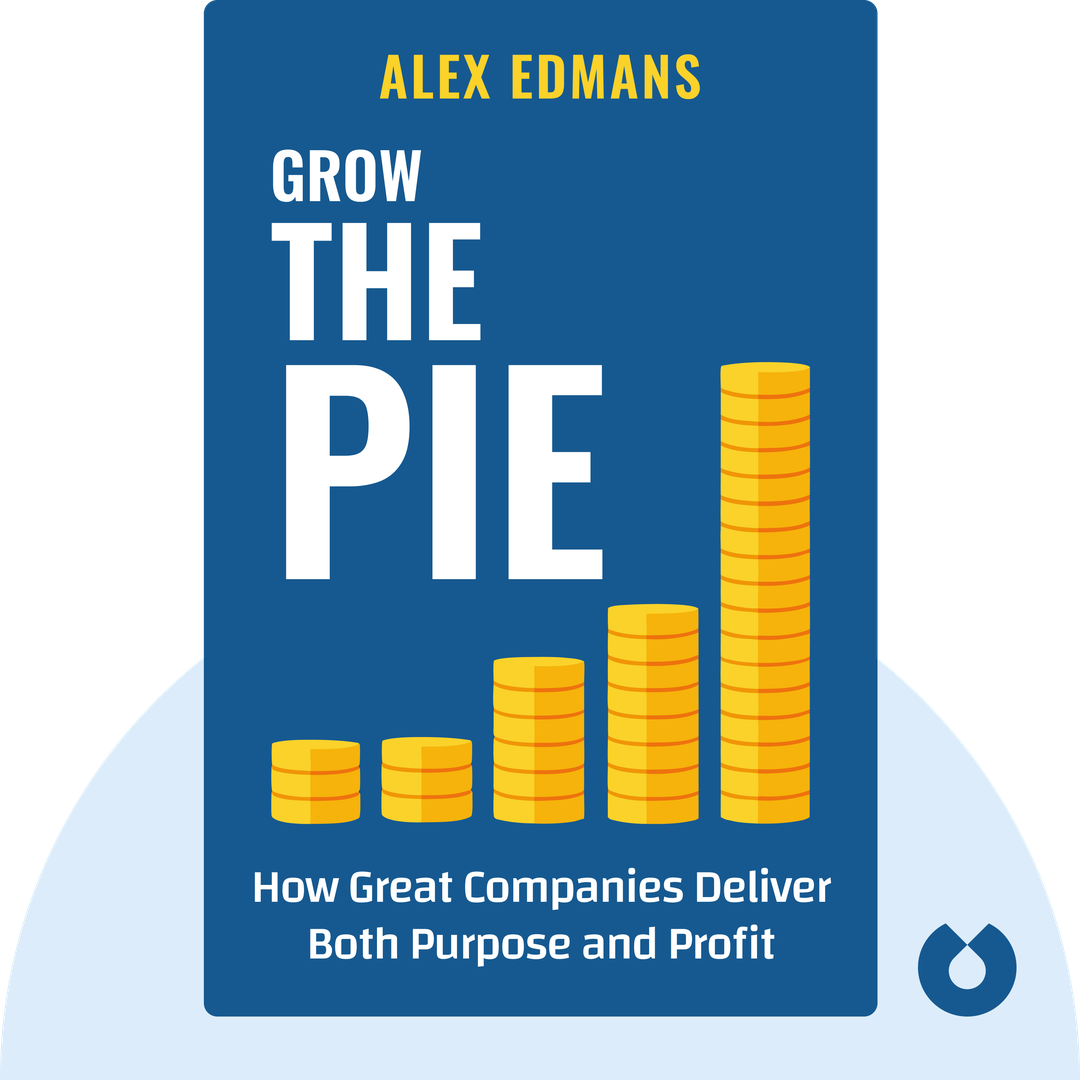
Grow the Pie (2020) shows how businesses can thrive by creating value for society while also achieving sustainable profits. It reveals that companies prioritizing the well-being of all stakeholders often outperform those focused solely on shareholder returns. By presenting extensive research and real-world examples, it makes a compelling case that long-term success comes from growing the pie for everyone.
Who Should Listen to Grow the Pie?
- Business leaders seeking sustainable growth strategies
- Investors interested in long-term corporate performance
- Academics studying corporate governance and responsibility
Books Similar to Grow the Pie
Readers who enjoyed this also liked these titles.