If You're Curious About These Questions...
You should listen to this audiobook
- Did you know that the 'natural talent' we often see in experts is actually a myth, and that extraordinary skill is available to almost anyone?
- What’s the secret difference between someone who practices for decades without improving and a world-class performer who reaches the top of their field?
- What if you could rewire your brain to master any complex skill, even if you think you’ve already missed your window of opportunity?
Listen to Peak — Free Audiobook
Loading player...
Key Takeaways from Peak
- Discover why innate talent is a myth and how seemingly superhuman abilities, like Mozart's perfect pitch, are actually the result of correct and diligent practice.
- Understand the science of neuroplasticity and how rigorous training physically rewires and enlarges specific areas of your brain, just like a muscle.
- Learn how to bypass your short-term memory limits by developing sophisticated 'mental representations' that allow you to process information and react in a split second.
- Master the mechanics of 'purposeful practice' by setting highly specific goals, maintaining intense focus, stepping outside your comfort zone, and actively using feedback.
- Realize that anyone can acquire highly specialized skills by abandoning the limiting belief of natural-born genius and committing to proven methods of deliberate training.
Learning Tools
Reinforce what you learned from Peak
Mind Map
Peak
The Myth of Innate Talent+
Brain Plasticity+
Mental Representations+
Purposeful Practice+
Deliberate Practice+
Quiz — Test Your Understanding
Question 1 of 6
According to the research presented in the book, what is the true nature of 'perfect pitch' (the ability to identify musical notes without a reference)?
Question 2 of 6
What did neuroscientist Eleanor Maguire's study of London taxi drivers reveal about the human brain?
Question 3 of 6
How do 'mental representations' help experts, such as professional baseball players, excel in their fields?
Question 4 of 6
Which of the following is NOT listed as a core component of 'purposeful practice,' as demonstrated by the student who memorized 82 digits?
Question 5 of 6
What distinguishes 'deliberate practice' from 'purposeful practice'?
Question 6 of 6
How does the book explain Wolfgang Amadeus Mozart's seemingly miraculous childhood musical achievements?
Peak — Full Chapter Overview
- 1Recommendation
- 2Through diligent practice, anyone can cultivate specialized skills from early childhood onward.
- 3London cabbies quite literally have larger brains than you do, thanks to rigorous training regimes.
- 4Images kept in long-term memory enable people to excel at a range of complex tasks.
- 5To become a skilled performer, practice purposefully with clear goals and continuous feedback.
- 6Informed practice, guided by expert knowledge, separates good performances from outstanding ones.
- 7Contrary to popular belief, it’s deliberate practice, not talent, that is key to becoming extraordinary.
Peak Summary & Overview
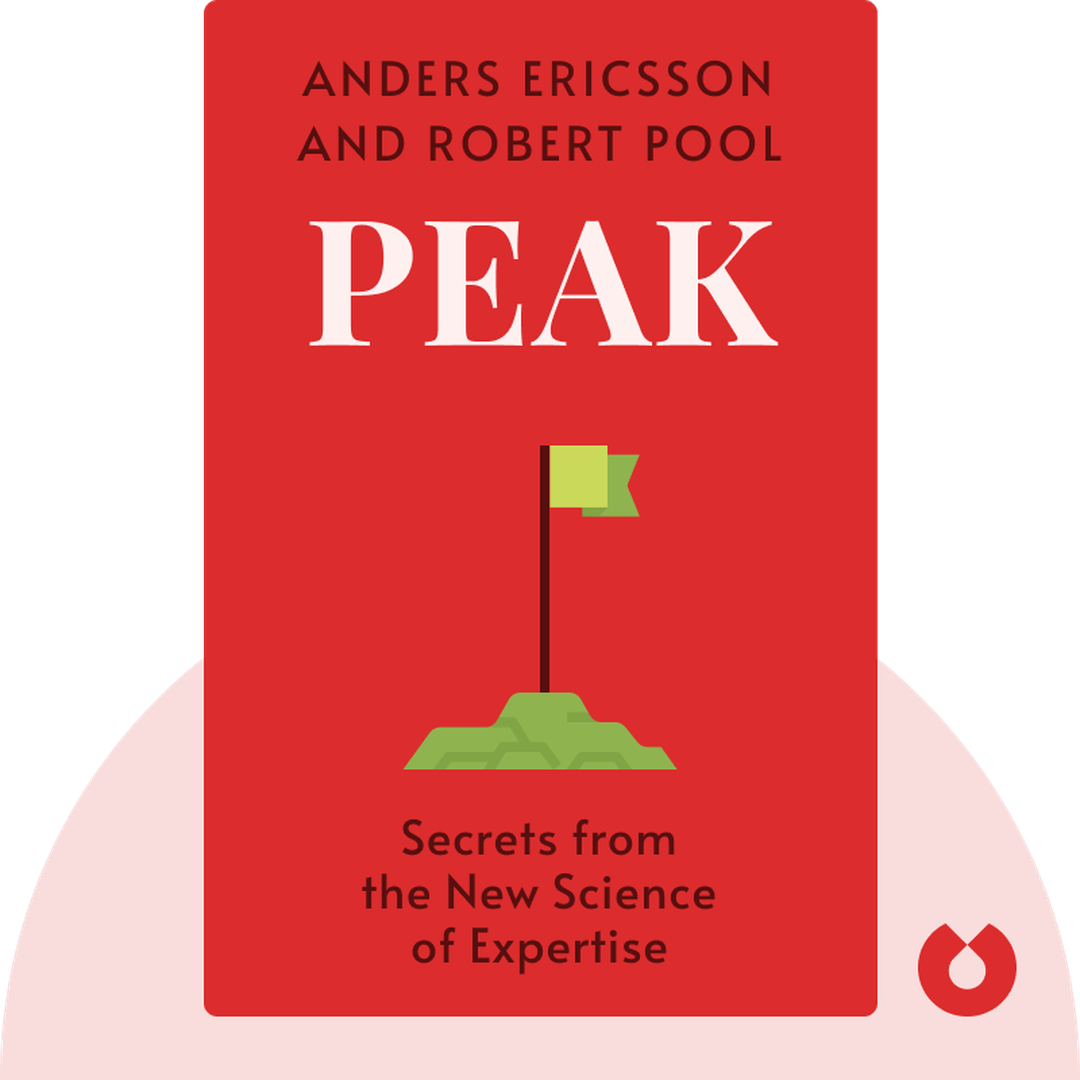
Peak (2016) is your guide to achieving expertise through regular practice. Counter to the general perception that natural ability plays a large part in determining performance, these blinks show you that just about anyone can acquire specialized skills if they practice hard and correctly.
Who Should Listen to Peak?
- Students of cognitive psychology
- People who think they’re too old to learn new skills
- Business managers and entrepreneurs
Books Similar to Peak
Readers who enjoyed this also liked these titles.