If You're Curious About These Questions...
You should listen to this audiobook
- How did an ordinary research participant manage to memorize 82 numbers in a row, and what does this extraordinary feat reveal about the 'mental blueprints' experts use to process complex information?
- Why do experienced professionals sometimes perform worse than newcomers, and what specific elements separate mindless repetition from the 'purposeful practice' required for true mastery?
- What physical changes occur in the brains of London taxi drivers, and how does this scientific discovery prove that our minds are capable of physically adapting to extreme challenges?
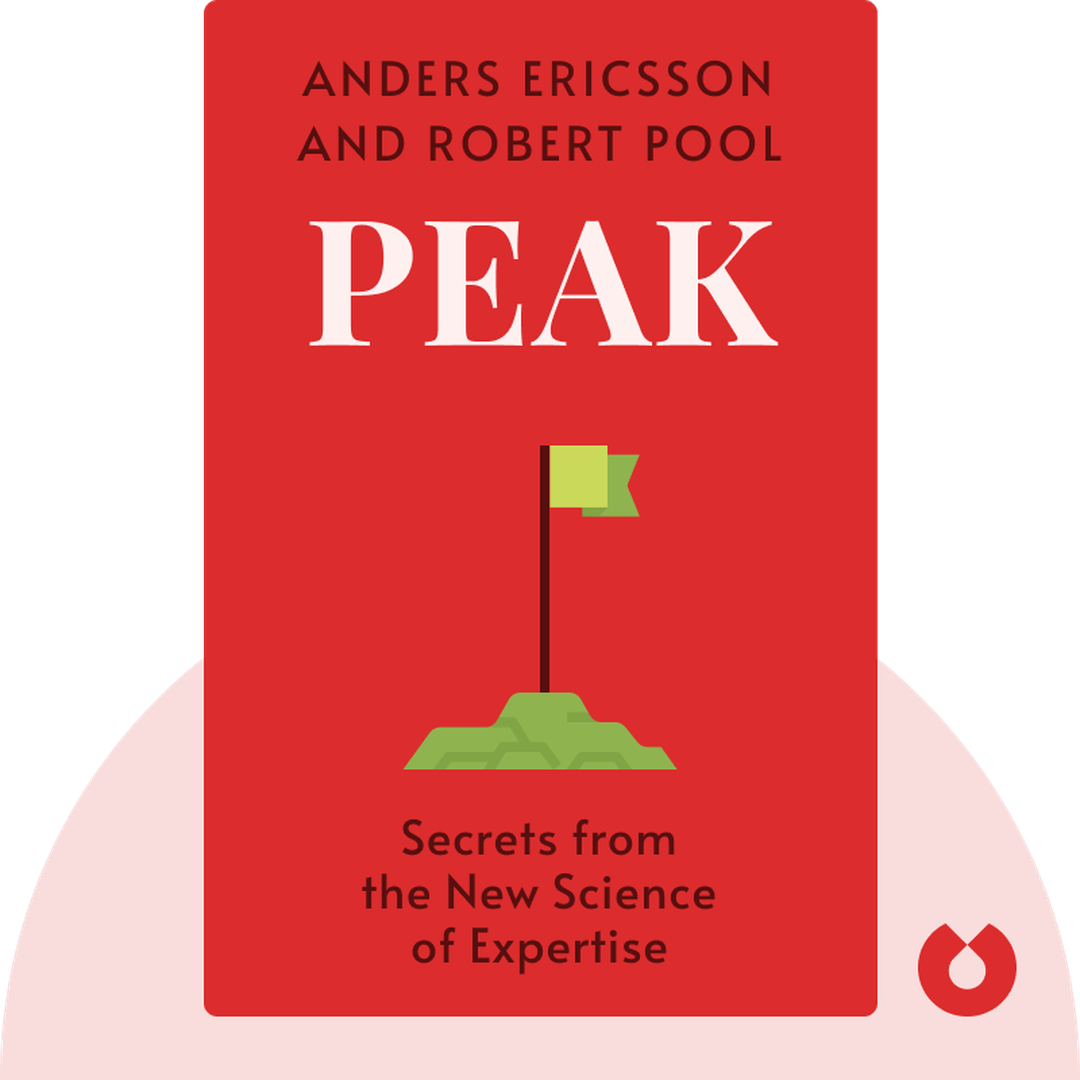
Listen to Peak — Free Audiobook
Key Takeaways from Peak
- Understand why 'natural talent' is often a myth, and learn how extraordinary abilities are actually built through focused, feedback-guided practice.
- Discover how the quality of your practice time matters more than the quantity, allowing anyone to shape their potential through a genuine willingness to evolve.
- Learn how your brain physically adapts to complex challenges, proving that mental capabilities can be strengthened just like a muscle through consistent training.
- Master the difference between simple repetition and real improvement by intentionally pushing beyond your comfort zone to target specific weaknesses.
- Understand how to build the 'mental blueprints' that experts rely on to quickly process complex information and organize isolated details into recognizable patterns.
Learning Tools
Reinforce what you learned from Peak
Mind Map
Quiz — Test Your Understanding
Peak — Full Chapter Overview
- 1Recommendation
- 2The Extraordinary Isn’t Born, It’s Built
- 3Training the Mind Like a Muscle
- 4Building the Inner Maps Experts Rely On
- 5What Practice Reveals About Real Mastery
- 6Turning Daily Life Into a Practice Ground
- 7Choosing Growth Over Destiny
- 8A Gentle Commitment to Keep Becoming
Peak Summary & Overview
This audio summary explores a hopeful, practical idea: excellence is less about being born gifted and more about learning how to practice in a way that actually changes the brain. Through stories from sports, music, memory research, and everyday life, it gently reframes “talent” as something we develop, not something we either have or don’t.
Across seven chapters, listeners are guided through the science of brain adaptability, the role of mental representations—those inner blueprints experts rely on—and the difference between repeating an action and practicing with intention. The message is steady and supportive: progress is available to anyone willing to learn, adjust, and keep going.
Who Should Listen to Peak?
- People who admire high performers and want to understand what actually builds skill beyond “natural talent.”
- Students, professionals, athletes, and creatives who want a calmer, clearer way to practice and improve.
- Anyone who feels “not gifted enough” and would like a more empowering, evidence-based mindset.
Books Similar to Peak
Readers who enjoyed this also liked these titles.