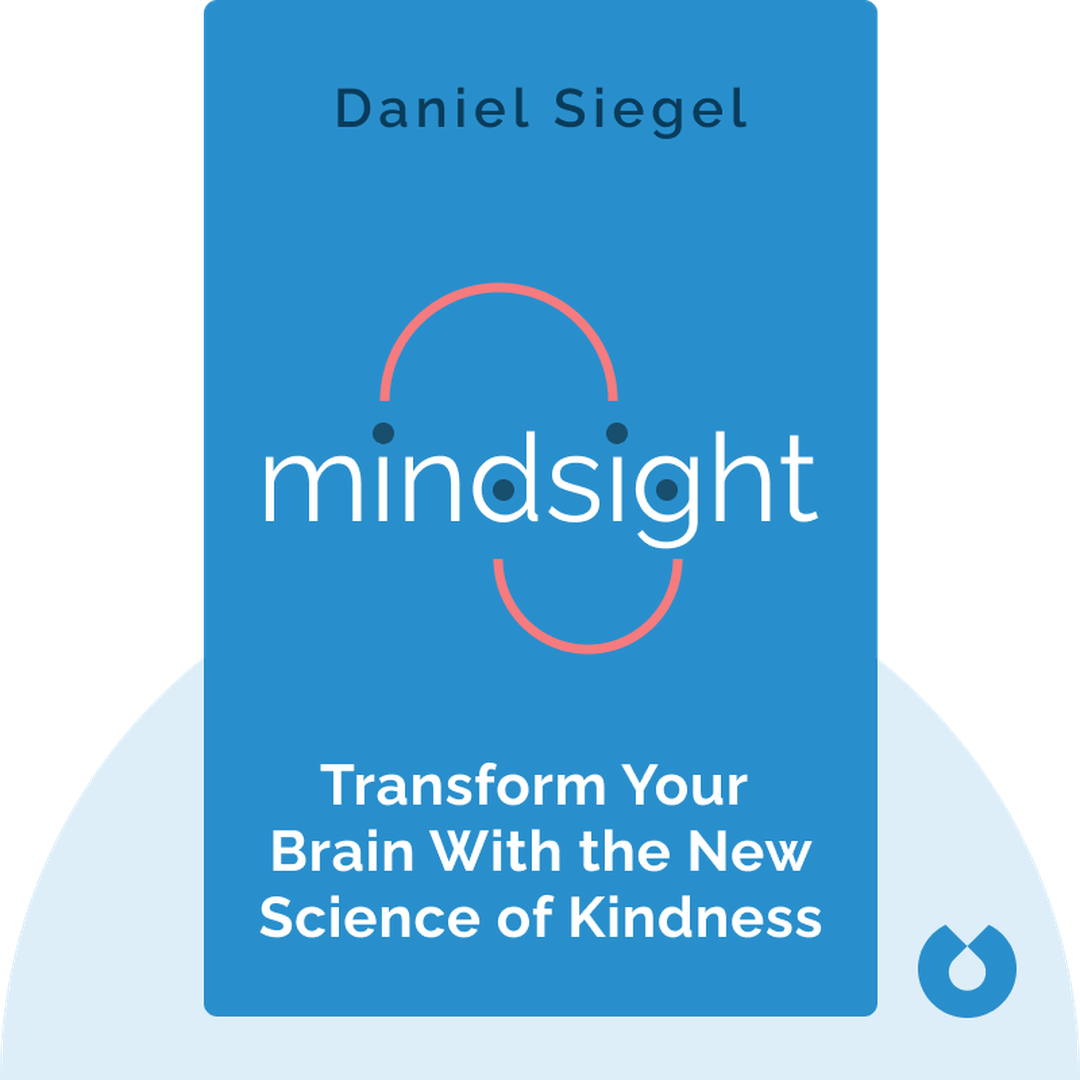
If You're Curious About These Questions...
You should listen to this audiobook
- Have you ever wondered why certain situations trigger intense emotional reactions that seem to come out of nowhere?
- What if you could develop a powerful 'sixth sense' to rewire your brain’s automatic responses and master your emotions?
- Did you know that the secret to transforming your relationships might lie in how your brain and body communicate during moments of stress?
Listen to Mindsight — Cinematic Audio Edition
Loading player...
Key Takeaways from Mindsight
- Discover how to develop 'mindsight,' your seventh sense, to recognize harmful mental habits and physically alter your brain's structure for improved well-being.
- Understand the crucial distinction between your core state of being and temporary feelings, allowing you to experience emotions without being consumed by them.
- Learn to navigate the 'Triangle of Well-Being'—the integrated system of your mind, brain, and relationships—to intentionally adjust the flow of energy and information in your life.
- Explore how the brain's prefrontal cortex constructs 'me,' 'you,' and 'we' mental maps that are essential for fostering self-awareness, deep empathy, and meaningful connections.
- Master the ability to balance your logical left brain with your emotional right brain by using focused awareness on physical sensations to manage and articulate intense feelings.
Learning Tools
Reinforce what you learned from Mindsight
Mind Map
Mindsight
Brain & Biology+
The Harmonic Self+
Emotional Regulation+
Healing the Past+
Enhancing Relationships+
Managing Uncertainty+
Quiz — Test Your Understanding
Question 1 of 9
According to the text, what is a primary function of mindsight in overwhelming situations, such as dealing with screaming children?
Question 2 of 9
Which part of the brain is identified as enabling us to use mindsight to empathize with others, make moral judgments, and maintain our sense of identity?
Question 3 of 9
What metaphor does mindsight-based therapy use to describe a 'harmonic self' that adapts to external changes while staying true to its core values?
Question 4 of 9
Why do mindsight-based therapies specifically target the right hemisphere of the brain?
Question 5 of 9
Which of the following makes up the three key pillars of mindsight exercises designed to help us understand our feelings?
Question 6 of 9
How does the text suggest using mindsight to overcome harmful misconceptions learned during childhood?
Question 7 of 9
In the context of relationship problems, what happens when a partner becomes 'reactive'?
Question 8 of 9
How can mindsight techniques like the 'body scan' help individuals deal with unexplained physical pain linked to past trauma?
Question 9 of 9
What mindsight strategy is recommended for coping with neurotic behaviors or obsessive-compulsive urges?
Mindsight — Full Chapter Overview
- 1Recommendation
- 2Mindsight helps us understand the links between mind, body, and attitude.
- 3The aim of mindsight practice is a balanced, harmonious self.
- 4Mindsight is brain training that supports resilience and everyday emotional health.
- 5Mindsight helps train the brain’s right side to recognize and manage discomfort.
- 6Mindsight shows us that feelings are passing experiences, not fixed character traits.
- 7Negative childhood experiences may shape how we see the world today, but mindsight can help us move beyond them.
- 8Use mindsight to respond receptively, rather than reactively, when addressing relationship problems with your partner.
- 9Mindsight can help us deal with both past trauma and an uncertain present.
- 10Final summary
Mindsight Summary & Overview
Mindsight (2010) introduces the reader to the many factors that shape the way we react to life’s challenges. Emotional responses are tied to our bodies, brains and childhood experiences. With mindsight, we can learn to manage our emotions in order to improve our relationships and well-being.
Who Should Listen to Mindsight?
- Readers interested in the relationships between the human body, brain and behavior
- Anyone interested in contemporary approaches to psychotherapy
- Individuals looking for guidance in dealing with uncontrollable emotions
Books Similar to Mindsight
Readers who enjoyed this also liked these titles.