If You're Curious About These Questions...
You should listen to this audiobook
- What's the secret to boosting your well-being and relationships with just a few simple daily habits?
- Have you ever wondered how ancient mindfulness techniques can be combined with modern psychology to transform your life?
- What if you could rewire your brain to respond to stress and anxiety with calm and clarity?
Listen to The Mindful Day — Free Audiobook
Loading player...
Key Takeaways from The Mindful Day
- Understand why our biological evolution wires our brains to anticipate threats, and discover how mindfulness helps you overcome this primal alarm system to stay present.
- Learn how to perform a body scan to connect physical sensations with hidden emotions, allowing you to make more meaningful choices throughout your day.
- Master the STOP method—Stop, Take a breath, Observe, and Proceed with kindness—a powerful, four-step technique to quickly calm your mind during stressful situations.
- Discover why starting your morning by practicing gratitude instead of stressing over your to-do list can significantly boost both your daily productivity and overall well-being.
- Find out how practicing loving-kindness meditation can increase your compassion for yourself and others, helping you build a calmer and more accepting mindset.
Learning Tools
Reinforce what you learned from The Mindful Day
Mind Map
The Mindful Day
Core Concepts+
Foundational Practices+
Morning Routine+
Professional Communication+
Leisure and Nature+
Relationships and Affection+
Evening and Home Rituals+
Actionable Mindset Shifts+
Quiz — Test Your Understanding
Question 1 of 8
Why does the human mind naturally struggle to stay in the present moment, according to the text?
Question 2 of 8
What is the primary purpose of noticing physical sensations during the 'body scan' practice?
Question 3 of 8
In the STOP practice used for stressful situations, what does the 'O' stand for?
Question 4 of 8
What did a University of California study reveal about the practice of gratitude?
Question 5 of 8
How does the author suggest you respond to an upsetting or critical email from a coworker?
Question 6 of 8
According to the text, what happens to your brain when you take a mindful walk in nature?
Question 7 of 8
What is the specific technique recommended for the 'hugging meditation'?
Question 8 of 8
When practicing mindful cooking, what does the author suggest using as an 'anchor' if your mind starts to wander?
The Mindful Day — Full Chapter Overview
- 1Recommendation
- 2Mindfulness practice helps you stop ruminating about the past or mentally rushing far ahead into the future.
- 3Just a handful of simple practices is all you need to begin practicing mindfulness.
- 4Create a mindful morning by practicing gratitude alongside a short meditation.
- 5Mindfulness helps you be a better communicator.
- 6Your free time is a precious resource, and you shouldn’t waste it.
- 7The hugging practice helps us show our loved ones we care.
- 8Mindfulness lets you feel like you’ve truly come home.
The Mindful Day Summary & Overview
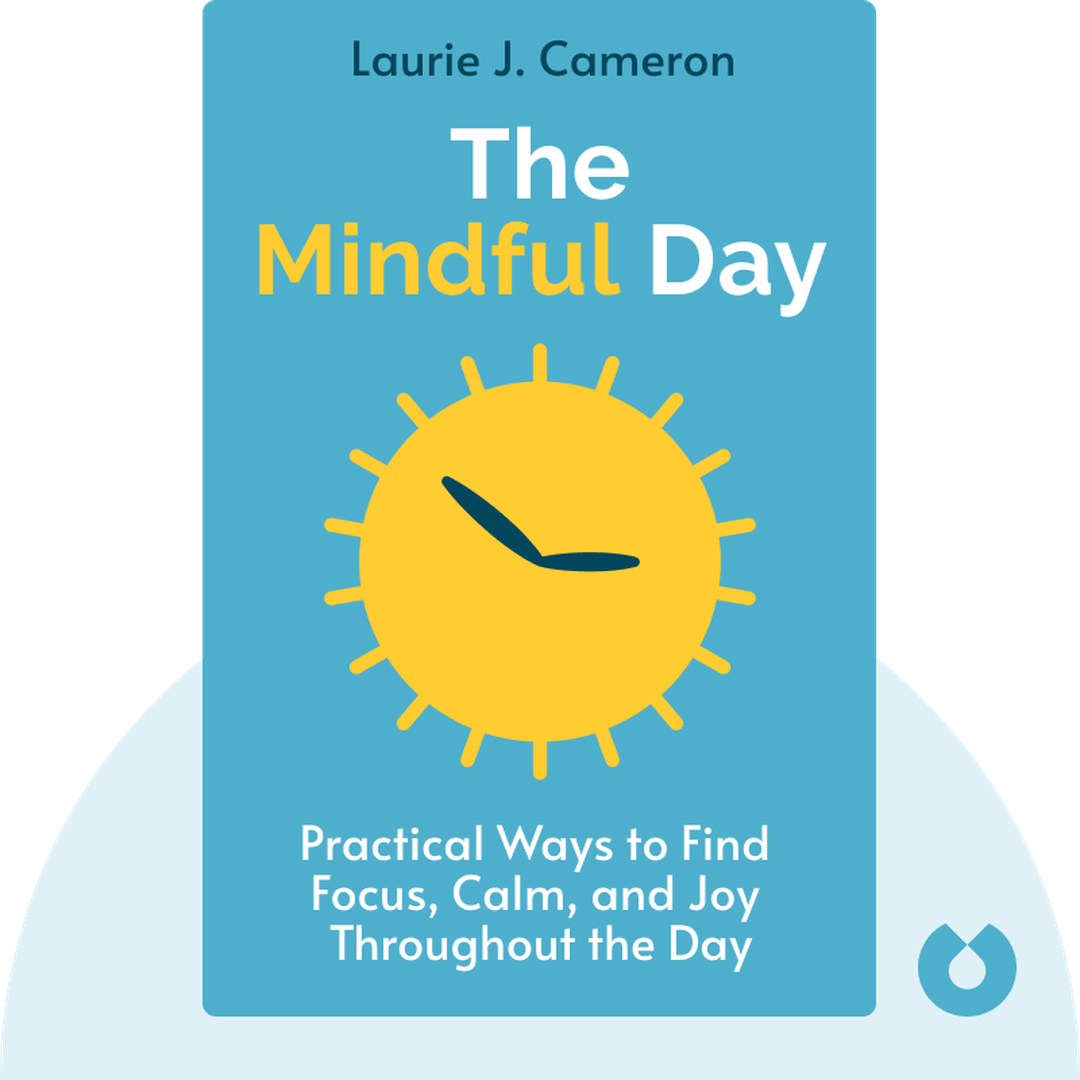
The Mindful Day (2018) explores the benefits of mindfulness and explains how it can be integrated into your everyday routine. Drawing on ancient techniques and cutting-edge psychological research, these blinks reveal how simple mindfulness practices can give your well-being, and your relationships, a boost.
Who Should Listen to The Mindful Day?
- Anyone feeling stressed or overburdened
- Psychology buffs looking for fresh insights
- Mindfulness enthusiasts seeking a new angle
Books Similar to The Mindful Day
Readers who enjoyed this also liked these titles.