If You're Curious About These Questions...
You should listen to this audiobook
- Have you ever wondered why highly qualified experts are often ignored while confident 'blowhards' manage to capture everyone’s attention?
- Did you know that seemingly irrelevant details, like the shape of your face or the color of your lipstick, can fundamentally change how people respond to your message?
- What’s the secret to becoming the kind of person others instinctively trust and follow, regardless of the actual information you're sharing?
Listen to Messengers — Free Audiobook
Loading player...
Key Takeaways from Messengers
- Understand why we often accept or reject information based entirely on our instinctive reactions to the messenger, rather than the logical merits of the message itself.
- Discover how humans make remarkably accurate snap judgments about a person's character and competence within mere milliseconds of observing them.
- Learn how a messenger's visible socioeconomic status heavily influences our behavior, making us far more likely to defer to and follow those who appear wealthy.
- Explore the 'Just World Hypothesis' to understand why we naturally assume highly successful people are intelligent, hardworking, and deserving of our undivided attention.
- Find out how perceived competence and authority can trigger blind obedience, leading people to unquestioningly follow instructions even when they defy common sense.
Learning Tools
Reinforce what you learned from Messengers
Mind Map
Messengers
Core Premise+
Status Indicators+
Connection Builders+
Quiz — Test Your Understanding
Question 1 of 9
Why did investigators of the 2007-08 financial crisis prefer to speak with journalist Michael Lewis rather than investor Michael Burry, who actually predicted the crash?
Question 2 of 9
What psychological concept explains why pedestrians are three times more likely to follow a jaywalker wearing a suit than one wearing denim?
Question 3 of 9
According to the book, what is the primary reason people blindly follow instructions from perceived experts, such as a nurse administering ear drops rectally?
Question 4 of 9
Which of the following traits is most closely associated with a messenger projecting dominance?
Question 5 of 9
Why do humans generally find average-looking and symmetrical faces attractive?
Question 6 of 9
What did the Zimbabwean 'Get Braids Not Aids' program demonstrate about effective messengers?
Question 7 of 9
In the Texaco vs. Pennzoil lawsuit, what major factor contributed to Texaco losing the case and facing a massive penalty?
Question 8 of 9
How does displaying vulnerability, such as Theresa May's awkward dancing, typically affect a messenger's relationship with their audience?
Question 9 of 9
According to the text, how can a messenger like Donald Trump be viewed as trustworthy by his supporters despite making numerous false statements?
Messengers — Full Chapter Overview
- 1Recommendation
- 2Humans make quick judgments about messengers, not just their message.
- 3A messenger’s socioeconomic status shapes how we respond to them.
- 4Perceived competence is another status factor that strengthens a messenger.
- 5Signs of dominance can be a powerful way to deliver a message.
- 6We pay closer attention to and respond more positively to attractive messengers.
- 7Messengers should look for ways to connect with their audience.
- 8We instinctively respond well to messengers who seem warm.
- 9Showing vulnerability can tap into an audience’s empathy and willingness to help.
- 10Whether a messenger seems trustworthy is crucial to how we respond.
- 11Final summary
Messengers Summary & Overview
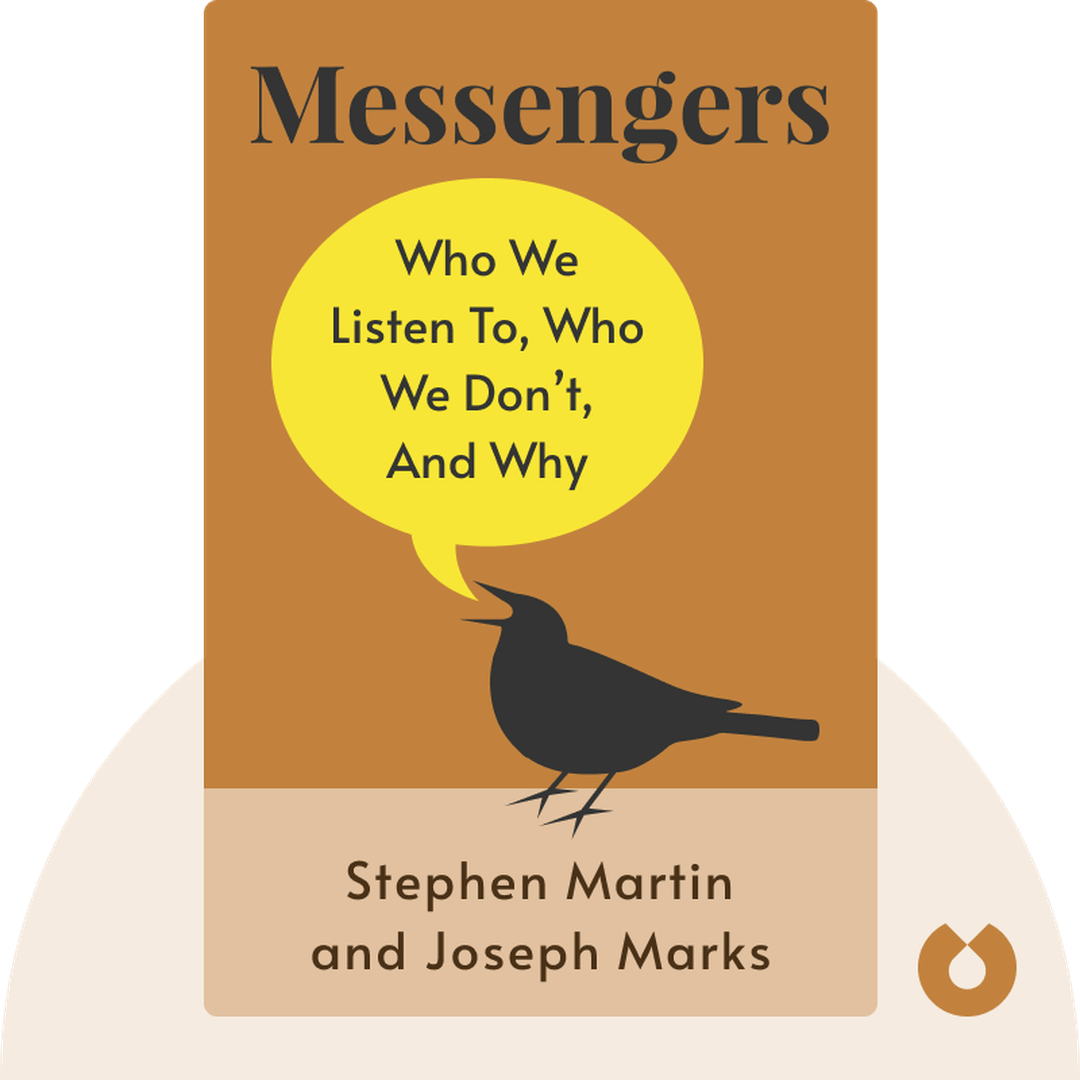
Messengers (2019) is a fascinating exploration of why we listen to, follow, or believe in some people but not others. It explains why thoughtful experts are sometimes ignored in favor of confident blowhards. And it reveals why apparently irrelevant details, like the color of someone’s lipstick or the roundness of their face, can make a huge difference to how we respond to them.
Who Should Listen to Messengers?
- Communicators who want to step up their influence
- Professionals who want to be more persuasive
- Anyone who wants to find more ways to connect with the people in their lives
Books Similar to Messengers
Readers who enjoyed this also liked these titles.