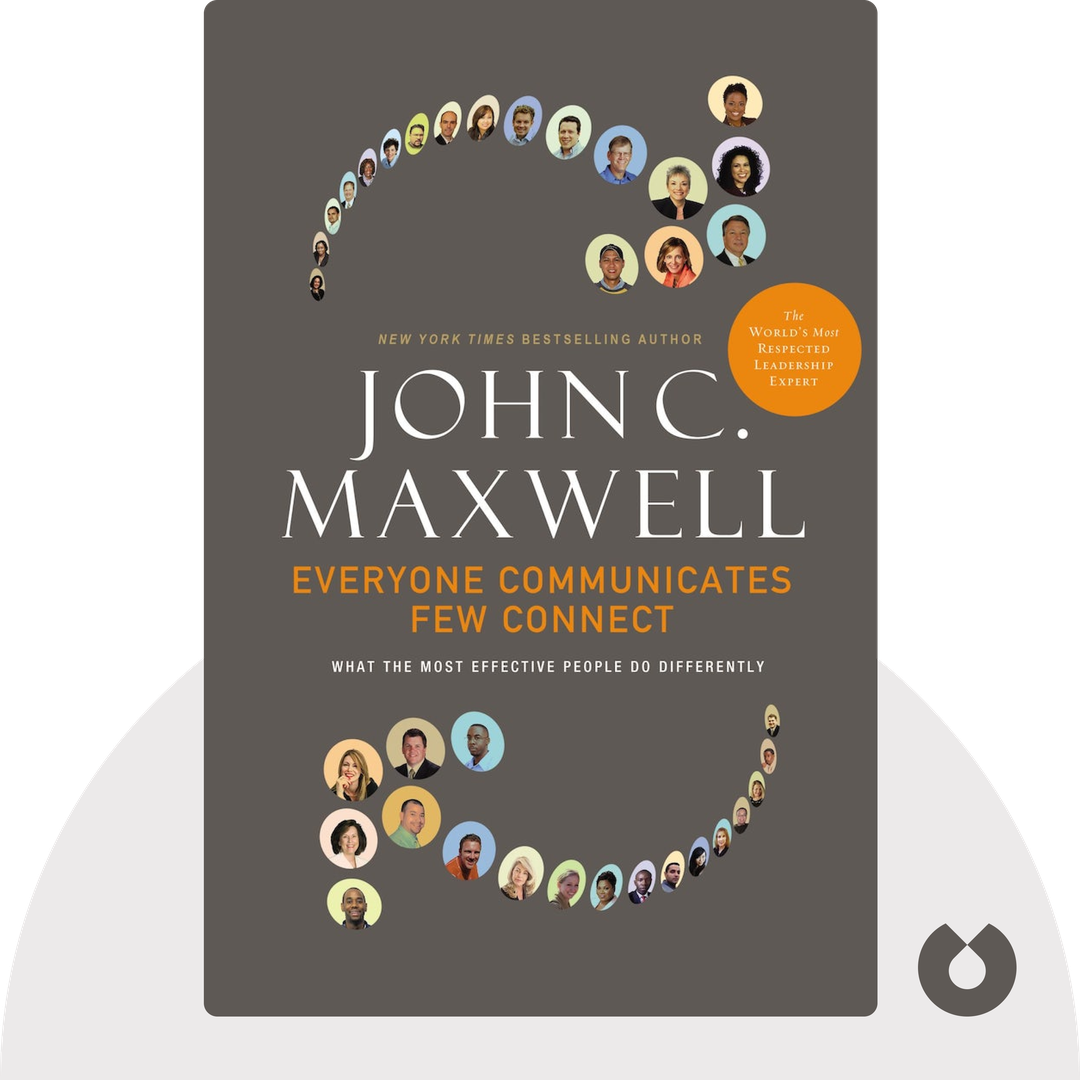
Everyone Communicates, Few Connect
Start ListeningDownload Try free on iPhoneScan to start in 5 seconds
Categories:
If You're Curious About These Questions...
You should listen to this audiobook
- Have you ever wondered why some people can effortlessly command a room while others struggle to be heard, even when they’re saying the exact same thing?
- What if you could master a simple shift in focus that instantly makes you more influential and persuasive in every conversation you have?
- What’s the secret to breaking through the common communication barriers that are quietly sabotaging your personal and professional relationships?
Listen to Everyone Communicates, Few Connect — Cinematic Audio Edition
Loading player...
Key Takeaways from Everyone Communicates, Few Connect
- Discover why moving beyond surface-level communication to forge genuine emotional connections is the ultimate key to expanding your influence and accelerating your career.
- Identify the four distinct communication styles—Relaters, Reactors, Accommodators, and Analyzers—so you can play to your strengths and adapt your approach to connect with anyone.
- Master the art of active listening by intentionally overcoming common psychological barriers like egocentrism, lack of focus, insecurity, and premature judgment.
- Understand how effective leaders use personal connection to build consensus, cast a shared vision, and win trust across all levels of an organization.
- Learn how to make authentic connection a daily habit by staying fully present, curbing your internal monologue, and genuinely valuing every person you interact with.
Learning Tools
Reinforce what you learned from Everyone Communicates, Few Connect
Mind Map
Everyone Communicates, Few Connect
The Value of Connection+
Four Communication Styles+
Listening as the Foundation+
Audience and Messaging+
Mastering Delivery+
Making Connection a Habit+
Quiz — Test Your Understanding
Question 1 of 8
According to the text, what is the fundamental definition of "connecting" in the context of communication?
Question 2 of 8
Which communication style is characterized by responding instinctively and emotionally, often resulting in a lively but sometimes impulsive conversationalist?
Question 3 of 8
What is a common pitfall for individuals who primarily use the "Accommodator" communication style?
Question 4 of 8
According to the book, how does insecurity act as a specific barrier to effective listening?
Question 5 of 8
When tailoring a message to an audience, what is the primary reason the author suggests doing demographic research beforehand?
Question 6 of 8
What specific body language and eye contact strategy is recommended for connecting during a one-on-one conversation?
Question 7 of 8
When presenting to a group, what effect does slowing down your speaking pace have on the audience?
Question 8 of 8
To make connecting a daily habit, what specific morning ritual does the text suggest?
Everyone Communicates, Few Connect — Full Chapter Overview
- 1Recommendation
- 2Connection is the key to leadership and impact
- 3The four communication styles
- 4Listening, not talking, forms the foundation of connection
- 5Keep your audience in mind
- 6Delivery makes all the difference
- 7Turn connecting into a habit
- 8Final summary
Everyone Communicates, Few Connect Summary & Overview
Everyone Communicates, Few Connect (2010) examines the common barriers that prevent authentic connection in communication. It provides practical strategies anyone can use to become better at connecting with others in both personal and professional relationships.
Who Should Listen to Everyone Communicates, Few Connect?
- Leaders, managers, and business professionals looking for more effective communication strategies
- Educators and parents seeking deeper connections at home and at school
- Anyone craving better communication for closer relationships, thriving teams, or energized communities
Books Similar to Everyone Communicates, Few Connect
Readers who enjoyed this also liked these titles.