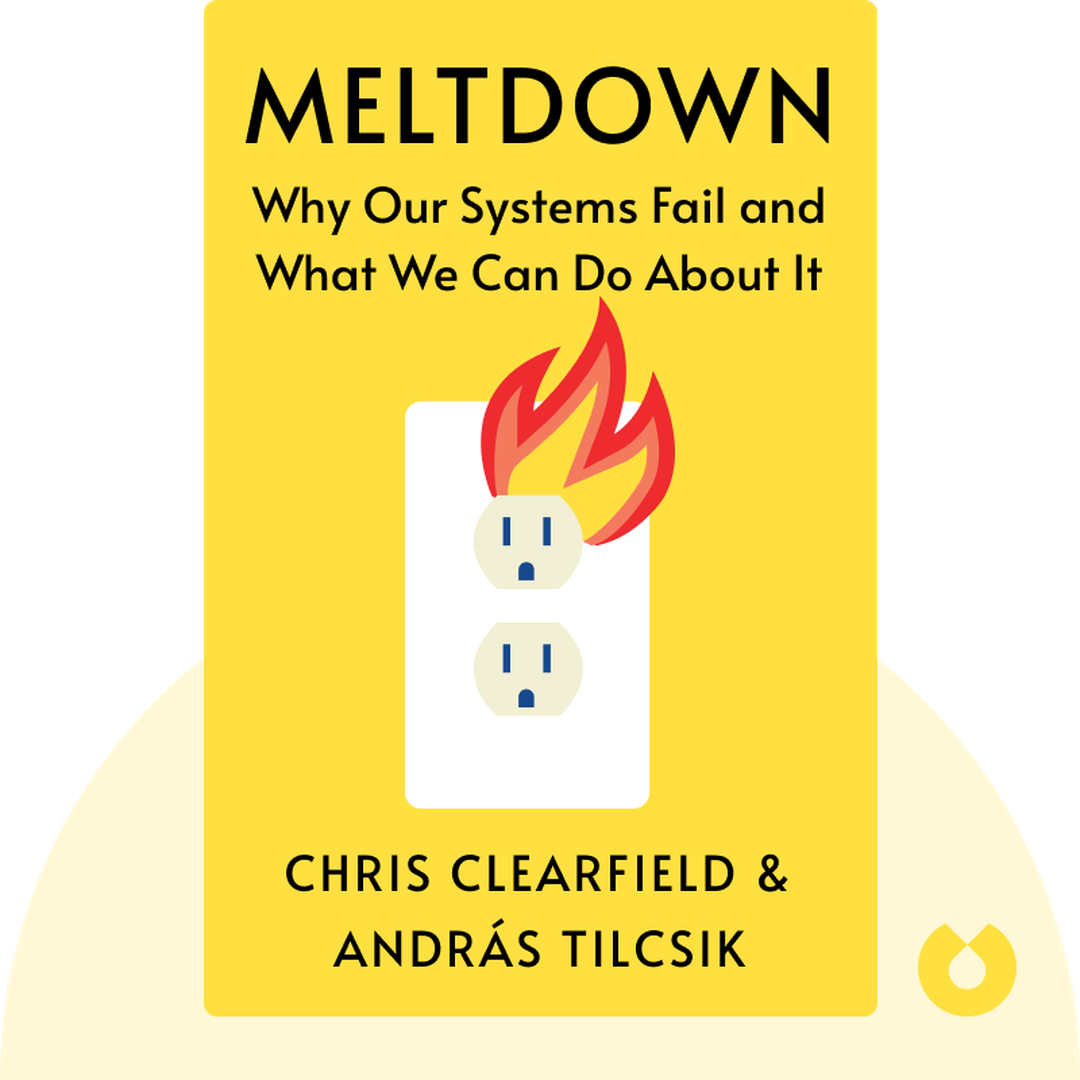
If You're Curious About These Questions...
You should listen to this audiobook
- Did you know that the most catastrophic system failures, from nuclear meltdowns to financial crashes, often share the exact same hidden patterns?
- Have you ever wondered why your team’s most outspoken dissenter might actually be your strongest defense against a total corporate collapse?
- What if you could master the simple, counterintuitive strategies that allow high-stakes organizations to prevent disasters before they even start?
Listen to Meltdown — Free Audiobook
Loading player...
Key Takeaways from Meltdown
- Discover why modern crises—from financial crashes to nuclear disasters—share the same hidden DNA of system complexity and tight coupling.
- Learn how to failure-proof your projects by increasing system transparency, making it harder for simple mistakes to escalate into catastrophic meltdowns.
- Understand the importance of building operational buffers into your business, allowing you to survive inevitable problems without needing to predict exactly what will go wrong.
- Master structured decision-making tools like SPIES to overcome the flaws of human instinct and accurately forecast a broader range of possible outcomes.
- Find out how to safely navigate inherently complex situations by actively troubleshooting minor everyday problems before they can snowball into irreversible crises.
Learning Tools
Reinforce what you learned from Meltdown
Mind Map
Meltdown
The Danger Zone+
System Design Solutions+
Decision-Making Tools+
Warning Signals+
Organizational Culture+
Coping Strategies+
Quiz — Test Your Understanding
Question 1 of 8
What two inherent features of modern systems combine to create what Charles Perrow calls the 'Danger Zone' for meltdowns?
Question 2 of 8
According to the text, if a system's complexity cannot be reduced (such as climbing Mount Everest), what is the best alternative to prevent catastrophic failure?
Question 3 of 8
How does the SPIES (Subjective Probability Interval Estimates) tool help prevent disasters like the Fukushima nuclear accident?
Question 4 of 8
What is the primary goal of the 'anomalizing' process used in the commercial airline industry?
Question 5 of 8
Why did the US National Transportation Safety Board (NTSB) find that major airline accidents occurred more frequently when senior captains were flying instead of junior officers?
Question 6 of 8
Based on sociological research cited in the text, why do compulsory diversity programs often fail to produce results in organizations?
Question 7 of 8
What is 'plan continuation bias' (also known by pilots as 'get-there-itis')?
Question 8 of 8
What is the main advantage of conducting a 'pre-mortem' before starting a project?
Meltdown — Full Chapter Overview
- 1Recommendation
- 2Modern systems often break down for similar reasons across very different contexts.
- 3Failure can be prevented by reducing complexity and creating more buffer between system parts.
- 4Structured decision-making tools can help you prevent disasters, large and small.
- 5Complex systems send warning signals that can help save lives, money, and reputations.
- 6Encouraging dissent makes teams more effective and systems more resilient.
- 7Building diverse teams helps organizations reduce risk and improve outcomes.
- 8Reflection and iteration are vital coping strategies in high-pressure situations.
- 9Final summary
Meltdown Summary & Overview
Meltdown (2018) unpacks the weaknesses shared by local and global systems. With diverse and astonishing examples, it provides empowering solutions to avoid failure. The Financial Times named it one of their best books of 2018, and the book’s message is ultimately hopeful – that the answers are easily within reach if we look for them.
Who Should Listen to Meltdown?
- Curious individuals seeking a new perspective on how the world works
- Leaders and staff who want to build stronger teams and better handle or prevent crises
- Whistleblowers, dissenters and diversity champions
Books Similar to Meltdown
Readers who enjoyed this also liked these titles.