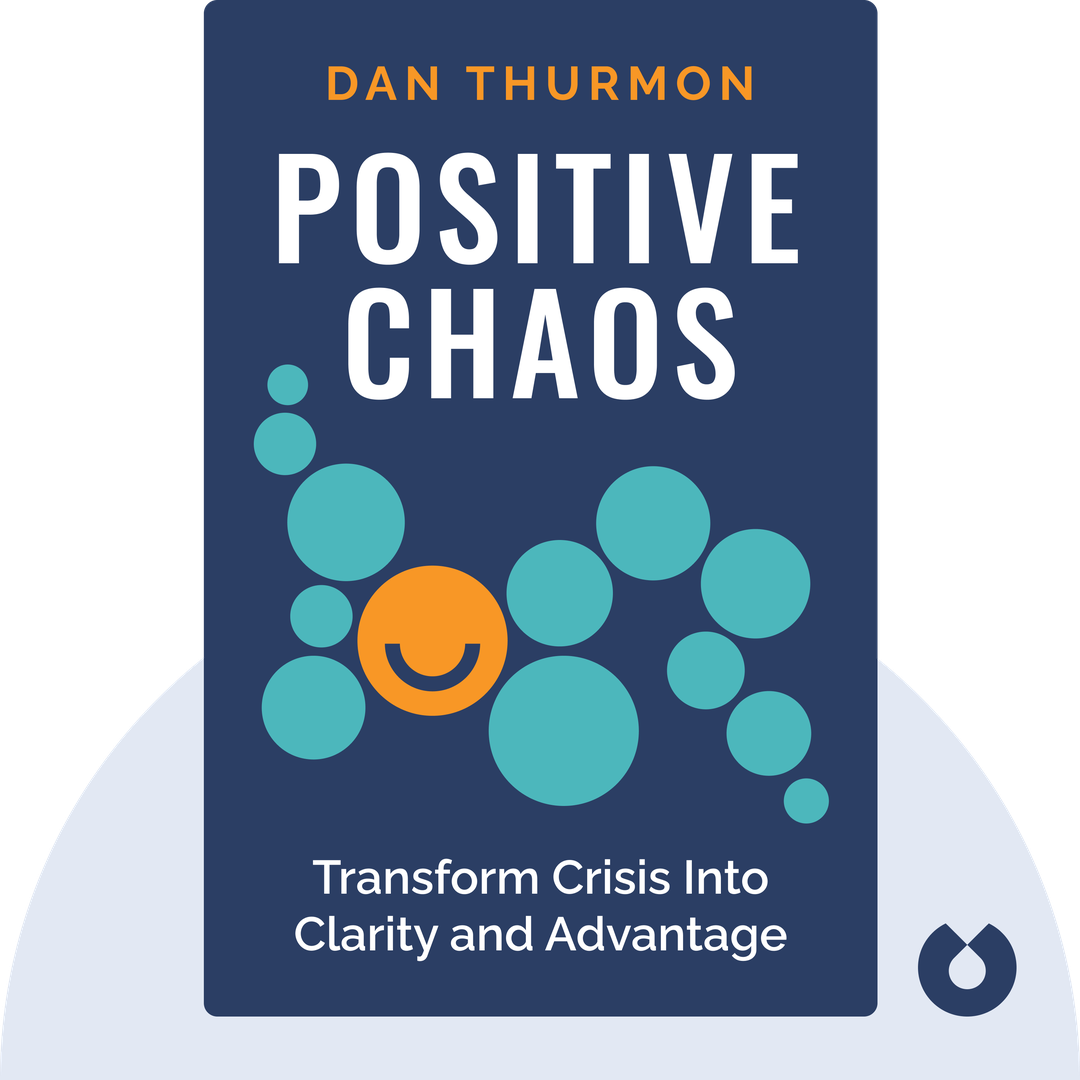
If You're Curious About These Questions...
You should listen to this audiobook
- Did you know that the very chaos you’re trying to avoid might actually be the secret ingredient to your next major breakthrough?
- Have you ever wondered why some leaders seem to gain momentum during unpredictable times while others are paralyzed by uncertainty?
- What if you could transform every disruptive moment in your life into a deliberate catalyst for your own personal and professional growth?
Listen to Positive Chaos — Free Audiobook
Loading player...
Key Takeaways from Positive Chaos
- Understand why chaos is a neutral force driven by perception rather than an unchangeable reality, and learn how to reframe it into a powerful opportunity for growth.
- Discover how to implement 'positive bookends' by starting and ending your day with uplifting actions that significantly tame your daily experience of stress.
- Learn to 'flip the script' on overwhelming situations by actively looking for the hidden upside, transforming anxiety-inducing challenges into actionable solutions.
- Find out how to break free from analysis paralysis by asking yourself one simple, profound question that identifies the single pivotal action you need to take.
- Master the strategy of playing offense against constant disruption by abandoning the impossible need to overanalyze every variable and choosing purposeful action instead.
Learning Tools
Reinforce what you learned from Positive Chaos
Mind Map
Positive Chaos
The Nature of Chaos+
The Power of Positivity+
Overcoming Analysis Paralysis+
Empowering Your Choices+
Cultivating Gratitude+
Quiz — Test Your Understanding
Question 1 of 7
According to the text, what is the fundamental nature of chaos in the modern era?
Question 2 of 7
What does the practice of using 'positive bookends' entail?
Question 3 of 7
How does the author suggest we should view the shortcomings of other people?
Question 4 of 7
To overcome 'analysis paralysis' caused by chaos, what specific question does the author recommend asking yourself?
Question 5 of 7
Why does the author argue against trying to intellectually grasp and anticipate every aspect of a chaotic situation?
Question 6 of 7
What is the primary danger of repeatedly using the phrase 'I have to' in daily life?
Question 7 of 7
How does adopting a 'get-to' mindset help in dealing with life's obligations and challenges?
Positive Chaos — Full Chapter Overview
- 1Recommendation
- 2Chaos can seem overwhelming, yet it’s often more about perception than concrete reality itself
- 3Positivity calms chaos
- 4Simple questions can produce profoundly meaningful conclusions
- 5Gain greater power by embracing your choices
- 6Gratitude can offer you a fresh perspective on chaos
Positive Chaos Summary & Overview
Positive Chaos (2023) delves into the complexities and paradoxical benefits of chaos. Drawing on groundbreaking research, it shows how to transform chaos from a disruptive force into a catalyst for personal development.
Who Should Listen to Positive Chaos?
- Individuals seeking strategies to thrive in chaotic environments
- Leaders aiming to enhance their skills in unpredictable times
- Professionals interested in personal and workplace growth
Books Similar to Positive Chaos
Readers who enjoyed this also liked these titles.