Mastering Communication at Work
Start ListeningDownload Try free on iPhoneScan to start in 5 seconds
Categories:
If You're Curious About These Questions...
You should listen to this audiobook
- Have you ever wondered why your most important messages are sometimes ignored, even when you’re being perfectly clear?
- What’s the secret to identifying your listener’s hidden tendencies so you can influence their decisions more effectively?
- What if you could master the specific communication shifts that turn average managers into high-impact leaders?
Listen to Mastering Communication at Work — Free Audiobook
Loading player...
Key Takeaways from Mastering Communication at Work
- Learn how to become a master communicator by adapting your personal style to fit the specific needs of your audience.
- Discover the critical difference between inductive and deductive thinkers so you can properly structure your conversations and presentations for maximum impact.
- Understand how to build and maintain your workplace 'ethos' to boost your professional credibility and effectively champion your ideas.
- Find out how to strike the perfect balance of professionalism and respect when delivering feedback, ensuring your employee's dignity remains intact.
- Master team motivation by ditching the one-size-fits-all approach and identifying whether each individual is driven by ethos, emotion, or logic.
Learning Tools
Reinforce what you learned from Mastering Communication at Work
Mind Map
Mastering Communication at Work
Adapting to Thinking Styles+
Managing Ethos (Credibility)+
The Motivation Matrix+
Framing the Message+
Mastering Validation+
Vocal Delivery (Color)+
Workplace Culture & Remote Work+
Quiz — Test Your Understanding
Question 1 of 7
How should you structure a presentation for a board of directors who primarily think deductively?
Question 2 of 7
When giving constructive feedback to an employee you manage, how should you adjust your ethos?
Question 3 of 7
According to the book's 3x3 motivation matrix, why might offering a $100 bonus to the best salesperson backfire?
Question 4 of 7
What is a key consideration regarding internal and external thinkers when facilitating a meeting?
Question 5 of 7
What does it mean to 'validate' an employee, particularly when they are being defensive?
Question 6 of 7
How can a speaker effectively use 'plosives' (hard consonants like B, P, T, K) in their workplace communication?
Question 7 of 7
How can you test if your communication framing strategy is actually working on your audience?
Mastering Communication at Work — Full Chapter Overview
- 1Recommendation
- 2Deductive and inductive thinkers communicate in different ways – so adapt accordingly.
- 3Maintaining strong ethos is essential for workplace communication.
- 4Motivate your team by understanding what drives each person.
- 5Good communicators know how to frame their message well.
- 6The best communicators are skilled at validation.
- 7Use vocal variety to convey the message you truly mean.
- 8Communication is a vital hard skill in the workplace.
- 9Final summary
Mastering Communication at Work Summary & Overview
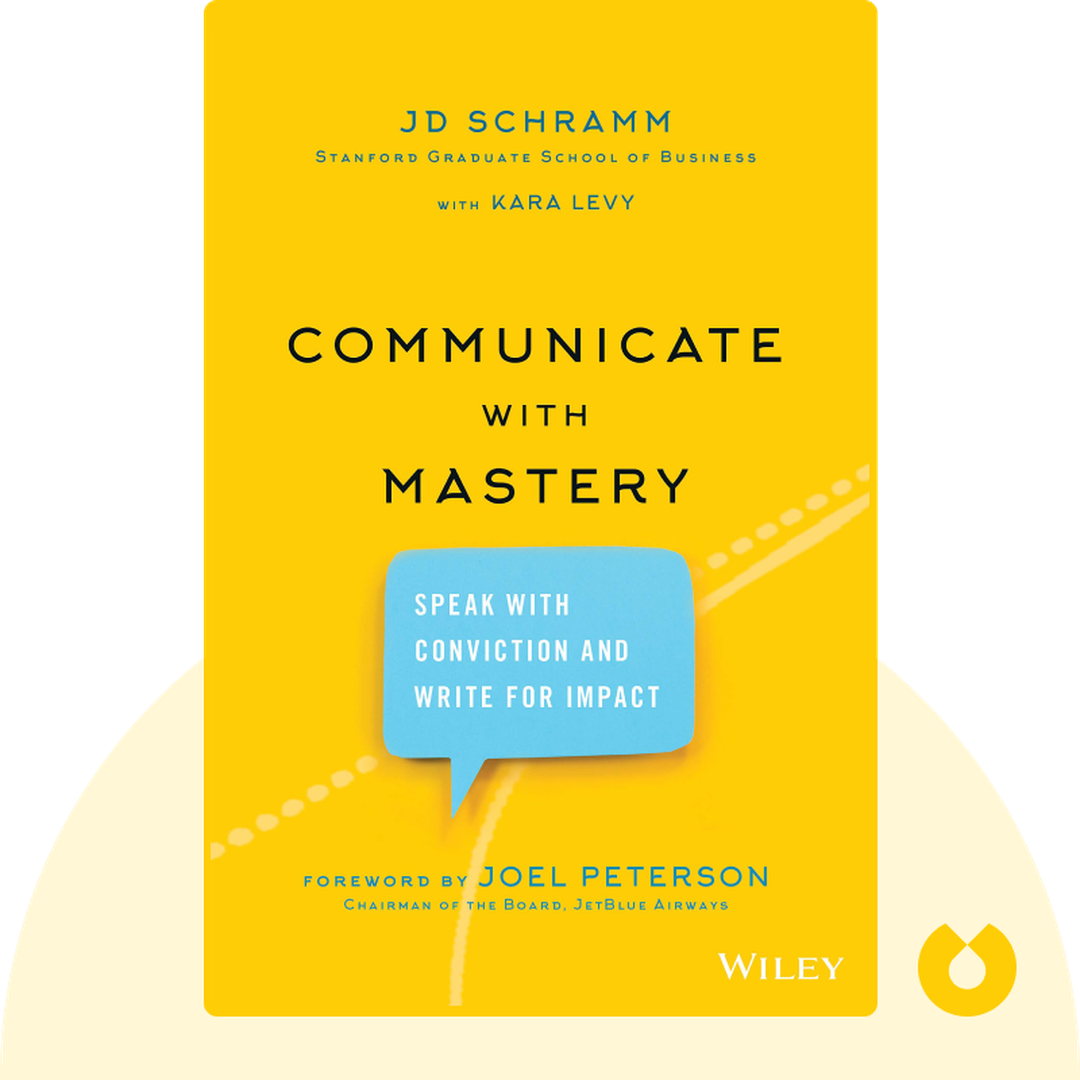
Mastering Communication at Work (revised edition, 2021) is a classic guide on leading in the workplace through strong communication skills. It teaches you how to communicate effectively by understanding your listener’s tendencies and motivations.
Who Should Listen to Mastering Communication at Work?
- Managers looking for new communication tactics
- Employees aiming to make the next step up
- Executives who want to improve relations with staff
Books Similar to Mastering Communication at Work
Readers who enjoyed this also liked these titles.