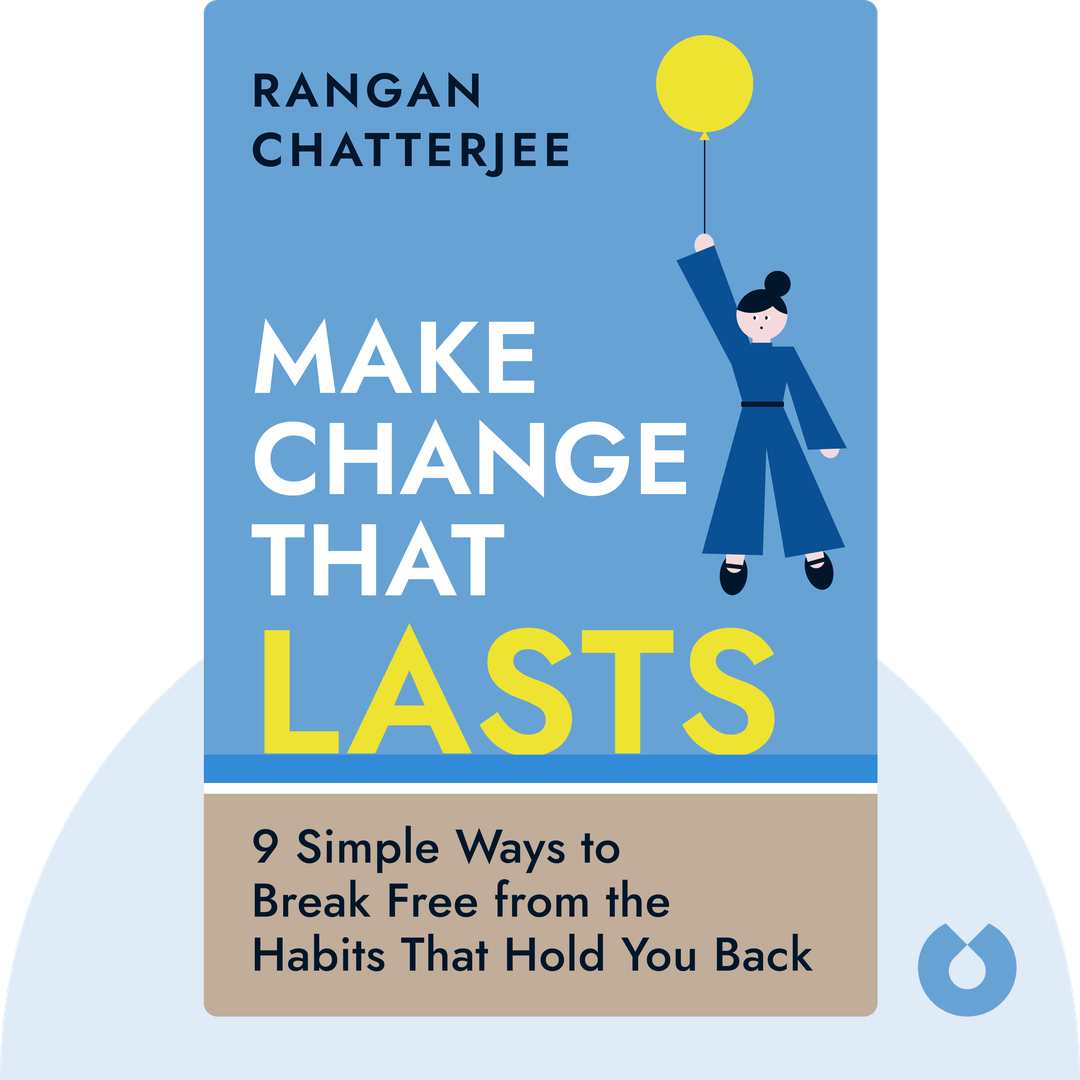
Make Change That Lasts
Start ListeningDownload Try free on iPhoneScan to start in 5 seconds
Categories:
If You're Curious About These Questions...
You should listen to this audiobook
- Did you know that nine hidden triggers could be secretly driving your daily habits, and identifying them is the key to finally breaking free from stress?
- Have you ever wondered why external achievements often fail to bring lasting happiness, and what the real secret is to finding fulfillment that actually sticks?
- What if you could move beyond the cycle of overthinking and reactive behavior to regain complete control over your emotional well-being?
Listen to Make Change That Lasts — Cinematic Audio Edition
Loading player...
Key Takeaways from Make Change That Lasts
- Discover how to shift from 'outsight' to 'insight' by uncovering the hidden emotional drivers and reliances that secretly control your unwanted behaviors.
- Learn why outsourcing your health decisions to experts can backfire, and how tuning into your body's unique signals leads to more empowered well-being.
- Understand how striving for perfection and seeking external validation drains your energy, and discover simple journaling techniques to build self-compassion.
- Find out how chronic people-pleasing harms your health and relationships, and learn to live authentically by setting small, consistent boundaries.
- Master the practice of intentional discomfort—like taking cold showers or walking in bad weather—to counteract modern convenience and build unshakeable physical and mental resilience.
Learning Tools
Reinforce what you learned from Make Change That Lasts
Mind Map
Make Change That Lasts
Core Philosophy: Minimal Reliance+
Trusting Yourself Over Perfection+
Authenticity and Boundaries+
Navigating Conflict and Adversity+
Reclaiming Time and Releasing the Past+
Meaningful Relationships+
Quiz — Test Your Understanding
Question 1 of 8
What is the primary difference between 'outsight' and 'insight' as described in the book?
Question 2 of 8
How does the concept of 'minimal reliance' approach unwanted behaviors and indulgences?
Question 3 of 8
Why does the author caution against outsourcing all of your health decisions to experts?
Question 4 of 8
What strategy does the book suggest for counteracting the negative effects of modern society's over-reliance on comfort?
Question 5 of 8
According to the author, what is the root cause of easily taking offense to differing opinions?
Question 6 of 8
Why is viewing life as an 'escalator' of constant progress considered problematic?
Question 7 of 8
How does the book view the common association between busyness and success?
Question 8 of 8
What is the author's perspective on the balance between self-reliance and relationships?
Make Change That Lasts — Full Chapter Overview
- 1Recommendation
- 2Discover what controls your behavior
- 3Stop pursuing perfection and start trusting yourself
- 4Live more authentically by setting boundaries and accepting discomfort
- 5Release the need to be right and embrace life’s challenges
- 6Move on from the past and reclaim your time
- 7Thrive with balanced reliance and meaningful relationships
- 8Final summary
Make Change That Lasts Summary & Overview
Make Change That Lasts (2024) uncovers nine hidden triggers that drive reliance on external factors to maintain happiness and calm. It offers simple, practical strategies to help you break free from reactive habits and regain control of your well-being. It will empower you to develop self-awareness, resilience, and a sense of lasting fulfillment.
Who Should Listen to Make Change That Lasts?
- Stressed professionals seeking balance and intentional living
- Self-improvers aiming to break negative behavior patterns
- Overthinkers struggling with perfectionism or external validation
Books Similar to Make Change That Lasts
Readers who enjoyed this also liked these titles.