If You're Curious About These Questions...
You should listen to this audiobook
- Did you know that one of the world's most influential leaders began his journey not in a hall of power, but as a humble herd boy in the South African countryside?
- What’s the secret to maintaining an unbreakable spirit and a vision for justice through nearly three decades of imprisonment?
- Have you ever wondered how a revolutionary freedom fighter successfully transitioned from a prison cell to leading a nation toward reconciliation?
Listen to Long Walk to Freedom — Free Audiobook
Loading player...
Key Takeaways from Long Walk to Freedom
- Discover how Nelson Mandela’s lifelong commitment to social justice was sparked by the history lessons of tribal elders during his rural childhood.
- Learn how Mandela first began challenging institutional authority as a college student by organizing a representative committee and risking expulsion to stand up for his peers.
- Understand the profound impact of Johannesburg's segregated workforce on Mandela's worldview, where a gold mine served as a stark symbol of systemic capitalist oppression.
- Find out how a 1943 bus boycott over rising fares transformed Mandela from a passive observer into an active, empowered political participant.
- Explore why Mandela and his peers formed the ANC Youth League to cure a culture-wide inferiority complex and unite the masses at the dawn of apartheid.
Learning Tools
Reinforce what you learned from Long Walk to Freedom
Mind Map
Long Walk to Freedom
Early Life & Awakening+
Political Beginnings+
Apartheid & Defiance+
The Turn to Violence+
Trial & Imprisonment+
Uprisings & Global Pressure+
Negotiation & Freedom+
Quiz — Test Your Understanding
Question 1 of 10
What early experience initially opened Mandela's eyes to social injustice?
Question 2 of 10
Why was Mandela expelled from Fort Hare College during his second year?
Question 3 of 10
When Mandela first arrived in Johannesburg, what did he view as a powerful symbol of white oppression?
Question 4 of 10
What was the core argument of Anton Lembede, who deeply influenced Mandela and the ANC Youth League?
Question 5 of 10
Why did Mandela and the MK (Umkhonto we Siswe) initially choose sabotage as their primary method of resistance?
Question 6 of 10
During his 1962 trial, what was Mandela's primary argument regarding his defiance of the law?
Question 7 of 10
How did Mandela and his fellow prisoners protest the living conditions on Robben Island in 1966?
Question 8 of 10
How did the new generation of freedom fighters from the Black Consciousness Movement view Mandela when they arrived at Robben Island?
Question 9 of 10
What realization prompted Mandela to initiate secret negotiations with the South African government in the 1980s?
Question 10 of 10
Following his release in 1990, what controversial compromise did the ANC make during secret bilateral talks with the government?
Long Walk to Freedom — Full Chapter Overview
- 1Recommendation
- 2Nelson Mandela’s passion for social justice began in rural South Africa.
- 3Mandela first challenged authority while studying at Fort Hare.
- 4Mandela’s political activism began in Johannesburg.
- 5The National Party’s rise to power marked the start of apartheid.
- 6As the National Party grew harsher, Mandela came to see violence as necessary.
- 7As tensions worsened, the government targeted Mandela and other ANC leaders.
- 8After the trial, the ANC went underground and Mandela founded the MK.
- 9As the struggle intensified, the government persecuted Mandela.
- 10Mandela and his fellow prisoners continued resisting behind bars.
- 11Mandela and other African freedom fighters gained broad international support, increasing pressure on South Africa’s government.
- 12The South African government and freedom fighters finally negotiated after accepting that the violence had gone too far.
- 13Mandela was freed in 1990, won the Nobel Peace Prize, and continued his political work.
- 14Final summary
Long Walk to Freedom Summary & Overview
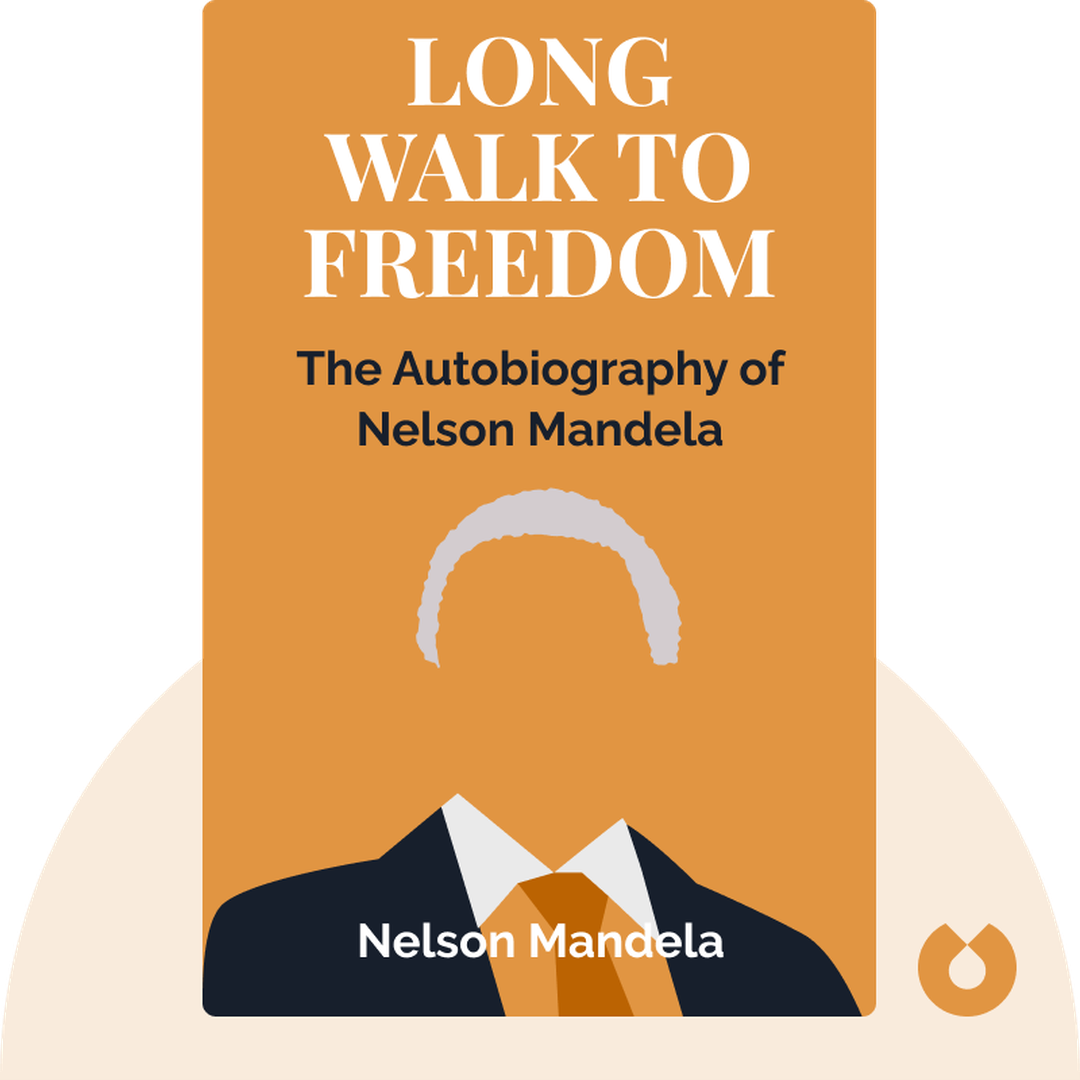
Nelson Mandela's A Long Walk to Freedom (1994) is one of the most famous autobiographies of recent times. It tells the story of his life, from his humble beginnings in the South African countryside to his work as an iconic anti-apartheid freedom fighter, and ends, after chronicling his twenty-year prison sentence, with his final victory and release.
Who Should Listen to Long Walk to Freedom?
- People interested in Nelson Mandela
- Anyone curious about South African history
- Proponents of social justice
Books Similar to Long Walk to Freedom
Readers who enjoyed this also liked these titles.